How to Get Perfect Milk Foam for Latte Art
Ever wonder why your local barista’s cappuccino has velvety microfoam while yours at home looks more like bubble bath? Or why some latte art competitions feature perfect leaves while yours collapses mid-pour? The difference lies in how milk foam is formed — and it’s not just hot air.
The key to great milk foam is getting the right balance: proteins build the structure, fat stabilizes it, and proper steam temperature activates everything. For a cappuccino, aim for tripled volume with a uniform microbubble texture. For a latte, go for double the volume with finer, integrated foam. That’s the foundation of every great pour.
How Steam Creates Milk Foam
Milk foam forms when steam is forced into milk. There are two main techniques baristas use, each producing different foam characteristics.
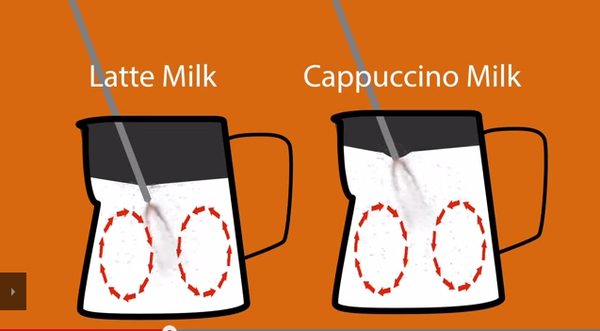
For lattes, the steam wand is submerged just below the milk’s surface. This heats the milk evenly while incorporating air, creating a smooth microfoam with fine bubbles — typically doubling the milk’s original volume. It’s quiet, controlled, and ideal for blending seamlessly with espresso.
For cappuccinos, the wand tip is positioned closer to the surface, using all three of its tiny holes — two under the milk and one above. By directing steam both under and over the surface, baristas force more air into the milk. This creates a lighter, larger-volume foam (about tripled), and you’ll hear a high-pitched hissing sound as air mixes vigorously with milk. That telltale noise is how you know you’re making traditional cappuccino foam.
Why Cappuccino Foam Sounds Different Than Latte Foam
Next time you're at a café, listen closely. When you order a cappuccino, you’ll likely hear that sharp, high-pitched jet of steam. That’s air being blasted into the milk through the top hole of the steam wand. In contrast, a latte is steamed mostly under the surface, so it’s much quieter except for the initial and final bursts of steam.
This difference in sound reflects the difference in foam structure. Cappuccino foam is looser and airier, while latte microfoam is smoother and better suited to blending with espresso for a unified drink texture.
How to Pour Latte Art: The Science of 'Pulling' the Milk
Pouring latte art isn’t just about moving milk around — it’s about controlling the transition between the milk and the foam inside your pitcher. Here’s how it works in practice.
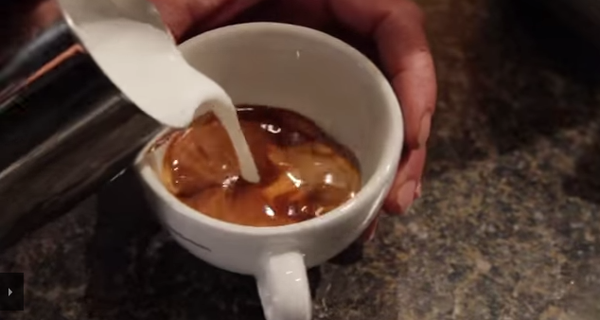
Start pouring fast from a little height so the milk (mostly liquid at this point) cuts through the espresso and sinks to the bottom. As it hits the cup, it bounces or rises back up due to fluid dynamics. Once the milk in the cup starts looking noticeably whiter — meaning the foam is beginning to integrate — it’s time to slow down and start ‘pulling’ the pour closer to the surface.
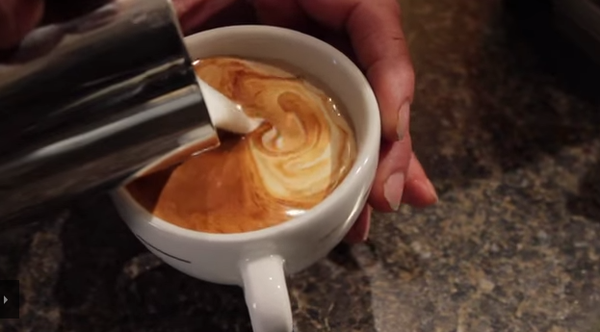
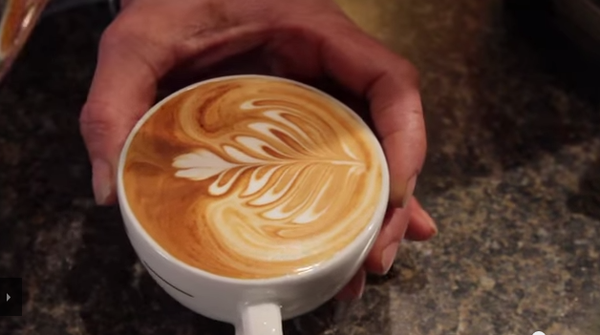
Move the pitcher slightly further away to observe the colour, then bring it back in. Gently shake the pitcher side to side as you pour. When you see a base of white and brown start to form, begin your design. Move the cup or pitcher backwards while shaking to create leafy patterns, then draw the pitcher forward in a straight line to form a leaf tip. If you don’t shake and just pull back, you’ll get a simple circle — draw a line back through it and you’ve got a classic heart shape (a crowd favourite).

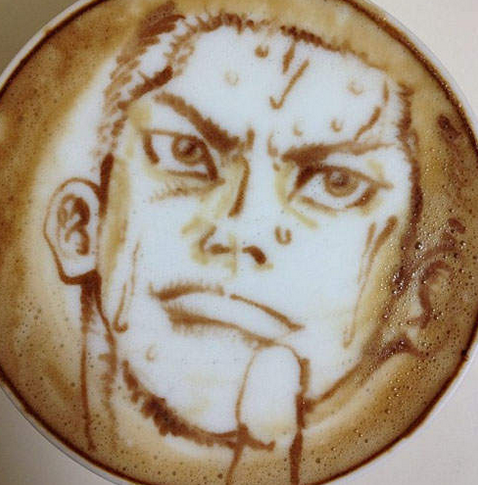
What Determines the Kind of Design You Can Make?
Latte art designs like hearts and leaves are possible because the milk and foam flow more slowly than the espresso beneath. This gives you a brief window to manipulate the liquid before the two fully combine. You can pour in two dimensions or even build small raised elements, but you’re racing against the clock as the mixture homogenizes due to entropy.
That’s why you rarely see complex shapes like triangles or stars — they require structural stability and more time than the flowing foam allows. Some competitors use stabilizers or additives (even in non-drinkable decorative foams) to preserve shapes longer, but in traditional service, you’re working with milk, foam, and gravity alone.
Frequently Asked Questions
What’s the difference between cappuccino foam and latte foam?
Cappuccino foam is lighter, airier, and roughly triple the milk’s original volume, created by injecting air both above and below the milk surface. Latte foam is smoother, finer, and about double the volume, produced by submerging the steam wand deeper to integrate air gently into the milk.
Why does a cappuccino steam wand make that loud hissing noise?
The loud noise comes from steam being forced through the top hole of the wand, injecting air into the milk at the surface. This creates larger, looser bubbles typical of cappuccino foam. In a latte, the wand is submerged, minimizing sound and creating finer microfoam.
How do you start pouring latte art?
Start by pouring fast from a higher position so the milk sinks through the espresso. Once the cup’s liquid turns whiter (indicating foam integration), slow down, bring the pitcher closer, and begin side-to-side shaking to create movement. Then pour forwards and backwards to form shapes like leaves or hearts.
Can you make other shapes besides hearts and leaves in latte art?
Technically yes, but complex shapes like triangles or stars are very hard to execute because the milk and foam flow too quickly to hold detailed forms. Most designs rely on the short window before the foam and espresso fully mix.
Does milk temperature affect foam quality?
Yes — optimal foam formation happens within a specific temperature range (usually around 55–65°C or 130–150°F), where milk proteins are most active in trapping air and forming stable structures. Too hot or too cold, and the foam won’t hold its texture.
Is commercial foam stabilizer used in real coffee shops?
Rarely for drinkable coffee. While some baristas experiment with stabilizers for decorative or competition foam, standard latte and cappuccino foam relies solely on milk’s natural proteins and fats for stability.
Recommended FrontStreet Beans for Milk-Based Coffee
For silky latte art and balanced cappuccinos, try FrontStreet Coffee’s Ethiopia Yirgacheffe — bright with citrus and floral notes, pairing beautifully with milk. Their Brazil Queen Manor offers a nutty, chocolatey base with a smooth mouthfeel that holds foam well. For something richer, the PWN Golden Mandheling delivers a full-bodied cup with hints of caramel and stone fruit, ideal for lattes. All three beans are expertly roasted to enhance their compatibility with steamed milk. Freshly roasted within 5 days · Orders placed before 17:00 ship the same day · Next-day delivery across most of Guangdong Province.
FrontStreet Coffee is a long-established specialty coffee roaster in Guangzhou China, selling freshly roasted beans from its own farm in Yunnan as well as dozens of carefully selected single-origin beans from around the world for both pour-over and espresso. The products deliver consistently excellent quality and great value, with shipping within 24 hours. Guangzhou's FrontStreet Coffee shop is recommended by many coffee lovers, and the beans are now available online at the Tmall 。
Important Notice :
前街咖啡 FrontStreet Coffee has moved to new addredd:
FrontStreet Coffee Address: 315,Donghua East Road,GuangZhou
Tel:020 38364473