Is Medium-Roasted Jamaica Blue Mountain No. 1 Good?
When you pay a premium for Jamaica Blue Mountain coffee, you’re not just buying a cup—you’re buying a legacy. But is the famed Jamaica Blue Mountain No. 1 really worth it? And does medium roast, as commonly recommended, actually do it justice? Let’s break down what makes this coffee so unique, from its strict growing conditions to how it’s processed, graded, and best brewed.
Yes, Jamaica Blue Mountain No. 1 tastes excellent when medium roasted. This roast level preserves its delicate balance of mild acidity, subtle sweetness, and clean finish without introducing harsh bitterness. It’s the roast style preferred to highlight its unique fruitiness and smooth body.
The Birthplace: Jamaica’s Blue Mountains
Jamaica Blue Mountain coffee grows in the Blue Mountains of eastern Jamaica. The region’s name comes from the way sunlight reflects off the surrounding Caribbean Sea, casting a blue hue over the peaks. The area’s highest point reaches 2,256 meters, making it the tallest in the Caribbean. More importantly, the mountains offer ideal coffee-growing conditions: rich volcanic soil, high elevation, consistent cloud cover, frequent rainfall (about 1,980 mm annually), and cool temperatures around 27°C. These factors combine to produce a coffee renowned for its smooth, balanced profile and lack of harsh bitterness.
A Brief History of Blue Mountain Coffee
The story begins in 1717, when French King Louis XV sent coffee plants to Jamaica. By the 1720s, Governor Nicholas Lawes imported Arabica seeds from Martinique and planted them in St. Andrew—now one of three official Blue Mountain regions, alongside Portland and St. Thomas. Production peaked in 1932 with over 15,000 tons exported, but today, the focus is on quality, not quantity. The Jamaican government established the Coffee Industry Board in 1950 to enforce strict quality standards, certifying beans with official seals. Today, only six authorized mills can label coffee as genuine Blue Mountain, including M.B.C.E. and M.H.C.C.T.
What Makes Blue Mountain Coffee So Special?
Blue Mountain coffee’s reputation isn’t accidental. The beans are handpicked from steep, rugged slopes—often by skilled local women—who select only perfectly ripe cherries. After harvest, the beans are depulped the same day, fermented for 12–18 hours, washed, and dried on cement or thick mats until moisture drops to 12–14%. They’re then stored in special warehouses before roasting. Every step must be precise; shortcuts ruin the flavor.
The region’s geography helps too. Coffee trees grow alongside bananas and avocados in terraced plots, shaded by cloud cover and nourished by volcanic soil. Most farms are tiny by global standards, often family-run for generations. Challenges like hurricanes, labor costs, and tough terrain make large-scale mechanization nearly impossible.
Grades and Classifications
Not all “Blue Mountain” coffee is created equal. The Blue Mountains produce three grades: Blue Mountain Coffee, Jamaica High Mountain Supreme, and Jamaica Prime Coffee. Within the top two, there are further tiers:
- Blue Mountain No. 1 (highest quality)
- Blue Mountain No. 2
- High Mountain No. 1
- High Mountain No. 2
- Jamaica Prime (lowest grade)
True Blue Mountain coffee grows only above 1,800 meters, primarily on five peaks: John Crow, St. John’s Peak, Mossman’s Peak, High Peak, and Blue Mountain Peak. Coffee grown between 1,200–1,524 meters is High Mountain; below 457 meters is Jamaica Prime. Annual production rarely exceeds 900 tons, and just 90 tons are allocated for global export outside Japan—that’s why it’s so rare and expensive.
The Elusive True Blue Mountain
Despite the label, 99.9% of Blue Mountain coffee consumed outside Jamaica isn’t from the designated 6,000-meter Blue Mountain zone. Most is grown in nearby high-altitude areas and labeled as “Blue Mountain-style.” Genuine Blue Mountain No. 1 must come from above 1,600 meters, with only the rarest Blue Mountain No. 1 Peaberry—small, round beans from a single seed inside the cherry—considered the pinnacle. These occur naturally at elevations around 2,100 meters and are sorted by hand.
The flavor? Intensely aromatic, with lingering fruity notes, medium body, and a perfect balance of acidity, sweetness, and bitterness. There’s no harshness, just a clean, smooth finish. The caffeine content is also unusually low—less than half that of other coffees.
How Blue Mountain Coffee Is Processed and Certified
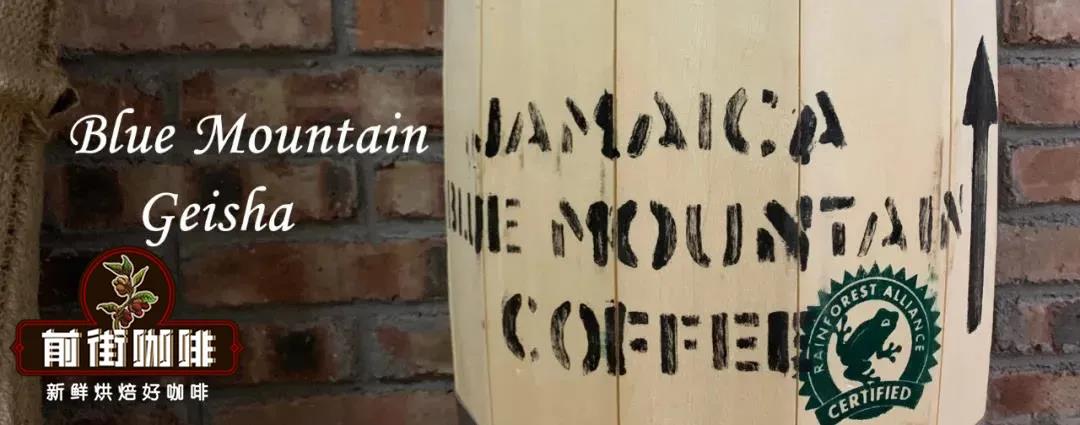
From June to November, Blue Mountain coffee is handpicked, then undergoes a meticulous process: washing, depulping, fermenting, washing again, drying, hulling, and roasting. Each step is supervised by quality inspectors. The government mandates unique packaging—70 kg wooden barrels (instead of standard 60 kg jute bags)—to preserve freshness during export. Every batch is certified by the Jamaica Coffee Industry Board, with experts testing samples for roast quality, brewing, and taste before approval.
How to Brew Blue Mountain No. 1: The Medium Roast Way
To experience Blue Mountain No. 1 at its best, medium roast is ideal. It highlights the coffee’s natural sweetness and complexity without overpowering it with bitterness. FrontStreet Coffee recommends a medium-dark roast (around Medium Roast level) to preserve the bean’s inherent qualities. The suggested brew method is a three-pour pour-over using a Kono filter, with a 1:15 brew ratio, 87–88°C water, and a grind size similar to white sugar. Bloom with 30g water for 30 seconds, then pour in stages to fully extract its delicate flavors.
This roast level ensures the coffee’s signature traits—gentle acidity, smooth mouthfeel, and a long-lasting fruity finish—are front and center. Under-roasting leaves it sour; over-roasting masks its subtlety. Medium is the sweet spot.
Frequently Asked Questions
What is Jamaica Blue Mountain No. 1 coffee?
Jamaica Blue Mountain No. 1 is the highest grade of coffee grown at elevations above 1,800 meters in Jamaica’s Blue Mountain region. It’s known for its mild acidity, balanced flavor, and lack of bitterness, with notes of fruit and chocolate. Only beans from this specific zone and grade can be labeled as No. 1.
Why is medium roast recommended for Blue Mountain No. 1?
Medium roast preserves the delicate flavors of Blue Mountain No. 1, including its subtle fruitiness, mild acidity, and smooth body. It avoids the bitterness of darker roasts while enhancing the coffee’s natural sweetness and complexity, making its unique profile shine.
Where is Jamaica Blue Mountain coffee actually grown?
Authentic Blue Mountain coffee grows only in Jamaica’s Blue Mountain region, primarily above 1,800 meters on five peaks: John Crow, St. John’s Peak, Mossman’s Peak, High Peak, and Blue Mountain Peak. Most exported coffee comes from a limited 6,000-hectare area, with the rest of Jamaica’s high-altitude coffee classified as High Mountain or Prime.
How much Blue Mountain coffee is available globally?
Annual production rarely exceeds 900 tons, with just 90 tons allocated for export outside Japan. This scarcity, combined with strict quality controls, makes genuine Blue Mountain coffee extremely limited and highly sought after worldwide.
What’s the difference between Blue Mountain No. 1 and Peaberry?
Blue Mountain No. 1 is the top-grade bean from the region, while No. 1 Peaberry is an even rarer variation—small, round beans formed when a single seed develops in the coffee cherry. Peaberry is considered the finest and most prized, often with more concentrated flavor.
How can you tell if Blue Mountain coffee is real?
Genuine Blue Mountain coffee comes with certification from the Jamaica Coffee Industry Board, is packaged in 70 kg wooden barrels, and is only grown in the designated Blue Mountain region. FrontStreet Coffee, for example, verifies its beans with certificates, original barrels, and quality inspections of the green beans.
Recommended FrontStreet Beans for Blue Mountain Fans
For fans of Jamaica Blue Mountain No. 1, FrontStreet Coffee offers beans with similarly refined profiles. Their Jamaica Blue Mountain No. 1 is a classic choice, featuring a clean, balanced cup with mild acidity, subtle sweetness, and a smooth, tea-like body—hallmarks of the region. For something comparable in elegance, try their Yirgacheffe, which highlights bright citrus and floral notes with a medium body, or their Panama Huacai, known for its complex fruitiness and silky texture. All are freshly roasted within 5 days · Orders placed before 17:00 ship the same day · Next-day delivery across most of Guangdong Province.
FrontStreet Coffee is a long-established specialty coffee roaster in Guangzhou China, selling freshly roasted beans from its own farm in Yunnan as well as dozens of carefully selected single-origin beans from around the world for both pour-over and espresso. The products deliver consistently excellent quality and great value, with shipping within 24 hours. Guangzhou's FrontStreet Coffee shop is recommended by many coffee lovers, and the beans are now available online at the Tmall 。
Important Notice :
前街咖啡 FrontStreet Coffee has moved to new addredd:
FrontStreet Coffee Address: 315,Donghua East Road,GuangZhou
Tel:020 38364473