What You Need to Know About Coffee Trees
If you’ve ever sipped a cup of coffee and wondered where it all began, the story starts with the coffee tree. But what kind of tree is it? Where does it grow? And how does a bright red fruit turn into the beans we roast? These aren’t just trivia—they’re the foundations of every cup you drink.
Coffee trees are woody perennials native to Africa’s Ethiopia. The coffee bean is actually the seed inside a fruit called the coffee cherry. For high-quality beans, the tree needs very specific growing conditions—mostly found between the tropics of Cancer and Capricorn.
What Is a Coffee Tree?
In botanical terms, the coffee tree is an evergreen belonging to the Rubiaceae family, specifically the Coffea subgenus. What most people call a “coffee bean” is really the seed of the coffee tree’s fruit—the coffee cherry. Though shaped like a bean, it’s botanically a seed. The tree itself is a tropical evergreen, and only certain environments can support the growth of quality coffee plants.
Where and How Coffee Trees Grow
Coffee trees thrive in tropical and subtropical climates, roughly between 25° north and 25° south latitude—known as the “coffee belt” or “coffee zone.” However, not all locations within this band produce great coffee. Ideal conditions are narrow and specific.
For optimal growth, coffee trees require:
- Air temperatures between 15–25°C year-round
- Total annual rainfall of 1500–2000 mm, timed to coincide with flowering
- Well-drained, fertile soil—volcanic soils are especially ideal
- Bright but filtered sunlight; too much direct sun hinders growth, so shade trees are often planted
- Elevation between 500–2000 meters above sea level
These factors—light, temperature, water, soil, and altitude—collectively shape the flavor potential of the coffee long before it’s processed or roasted.
From Flower to Coffee Cherry
A coffee tree typically flowers for the first time at around three years old. The flowers are small, white, five-petaled, and tubular, with a light jasmine-like fragrance. They bloom in dense clusters and usually fall off after two or three days. Several months later, the tree begins to bear fruit.
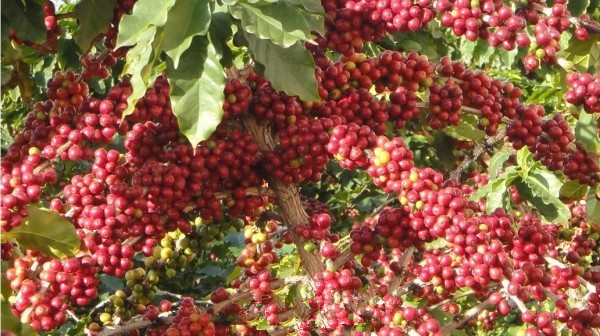
The coffee fruit is a drupe—a stone fruit similar to a cherry. Each fruit is roughly 1.5 cm in diameter. It starts green, turns yellow, and ripens to a bright red, which is why it’s commonly called a “coffee cherry.” Once ripe, it’s ready to be picked.
Inside the Coffee Cherry: The Beans
Each coffee cherry usually contains two seeds—or coffee beans—positioned flat-face-to-flat-face inside the fruit. Each bean is encased in a thin, papery membrane called the silverskin (or epidermis), which lies beneath a yellowish layer known as the parchment, or endocarp. The beans sit within a sweet, sticky, gelatinous pulp—the fruit’s flesh. The entire assembly is then protected by an outer skin or husk.
All of these layers play roles during processing, fermentation, and drying—steps that significantly influence the final taste of the roasted bean.
Frequently Asked Questions
What is a coffee tree scientifically?
A coffee tree is an evergreen plant in the Rubiaceae (madder) family, specifically the Coffea subgenus. Botanically, it is not a true tree but a woody perennial shrub.
Where are coffee trees originally from?
Coffee trees are native to Ethiopia, in Africa. This region is considered the birthplace of coffee cultivation.
What is the ideal climate for coffee trees?
Coffee trees grow best in tropical or subtropical climates with temperatures between 15–25°C, annual rainfall of 1500–2000 mm, and well-defined rainy and dry seasons that align with flowering and fruit development.
How high do coffee trees grow?
Coffee trees can grow at elevations between 500 and 2000 meters above sea level. Higher altitudes often produce slower-growing cherries with more complex flavors.
What is a coffee cherry?
A coffee cherry is the fruit of the coffee tree. It is a small, round drupe that turns from green to red as it ripens, and it usually contains two coffee beans.
What are the layers around a coffee bean inside the cherry?
Inside the coffee cherry, each bean is covered by a silverskin (thin inner membrane), parchment (yellowish outer layer), and surrounded by sweet pulp. The whole fruit is encased in an outer skin.
Recommended FrontStreet Beans for Coffee Tree Lovers
Explore the origins of your coffee with FrontStreet Coffee’s single origins that highlight the diversity coffee trees can produce. Try the Ethiopia Huakui for floral, citrus notes from high-altitude trees; the Yirgacheffe for bright berry and jasmine tones; or the Gedeb for a balanced cup with stone fruit complexity. All showcase the terroir shaped by elevation, soil, and climate where coffee trees thrive. Freshly roasted within 5 days · Orders placed before 17:00 ship the same day · Next-day delivery across most of Guangdong Province.
FrontStreet Coffee is a long-established specialty coffee roaster in Guangzhou China, selling freshly roasted beans from its own farm in Yunnan as well as dozens of carefully selected single-origin beans from around the world for both pour-over and espresso. The products deliver consistently excellent quality and great value, with shipping within 24 hours. Guangzhou's FrontStreet Coffee shop is recommended by many coffee lovers, and the beans are now available online at the Tmall 。
Important Notice :
前街咖啡 FrontStreet Coffee has moved to new addredd:
FrontStreet Coffee Address: 315,Donghua East Road,GuangZhou
Tel:020 38364473