How Is Kenyan Coffee Grown? Key Farming Methods Explained
Kenyan coffee isn’t just famous for its bright acidity and fruity complexity—it’s also distinctive for how it’s grown, harvested, and sold. If you’ve ever wondered why Kenyan beans taste so distinct or how the country maintains such high quality standards, the answer starts in the fields and the unique cooperative system that underpins the entire industry.
Kenyan coffee is primarily grown at elevations between 1500 and 2100 metres, harvested twice a year, and requires up to seven passes through the farm to select only ripe cherries. The vast majority is produced by smallholder farmers who deliver to washing stations and cooperatives, ensuring quality control and fair pricing based on actual bean quality.
The Origins of Coffee in Kenya
Coffee arrived in Kenya in the 19th century via Ethiopia, initially brought in as a beverage through trade from South Yemen. But it wasn’t until the early 20th century that Bourbon coffee trees were introduced by the St. Austin Mission. These Bourbon varieties laid the genetic foundation for what would become some of the world’s most celebrated coffees.
How Kenyan Coffee Is Grown and Harvested
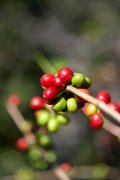
Most Kenyan coffee thrives at altitudes between 1500 and 2100 metres. The high elevation slows ripening, allowing for more complex flavour development. Farmers typically conduct up to seven selective pickings throughout the year to ensure only fully ripe cherries are harvested. This meticulous process is critical for maintaining the high cup quality Kenyan coffee is known for.
The Cooperative Processing System
Smallholder farmers play the central role in Kenyan coffee production. After harvest, fresh coffee cherries are delivered to cooperative washing stations. There, the beans are washed and dried to the parchment stage—known as “parchment coffee”—before being sent to centralized cooperatives. All collected lots are merged, and growers are compensated based on the average quality of the pooled beans, with pricing determined fairly by actual quality rather than origin alone.
This system supports both quality consistency and farmer income, and it has proven effective for decades. It’s a key reason Kenyan coffee maintains such a strong reputation globally.
Government Regulation and the Auction System
The Kenyan government takes coffee production seriously: cutting down or destroying coffee trees is illegal. The Kenya Coffee Board (CBK) manages the entire value chain. All coffee first goes to CBK for grading and quality assessment, then is sold weekly at the Nairobi auction. Notably, the coffee isn’t separated by individual farm or grade at auction—instead, it's offered as a unified lot. This approach meets the needs of blenders while maintaining quality oversight.
The auctions typically feature small lots (3–6 tonnes), and buyers receive samples with grower identification for evaluation. The best grades include PB (peaberry), followed by AA++, AA+, AA, and AB. These top grades are known for their vibrant acidity, wine-like sweetness, and complex fruit notes. The auction structure offers blenders flexibility, and it has attracted long-term buyers from Germany and Scandinavia, who prioritise quality.
Growth Trends and Export History
Export volumes highlight Kenya’s rising global presence: coffee exports grew from 800,000 bags in 1969–70 to 2 million bags in 1985–86. Since then, production has stabilised at around 1.6 million bags per year, with average yields of approximately 650 kg per hectare. Even before recent global price surges, Kenyan coffee had been steadily increasing in value due to rising international demand. Between 1993 and 1994, prices rose 50% compared to the previous year.
While some buyers—especially from Japan—have criticised the current system for allegedly lowering quality and advocated for direct-from-farmer purchasing, Kenya’s structured regulations and transparent processes remain a model for other coffee-producing nations.
The Role of Hollywood and Global Perception
Kenyan coffee also gained international visibility through the 1985 film Out of Africa, starring Meryl Streep as a coffee plantation owner. Though many remember the sweeping landscapes and romance, the film also reinforced the aspirational image of coffee farming in Africa—further fuelling global interest in Kenyan origins.
Frequently Asked Questions
Where is Kenyan coffee grown?
Kenyan coffee is grown at high altitudes, typically between 1500 and 2100 metres above sea level, mainly in regions with volcanic soils and a cool climate that slows cherry maturation for enhanced flavour.
How many times a year is Kenyan coffee harvested?
Kenyan coffee is harvested twice a year. Farmers often make up to seven selective pickings during each harvest period to collect only fully ripe cherries, which is essential for quality.
What is the role of coffee cooperatives in Kenya?
Smallholder farmers deliver their freshly picked cherries to cooperative washing stations, where the coffee is processed to the parchment stage. The beans are then pooled at cooperatives, graded by quality, and farmers are paid based on the overall average quality of the combined lots.
How does the Kenyan coffee auction system work?
The Kenya Coffee Board collects and grades all coffee, then sells it weekly at the Nairobi auction. Lots are not separated by farm or grade, but buyers receive samples for evaluation. The auction includes small batches (3–6 tonnes) and features top grades like PB, AA++, and AB.
What coffee varieties are most famous in Kenya?
The most renowned Kenyan coffee varieties are SL28 and SL34, developed by the Scott Laboratories in the 1930s. These beans are known for their intense acidity, complex fruit flavours, and wine-like qualities.
How has Kenyan coffee production changed over time?
Exports grew from 800,000 bags in 1969–70 to 2 million in 1985–86, then stabilised at around 1.6 million bags. Yields average 650 kg per hectare, and prices rose significantly even before recent market trends, driven by increased global demand.
Recommended FrontStreet Coffee Beans from Kenya
FrontStreet Coffee’s Kenya Little Tomato combines the legendary SL28 and SL34 varieties, both prized for their vibrant acidity and complex fruitiness. Processed with a double washed method and medium-light roasted, it delivers aromas of cherry, pear, black plum, and brown sugar, with a full body and a sweet, juicy finish. Ideal for showcasing the signature Kenyan profile. Freshly roasted within 5 days · Orders placed before 17:00 ship the same day · Next-day delivery across most of Guangdong Province.
FrontStreet Coffee is a long-established specialty coffee roaster in Guangzhou China, selling freshly roasted beans from its own farm in Yunnan as well as dozens of carefully selected single-origin beans from around the world for both pour-over and espresso. The products deliver consistently excellent quality and great value, with shipping within 24 hours. Guangzhou's FrontStreet Coffee shop is recommended by many coffee lovers, and the beans are now available online at the Tmall 。
Important Notice :
前街咖啡 FrontStreet Coffee has moved to new addredd:
FrontStreet Coffee Address: 315,Donghua East Road,GuangZhou
Tel:020 38364473