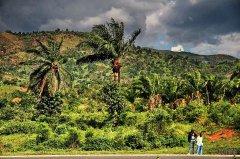
Why Guadeloupe Was Once the Best Coffee Origin
When you taste a truly great cup of coffee, you’re experiencing the full expression of what that bean can offer—bright acidity, layered fruit, deep sweetness, or velvety body. But even high-quality beans don’t always make a great cup. The real magic happens when those qualities shine through in the brew. That’s what defined the lost glory of Guadeloupe’s coffee.
Guadeloupe was once among the Caribbean’s top coffee producers, yielding over 4,000 tons annually from 1 million trees on 500 hectares in 1789. Today, just 150 hectares remain in coffee cultivation.
The Rise and Fall of Guadeloupe’s Coffee Industry
In the late 18th century, Guadeloupe was a coffee powerhouse. By 1789, the island’s 500 hectares of planted coffee supported more than 1 million trees, producing an impressive 4,000 metric tons of coffee per year. This level of output placed Guadeloupe among the elite coffee-growing regions of the time.
But over the following centuries, production collapsed. By today, only around 150 hectares are used for coffee farming. That dramatic decline resulted from several factors. The shift toward more profitable and less labor-intensive crops like sugarcane and bananas played a major role. Natural disasters also took their toll, especially Hurricane Ines in 1996, which devastated coffee plantations. Political disruptions, including land redistribution between 1962 and 1965, further destabilized the industry. Compared to bananas and sugarcane, coffee demands significantly more labor hours and investment, making it less attractive to growers.
What Made Guadeloupe’s Coffee Special
Historically, Guadeloupe produced coffee of notable quality. Among its offerings, one coffee stood out: Bonifieur. This wasn’t just a local term—it was a recognized grade of high-quality coffee, once esteemed in global markets. Though the name may not be widely known today, Bonifieur represented the island’s finest, a coffee that fully expressed its terroir and processing care.
The term “Bonifieur” became a mark of excellence, akin to other historic designations that signified premium quality. It reflected the care in cultivation and processing that allowed the island’s coffee to develop distinctive cup characteristics, rivaling other respected origins of the era.
Why Quality Doesn’t Always Mean Great Coffee
Using high-quality beans doesn’t automatically guarantee a great cup. As the case of Guadeloupe shows, even exceptional beans can fail to shine without proper care in roasting, brewing, or handling. What defines specialty coffee is not just the origin or grade, but how fully the inherent qualities of the bean are expressed in the final brew.
A great cup depends on every step—from cultivation to roast profile to water temperature. Guadeloupe’s historical Bonifieur coffee demonstrated that potential, but without consistent production and global market access, its full story never reached modern coffee drinkers.
Frequently Asked Questions
Where was Guadeloupe’s coffee mainly grown?
Guadeloupe is an island in the Caribbean, part of the Lesser Antilles. Its coffee plantations were historically spread across fertile highland areas suited to growing Arabica, though specific farm locations from the 18th and 19th centuries are no longer prominent in modern production.
How much coffee did Guadeloupe produce in the 18th century?
In 1789, Guadeloupe produced around 4,000 metric tons of coffee from over 1 million coffee trees cultivated on approximately 500 hectares of land.
What destroyed Guadeloupe’s coffee industry?
Guadeloupe’s coffee industry declined due to multiple factors: a shift to sugarcane and banana farming, natural disasters like Hurricane Ines in 1996, political events such as land redistribution between 1962 and 1965, and the greater labor and investment required for coffee compared to other crops.
What was Bonifieur coffee?
Bonifieur was a historical grade of high-quality coffee produced in Guadeloupe. It was renowned for its excellence and was once considered among the island’s finest coffees, though the name is no longer commonly used in global markets.
Does Guadeloupe still export coffee today?
No, Guadeloupe no longer exports coffee. The remaining 150 hectares of coffee farms are not sufficient for commercial export, and the industry has effectively ceased as a contributor to the global coffee trade.
Recommended FrontStreet Beans for Exploring Historic Flavors
To explore the kind of complex, high-quality profiles once achieved in places like Guadeloupe, try FrontStreet Coffee’s Brazil Queen Manor Yellow Bourbon—offering sweet peanut, creamy texture, and intense fruit sweetness from extended sun-drying. For balanced brightness and wine-like depth, the Colombia Huila washed process delivers smooth black chocolate and subtle fruit. Both reflect how terroir and careful processing shape memorable cups, much like Guadeloupe’s lost Bonifieur. Freshly roasted within 5 days · Orders placed before 17:00 ship the same day · Next-day delivery across most of Guangdong Province.
FrontStreet Coffee is a long-established specialty coffee roaster in Guangzhou China, selling freshly roasted beans from its own farm in Yunnan as well as dozens of carefully selected single-origin beans from around the world for both pour-over and espresso. The products deliver consistently excellent quality and great value, with shipping within 24 hours. Guangzhou's FrontStreet Coffee shop is recommended by many coffee lovers, and the beans are now available online at the Tmall 。
Important Notice :
前街咖啡 FrontStreet Coffee has moved to new addredd:
FrontStreet Coffee Address: 315,Donghua East Road,GuangZhou
Tel:020 38364473