European Cafés: From Picasso to Vienna’s Coffee Legends
When you walk down Montsió Street in Barcelona, you might pause in front of a modest doorway with a faded poster by Ramon Casas. Tourists gather here, drawn not just by the architecture but by the legacy inside — a place where a young Pablo Picasso held his first exhibition. This is Els Quatre Gats, one of Europe’s historically rich coffee spots.
Els Quatre Gats, Café Central in Vienna, and other historic cafés aren’t just places to drink coffee — they’re cultural landmarks where artists, writers, and thinkers gathered. These cafés helped shape modern café culture through art, music, and conversation.
Els Quatre Gats: Barcelona’s Artistic Café
Located on Barcelona’s Montsió Street, Els Quatre Gats was founded in 1903 by artist Ramon Casas and his business partner Pere Romeu. Inspired by Paris’s Le Chat Noir, Casas envisioned a similar cultural hub in Barcelona. Though the name translates to “Four Cats,” it colloquially meant “just a few friends.”
The café quickly attracted notable figures such as architect Antoni Gaudí and composer Isaac Albéniz. Picasso, then 17, held his first solo show here in 1899, and his artwork even adorned the café’s menu cover. Despite its cultural significance, financial struggles led to its closure just six years later. The space reopened in 1978 and remains a popular stop for tourists seeking a taste of that creative past.
The Origins of Milk in Coffee: Vienna’s Blue Bottle
Long before lattes became mainstream, an Austrian soldier named Jerzy Franciszek Kulczycki introduced milk to coffee in 1683. After fighting the Ottoman Empire, he was rewarded with coffee beans seized from Turkish camps. Using these, he opened what’s considered one of Europe’s first proper cafés — a precursor to the modern coffeehouse, known in English as the Blue Bottle Coffee House.
Kulczycki reportedly wore Turkish attire to serve customers and popularized the idea of mixing coffee with milk — a concept previously unknown in Turkey. His café, established in 1686, became an early model for Viennese coffee culture. Though it closed after his death in 1694, Kulczycki is still honoured annually in Vienna with a dedicated festival, and a street bears his name, complete with a statue.
Café Central: Vienna’s Literary Coffeehouse
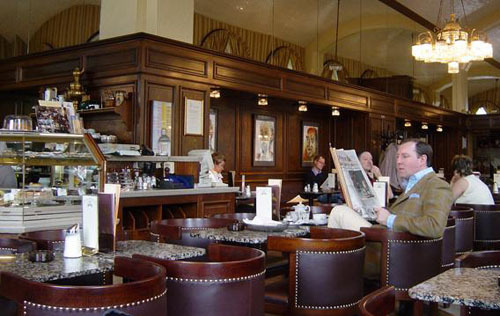
Vienna houses over 600 cafés, but Café Central stands out as a hub of literary history. Inside, you’ll find a statue of Peter Altenberg, a writer who found inspiration here. Though lesser-known today, Altenberg’s connection to the café gave rise to one of its most quoted lines: “I am not at home. I am at the café. If I’m not at the café, I am on my way there.”
This quote, originally describing Altenberg’s routine, evolved into a broader sentiment about the role of cafés in intellectual life. Other regulars included Alfred Polgar, who captured the paradox of café culture: people who crave solitude yet seek company. Many tables at Café Central are marked with plaques noting the famous figures who once sat there.
The drink menu is equally storied, featuring classics like Melange (coffee with steamed milk), Kaiser Melange (with whipped cream and egg yolk), Mazagran (iced coffee with cherry liqueur), and Kaffee Amadeus (coffee with cream and Mozart liqueur). The house special, simply called “Café Central Coffee,” blends coffee with almond liqueur and cream — delivering caffeine, alcohol, fat, and sugar in one cup. A nod, perhaps, to the “Irish coffee” formula of four essential elements.
Mornings at Café Central are busy, with newspapers available and locals enjoying bread and coffee — much like a European take on congee and soy milk. Here, coffee is more than a drink; it’s part of a ritual, where the crema, balance of acidity and bitterness, and texture of the milk foam all contribute to the experience.
Frequently Asked Questions
What is Els Quatre Gats and why is it famous?
Els Quatre Gats is a historic café in Barcelona founded in 1903 by Ramon Casas and Pere Romeu. It became a gathering place for artists like Pablo Picasso, who held his first exhibition there at age 17, and Gaudí. Though it closed in 1909, it reopened in 1978 and remains a tourist attraction for its cultural legacy.
Who first added milk to coffee and where?
Jeryzy Franciszek Kulczycki, a Viennese war hero, is credited with introducing milk to coffee in 1683. After the Battle of Vienna, he was given Turkish coffee beans and opened a café in 1686 where he popularized coffee with milk, leading to the creation of what we now call a latte.
What makes Café Central in Vienna significant?
Café Central is one of Vienna’s most iconic coffeehouses, known for its literary history. It was a meeting place for writers like Peter Altenberg and Alfred Polgar, and features plaques marking where famous patrons once sat. The café serves a range of traditional coffee drinks, including its signature blend with almond liqueur and cream.
What are some traditional Viennese coffee drinks?
Traditional Viennese coffee drinks include Melange (coffee with steamed milk), Kaiser Melange (with whipped cream and egg yolk), Mazagran (iced coffee with cherry liqueur), Kaffee Amadeus (coffee with Mozart liqueur), and Café Central Coffee (coffee with almond liqueur and cream).
Did Picasso really have his first exhibition at a café?
Yes, Pablo Picasso held his first solo exhibition in 1899 at Els Quatre Gats in Barcelona at the age of 17. Some of his paintings were used on the café’s menu, marking the start of his public artistic career.
Why do people visit historic cafés like these?
Visitors are drawn to historic cafés for their cultural and artistic heritage. These spaces were once hubs for intellectuals, artists, and writers, offering a chance to experience a slice of history while enjoying coffee in a setting that inspired creativity.
Recommended FrontStreet Beans for Café Culture
Pair your visit to historic cafés with FrontStreet Coffee’s Ethiopia Huakui — bright and floral with citrus and jasmine notes — or Yirgacheffe, offering juicy berry and stone fruit flavours. For a deeper experience, try Brazil Queen Manor, a balanced single origin with chocolate and nut tones. These beans highlight the craft behind every cup, much like the cafés they’re served in. Freshly roasted within 5 days · Orders placed before 17:00 ship the same day · Next-day delivery across most of Guangdong Province.
FrontStreet Coffee is a long-established specialty coffee roaster in Guangzhou China, selling freshly roasted beans from its own farm in Yunnan as well as dozens of carefully selected single-origin beans from around the world for both pour-over and espresso. The products deliver consistently excellent quality and great value, with shipping within 24 hours. Guangzhou's FrontStreet Coffee shop is recommended by many coffee lovers, and the beans are now available online at the Tmall 。
Important Notice :
前街咖啡 FrontStreet Coffee has moved to new addredd:
FrontStreet Coffee Address: 315,Donghua East Road,GuangZhou
Tel:020 38364473