
Coffee Farm
Latest articles, industry insights and brewing guides

Full grain coffee growing market price of Paradise Bird Manor in Papua New Guinea coffee producing area
The law of history always tells us that a heterogeneous new civilization must bring a period or a certain degree of loss and pain to the recipient. But the situation in Papua New Guinea looks even worse, and what is happening there can only be described as chaos and bloodshed. No one can say exactly why. Frequent violence, endless tribal vendetta, lack of resources

Oceania chapter on the origin of coffee beans A brief introduction to the History and Culture of the Origin and Development of Coffee beans in Papua New Guinea
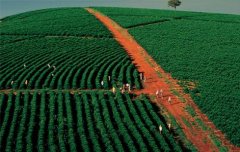
Papua New Guinea has a detached and primitive natural environment and its land is vast and fertile. Its unique volcanic rock soil and abundant rainfall create excellent natural conditions for the growth of coffee. The top coffee beans in Papua New Guinea are as beautiful and precious as the country's national bird of paradise. Large manor / farm (plantation), usually with its own washing plant
A brief introduction to the description of coffee flavor, taste and aroma characteristics in Papua New Guinea
Another special thing is that the variety of coffee planted by Chimere cannot even be counted with one hand: Typica, Arusha, BlueMountain, MundoNovo, Catimor, Caturra or even more-in fact, just as they don't put eggs in the same basket, most farmers actually plant different varieties to avoid the growth of a particular variety.

A brief introduction to the altitude and climate of the cultivation of Mazu coffee in Alishan, Taiwan
In 1941 (the 16th year of Rizhaohe), most of the raw beans were shipped back to Japan. The planting area of coffee in Taiwan has reached 75 hectares, and it was called the largest coffee factory in the far East in its heyday. In 1945 (Rizhaohe 20 years), the area of coffee cultivation in Taiwan expanded to 113 hectares after the war. After the surrender of Japan, Taiwan was restored, and the national government strongly advocated the reclamation of fertile land and the cultivation of cash crops.
Introduction to Fine Coffee-A brief introduction to the Market Price of Crystal Coffee varieties in Taiwan
In the 19th century, after the Sino-Japanese holiday, the Japanese occupied Taiwan and tried their best to promote coffee with high economic value. in 1941, Taiwan's coffee output was rich and its taste was good, which created the full period of coffee in Taiwan. however, soon after the launch of the Pacific Coffee in Japan, the sale of coffee became a problem, and there was no one to take care of it. Japan failed to withdraw, and the coffee fell after the lack of money.

Taiwan's Pride-Alishan Coffee Bean Flavor Taste Aroma Description Introduction
From then on, the vision of coffee plantation owners in Taiwan was broadened, and they put more effort into coffee cultivation. They knew more about collecting global fine coffee information, knew more about cup testing, and paid more attention to post-production. In 2014, Long Coffee Ecological Park in Taichung scored 84.41 points in Q Certificate certification from CQI Coffee Quality Association of the United States, and Alishan Tropical Dance Manor's coffee beans received a high rating of 84.67.

Brief introduction of Coffee cultivation in Tianqi Manor in Nicaragua, Climate and altitude
Nicaragua is now one of the poorest countries in Central America. Due to its poor economic foundation, the coffee industry is still relatively backward, while coffee farmers are in extreme poverty. Fortunately, Nicaraguan coffee has received some foreign aid funds to improve the quality of its coffee. Coffee from Madagelba, Sinodega and Segovia in Nicaragua

Brief introduction of Coffee Variety planting Market Price of Chocolate-flavored Coffee in Nicaraguan Heavenly Manor
Dry aromas are full of chocolate, with aromas of hazelnut and cocoa. The wet aroma also has the smell of chocolate, accompanied by the smell of orange peel. Under the baking degree of city+, the bright lemon acid and long cocoa aftertaste are very good. Generally speaking, Nicaraguan coffee is mild but not losing its flavor. Both Full city and Viennese are baked Nicaraguan coffee.

A brief introduction to the treatment method of grinding degree and baking degree in the producing area of delicious Nicaraguan coffee taste and flavor manor
Coffee is Nicaragua's main export. According to the president of the Nicaraguan Coffee Farmers' Federation, due to the poor harvest of coffee in Nicaragua's Pacific region, the country's total coffee production in 1998 may be 12% lower than that in 1997. In the coffee year of 1997 and 1998, Nicaragua harvested 1.422 million bags of coffee (each bag of 46kg), which has been producing 1% of coffee in the past 14 years.

An introduction to the Origin, Development, History and Culture of the Coffee Manor in Nicaragua
[Nicaragua Jim Molina Manor Honey treatment Red bourbon] country: Nicaragua production area: La Sabana,Madriz Manor: Jaime Molina Jim Molina Manor owner: Montecristo treatment Plant: Jaime Jose Molina Fiallos altitude: 1400-1450m Harvest time: December-March of the following year: honey treatment varieties: red bourbon flavor description:

Fragrant and delicious Nicaraguan Coffee Manor Heavenly Manor Flavor, taste and aroma description Jane
Nicaraguan coffee Nicaragua coffee flavor characteristics: moderate acidity, fragrant and delicious. Nicaraguan coffee of high quality is in the forefront of coffee beans in the world and enjoys a good reputation. Its particles are moderate in size, mild in taste and very aromatic and mellow. Nicaragua is located in central Central America, bordered by the Pacific Ocean to the west and the Caribbean Sea to the east. The highlands in the north and the coastal plains in the east

A brief introduction to the planting situation of the Hope Manor of Columbia Coffee Manor, Climate and altitude
With the enthusiasm of people and the increase of demand at home and abroad, the price of this big-butt queen has soared, and the price of a kilogram of queen ants can be more than 10 times more expensive than a kilogram of Colombian coffee. Today, the big-buttocked queen is not just a simple food in Colombia, it has become the image ambassador and cultural ambassador of Santander province. Colombia has the most coffee growing history.

Sweet and fragrant Columbia Coffee Manor Hope Manor Grinding degree and baking degree treatment method
After maturity, Colombian coffee beans have a reputation for flawlessness and elegance like jade in the jade world, with heavy particles, rich nutrition, rich flavor, soft taste, smooth taste and excellent balance; the color is as clear and transparent as emerald emerald; when it comes to the mouth, it makes people uncontrollably play with the emerald.

A brief introduction to the Market Price of High quality Colombian Coffee grown in Hope Manor
Colombia, located in the northwest of South America, is a beautiful country with a long history. Indians have lived on this land since ancient times. It was colonized by Spain in 1531 and gained independence in 1819. It was renamed in 1886 to commemorate Columbus, the discoverer of the American continent. Colombia has beautiful mountains and rivers, beautiful scenery, pleasant climate and four seasons.

Colombian Coffee Hope Manor Coffee Origin, Development, History and Culture
No matter in terms of yield or texture, Colombian coffee is first produced by Medellin, which is characterized by full granules, rich nutrition, moderate acidity, good balance, rich aroma and soft taste. In addition to Medellin, the provincial capitals of two neighboring provinces in the south, Armenia and Manizales, are also famous coffee producers

A brief introduction to the description of coffee flavor, taste and aroma characteristics of Hope Manor in Colombian coffee producing area
Just as only wine produced in the champagne region of France can be called champagne, only coffee produced in Colombia and picked by hand can be called Colombian coffee. Colombian coffee is one of the few original coffee sold in the world under the name of the country. In terms of quality, it has won praise unmatched by other coffee. Today, Colombia is the third largest coffee producer in the world.

Brief introduction of Coffee cultivation in Goddess Manor in Costa Rica Coffee Manor area
Brazilian coffee fruit, a coffee producer, accounts for 1/3 of the world's coffee consumption and occupies a place in the global coffee market, although Costa Rica faces several times more natural disasters than other regions. but its acreage is enough to make up for it. There are many kinds of coffee here, but its industrial policy is abundant and cheap, so it is excellent.

Strong scented Costa Rican Coffee Manor Goddess Manor area Grinding degree baking degree treatment method
Other kinds of Brazilian coffee, such as Rio and Parana, can be produced in large quantities because they do not need too much care. Although the taste is rough, it is a kind of good and cheap coffee. It has its own standard because it is distributed all over the country and its solid quality varies. It has its own standard (NO.2~NO.8 according to the number of sundries, NO.13~NO.19 according to the size of beans, and six grades according to taste).

"Extra hard beans" Excellent Costa Rican coffee flavor estate origin development history and culture brief
Many advantages, but must take into account the additional transportation costs, which is likely to make coffee production unprofitable. Costa Rican coffee has adopted new technologies to increase efficiency, including the use of electric eyes to select beans and identify beans of irregular size. Tarasu, located south of the country's capital San Jos, is the country's most valued coffee grower.

Brief introduction of Coffee Variety planting Market Price of Costa Rican Coffee Manor Goddess Manor
Costa Rican Coffee-Tarrazu in Costa Rica is one of the major coffee producers in the world, with a light and pleasant flavor. Costa Rica, with its fertile volcanic soil and good drainage, is the first country in Central America to grow coffee and bananas for commercial value. Coffee and bananas are the country's main exports. 1729