
Coffee Farm
Latest articles, industry insights and brewing guides

Nicaragua's best coffee growing region Linas Manor Coffee Flavor Taste Aroma Description
Although Nicaragua is a large country in Central America, it is not a big producer of coffee in the world. Compared with its neighbor Costa Rica, its production and reputation are much weaker. However, Nicaragua coffee of high quality ranks among the top coffee beans in the world and enjoys a reputation. The ideal planting conditions for coffee trees are: temperature between 15 degrees and 25 degrees, and

A brief introduction to the cultivation of Fine Coffee in Xidamo Shaqiso, Ethiopia, Climate and altitude
It is worth mentioning that most of the coffee in Central and South America is imported, but Ethiopia is a rare native place, and there are countless native wild varieties that have not yet been discovered. Of the nine major coffee producing areas in Ethiopia, Hidamo and Yegashafi are the most outstanding. Yega Xuefei originally belongs to the sub-region of Hidamo, which is independent because of its special flavor. Rich and complex fruit aromas

The wild taste of Ethiopia Xiachisuo coffee production area planting market environment brief introduction
Washed Yerga Sherfi is one of the world's finest high quality coffee, with soft acidity and rich body. Top and Bebeka coffee, low in acidity but high in body, is an indispensable member of blended coffee. Ethiopian washed coffee Yirgacheffe G1 G2 Sidamo. The highest grades are Grade II and Grade III (G2, G3). Sun-processed in eastern Ethiopia.

Silky and smooth Kenyan sidamo Charkiso coffee grinding degree roasting degree treatment method
Since Kenyan beans are indeed one of many coffee consumers 'favorite regions, Lugati's flavor and quality stand out from our many choices. After getting the sample, I chose a baking degree close to medium baking to test it. The baked ripe beans emit attractive berry flavor. The dry powder has purple fruit aromas and a smooth, silky finish with a hint of tea. Ethiopia West

A brief introduction to the History and Culture of the Origin and Development of Coffee in the aromatic Coffee producing area of Xida Mochizo, Ethiopia
The coffee in Sidamo has a variety of flavors. Different soil types, microclimates and countless native coffee species, towering mountains, highlands, plateaus, valleys and plains, diverse topography, and the geology of the area belongs to nutrient-rich, well-drained volcanic soil. the depth of the soil is nearly two meters, and the surface soil is dark brown or brown. The biggest advantage of the place is

A brief introduction to the description characteristics of coffee flavor and taste in Shaquiso producing area of Ethiopia
The taste of Sidama in the sun is close to the smell of flowers, but it is about a little earthy. Water washing has a nutty fruit aroma with a slight cocoa aroma, but what the two have in common is smooth taste and viscosity, comfortable and pleasant acidity and fragrance. Light or medium roasting is suitable for individual products, while medium or deep roasting is suitable for blending coffee and good Espresso base. The water-washed Sidamo is light green and the beans are small.

A brief introduction to the cultivation of boutique coffee in the fresh and bright Yega Ficher Manor, climate and altitude.
Yega Xuefei is a small town, 700-21000 meters above sea level, synonymous with Ethiopian boutique coffee. It has been a wetland since ancient times. The ancient saying "Yirga" means to settle down and "Cheffe" means a wetland. The mode of production and flavor of coffee here are so outstanding that Ethiopian coffee farmers compete to take pride in the flavor of their coffee, and thus become Africa.
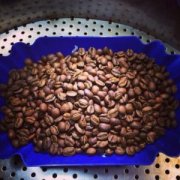
Fruity citrus-flavored coffee variety growing market environment in Yega Ficher Manor, Ethiopia
At first, Yejassefi's coffee trees were planted by European monks, and later by farmers or cooperatives. Yega Xuefei is actually constructed by the surrounding coffee communities or cooperatives, including: Hafusha, Hama, Biloya. These mountain villages are foggy, like spring all the year round, with a gentle breeze in summer, cool but not hot, rain but not damp, and no cold damage in winter.

A brief introduction to the History and Culture of the Origin and Development of Coffee in Coffee Cochel Manor of Ethiopia
These forest ecosystems also have a variety of medicinal plants, wildlife and endangered species-coffee grows in areas ranging from 1400 to 1800 meters above sea level. This kind of coffee is natural or sun-cured; it is weakly moderately acidic, the fruit is full, and the average quality is good; the smell is fragrant and mellow; one drop in the mouth, endless aftertaste. According to estimates, of the 127000 hectares of planting area,
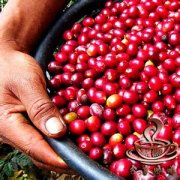
Coffee grindability and roasting degree of Yega Fischer Manor in Ethiopia with rich jasmine scent
There is a strict standard for collecting red fruits (as a result of coffee trees). Before exposure to coffee fruits, unripe green fruits or defective fruits are removed manually, and damaged or moldy fruits are removed during the sun drying process. after two weeks, the flesh sugar and essence seeped into the coffee beans, the water content was reduced to 12%, and then scraped off the hardened pulp, pectin layer and pods with a planer to remove the coffee.

A brief introduction to the description characteristics of Fine Coffee Flavor and Flavor Flavor Flavor
These mountain villages are foggy, like spring all year round, with a gentle breeze in summer, cool but not hot, rain but not damp, and no cold damage in winter, giving birth to a unique regional flavor of citrus and flowers. Yega Xuefei can be divided into two categories according to the different ways of handling raw coffee beans: category An is water washing treatment, the grade standard is set by the American Fine Coffee Association SCAA, divided into Gr-1 and Gr-2, the smaller the Arabic numerals.

Unique taste of Puerto Rico Coffee Manor San Pedro Manor boutique Coffee Bean planting Market
This is why Puerto Rico and Puerto Rico Yukot select Yauco Selecto, which is the manor bean, the joint brand of Puerto Rico San Pedro, Caracolillo and La Juanita. Island Coffee-in fact, any kind of coffee in Puerto Rico will be given a unique flavor because of its origin, just as different musical styles will always give

Puerto Rican Coffee San Pedro Manor A brief introduction to the Grinding degree and baking degree treatment of Fine Coffee beans
Higher altitude geographical characteristics, slower maturity, more than 100in annual rainfall, special clay to provide adequate nutrients, the pursuit of perfect taste of old tree species, oceanic monsoon micronutrients, all aspects of careful handling and monitoring, American standard working environment and many other reasons make Yauco Selecto worth more. Yauco Selecto so far is

A brief introduction to the planting situation of San Pedro Manor of Puerto Rico Coffee Manor
This is why Puerto Rico and Puerto Rico Yukot select Yauco Selecto, which is the manor bean, the joint brand of Puerto Rico San Pedro, Caracolillo and La Juanita. Island Coffee-in fact, any kind of coffee in Puerto Rico will be given a unique flavor because of its origin, just as different musical styles will always give

Puerto Rican Coffee Manor San Pedro Manor Origin and Development History
The ideal geographical location, soil conditions and unique microclimate provide favorable conditions for the growth of coffee. The gorgeous fragrance and round granules of Dora do coffee in Puerto Rico are the best proof of the world-class coffee. The production of 100% pure Puerto Rican coffee follows the most advanced and stringent quality control, in order to produce the freshest and most quality coffee beans.

Puerto Rico Coffee Bean Manor San Pedro Manor Fine Coffee Flavor, taste and aroma description characteristics Jane
Some old varieties of Arabica coffee beans are grown here, although the yield is lower than other varieties, but generally of high quality. People here have been using an ecological and intensive planting method, using only some low-toxic fertilizers and chemicals, and taking mixed crop planting measures to make the soil more fertile. When it's time to pick coffee beans, people wear them back and forth between coffee trees.

Hassanda Coffee Garden, Ecuador Coffee Fine Coffee Bean producing area planting varieties, climate, altitude environment is simple
Bananas, cocoa, coffee, cotton and other products from all over the country are collected and distributed here. Guayaquil has also played an important role in the history of friendly exchanges between the peoples of China and Ecuador. As early as the 18th century, Chinese clothing, textiles and other goods were shipped to Ecuadorian cities through Guayaquil. In August 1978, the Chinese cargo ship Jialing Jiang arrived here for the first time. The two countries

The results of cup test on grinding degree and roasting degree of fine coffee beans from Ecuador's Hasenda coffee garden
ES coffee is a clean organic coffee grown on the slopes of the Latin American Andes. It is 100% pure coffee, and the quality of our coffee has been safeguarded and enhanced through efforts to improve the economic and working conditions of the plantations, while maintaining the small-scale coffee plantations and the diversity of the organisms in the gardens. In addition, it is one of the most important economic sources of coffee origin.

Ecuador coffee plantation Hassenda coffee plantation cultivation processing market environment brief introduction
Bravo Mantenin is roasted from 100% Sumatra coffee beans and is suitable for brewing in siphon pots and French press pots. Ecuador is the world's highest arabica coffee plantation. Since the coffee tree was first introduced to Ecuador in 1875, the quality of its coffee has remained unchanged for 100 years, especially the coffee harvested in early June every year, which is known as the best coffee in the world. Ecuador

Fragrant Hassanda Coffee Garden in Ecuador Origin and Development of Fine Coffee History and Culture
In the mid-15th century, there were legends about enchanted mysterious islands among fishermen fishing in the western Pacific Ocean of South America. It is said that the islands can sometimes be seen clearly from a distance, but when the ship approaches, it disappears again; sometimes it looks like a galleon, sometimes it shows the shape of a witch. The fishermen called these islands Magic Island and thought it was there.