
Coffee Bean
Latest articles, industry insights and brewing guides

Know several kinds of coffee and coffee beans
1 Coffee trees are evergreen shrubs or trees belonging to the Rubiaceae; wild coffee trees can grow to a height of 5 to 10 meters, but coffee trees planted in the manor are often cut to a height of less than 2 meters in order to increase fruit and facilitate harvesting. The opposite leaf of the coffee tree is long oval, the leaf surface is smooth, the end branch is very long, the branch is few, and the flower is white, opening on the petiole.
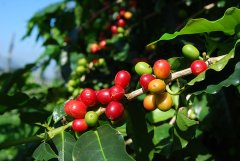
Three original species of Coffee Tree
Everyone should have heard of Elaraby as a kind of coffee. The best quality beans of the famous Colombian coffee are all Elaraby varieties. When it comes to the variety of coffee, we must first understand the type of coffee tree. At present, the most important coffee beans in the world are mainly from Arabica, Robata and Liberia. these three varieties of coffee beans are the three original species of coffee trees.
The fragrance of coffee beans is smooth and attractive.
In ancient times, Arabs first dried and boiled coffee beans and drank the juice as stomach medicine, thinking it was helpful to digestion. Later, it was found that coffee had a refreshing effect, and because Muslims forbade drinking, coffee was used instead of alcoholic beverages as a refreshing drink. Although coffee was found in the Middle East, coffee trees originated in Africa.

The flavor of coffee from the place of origin
After coffee beans spread to all parts of the world, due to the different climate, soil quality, planting methods and processing methods, the taste of coffee beans can be said to be completely different. Here is a list of the basic flavor characteristics of Arabica coffee beans from different producing areas (it should be noted that the flavor of coffee produced by different producing areas and different farms in the same place will be different. Some coffee products are generally believed to be
The main coffee beans in Taiwan market
Varieties of coffee beans: Alabella species, Libiga species, Romsda species, species of coffee beans: blue Mountain, Mocha, Brazil, Santos, Colombia, Mantra, Guatemala, Romsda Coffee, a small shrub growing in the tropical highlands, its fruit is red.
Florence coffee beans
Flores Flores is one of the most beautiful islands in the Indonesian island chain, with steep valleys, swift rivers, dense forests and fertile soil. On this secluded island, a small amount of high-quality Arabica coffee beans are produced. Full round beans, caramel sweetness, thick and warm taste
Introduction of Santos Coffee beans in Brazil
Brazil Santos Brazil Santos is the largest coffee producer in the world, with moderate taste and texture. It is suitable to be used as the base of comprehensive coffee, and it also has flavor to drink alone. Medium roasted with drupe aroma, creamy aroma scattered when grinding beans, medium consistency, not strong but long aftertaste, rich in oil and low acidity, it is the first introduction to single coffee.
Mamba coffee beans
Mamba Mambo Mantenin and Brazilian mixed coffee are mixed at 50%, 50%, rich taste and rich oil, smooth and consistency, deep texture and obvious bitterness are followed by elegant Huigan, black coffee drinking method can experience this mellow and charming flavor. It is the most popular mixed coffee in Taiwan! Alcohol thickness: ☆☆☆☆ acidity: ☆☆☆ equilibrium
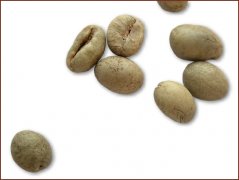
Picture of Java medium Coffee beans (Java Robusta)
1. Pictures of coffee beans in Java (Java Robusta) 2. Picture of Java medium Coffee beans (Java Robusta)
Varieties of coffee beans all over the world
When you drink coffee, do you notice what kind of coffee beans are ground? There are many varieties of coffee beans with different tastes. At present, most of the coffee beans on the market are distinguished by their origin. Some of the major producing countries and their famous coffee are listed below, and there are professional coffee companies in many countries that roast and grind their own coffee beans and pack them into brand coffee.
Characteristics of small seed Coffee in Yunnan
[scientific name] the small seed is Coffea arabica L., the medium seed is Coffea canephora, and the large seed is Coffea liberica family: Rubiaceae Coffee is also called Arabian species, medium grain species is also called Gaffra species, and large grain species are also called Liberian species, there are two common species: Arabica and Robusta. Coffee is rich in protein and fat.
Blue Mountain Coffee
Blue Mountain Coffee has always had a special position in the hearts of Chinese people. It always has a halo in many people's hearts. For me, it was the same at the beginning. However, as I came into contact with more and more coffee, I understood more and more. Blue Mountain Coffee also appeared to be a lot dimmer among many coffees. I drank a lot and baked a lot. I also knew a lot about Blue Mountain.
Kenya AA Coffee Bean
Flavor Taste Characteristics: Rich aroma, balanced acidity. Coffee is a part of African life, whether in the most remote parts of the Great Rift Valley, or in the Maasai nomadic Masai Mara steppe, whether urban or rural, can always smell the aroma of coffee, and look for incense to go, stay, taste, with a cup of coffee to carve those endless African time. Kenya is located in Ethiopia.
Ecuadorian coffee
Coffee origin: the Ecuadorian Arabian Coffee Tree was first introduced to Ecuador (Ecuador) in 1952 and its coffee quality is very good, especially the coffee harvested in early June. Ecuadorian coffee beans can be divided into two varieties: Galapagos and Gigante, both of which have the characteristics of large granules and heavy weight. Ecuadorian coffee can be divided into first class (No.1) and special coffee according to quality.
Organic coffee powder
Organic coffee powder catalogue concept organic coffee powder benefit production method attention concept organic coffee powder is the powder of organic coffee beans, that is, coffee beans do not use chemically synthesized pesticides, fertilizers, hormones, antibiotics, food additives, etc. at the same time, they are not the products of genetic engineering technology and this technology, the more famous is Peru.
Coffee Soy Milk
Coffee soy milk weight loss (a) raw material selection ① Ingredients: 400 ml of white soy milk, 18 grams of milk powder, 12 grams of coffee powder, 12 grams of white sugar. Ingredients: a small amount of hot water. Preparation method ① Dissolve milk powder and coffee in hot water to prepare milk powder liquid and coffee liquid for use.② Boil the white soybean milk in the pot, mix it with coffee solution and milk powder solution, add white sugar and cook for 15 minutes. production
Direct trade coffee
What is direct trade coffee? Direct trade coffee is a coffee roaster that buys coffee directly from growers, interweaves traditional middlemen, buyers and sellers, and also organizes the use of a term such as fair trade and bird-friendly control certification. Supporters of direct trade, for example, say their models are the best because they establish mutual benefit with individual producers or cooperatives in coffee-producing countries.
What is bird-friendly coffee?
What is bird-friendly coffee? Bird Friendship is a third party established by the Smithsonian Migratory Bird Center (Sumitomo Mitsui), which is part of the Washington-based National Zoo to certify that D.C. Bird Favorable Standards are stringent environmental standards. Certified coffee is sealed. What are environmental standards? SBMC requires producers to meet requirements for organic certification first, then
Arabica Coffee Coffee Arabica
Many people have seen roasted coffee beans, but unless you have lived or traveled to coffee producing areas, you may not know coffee trees. The saplings are short-trimmed, but when they mature, they are 30 feet tall and covered with waxy leaves that grow symmetrically in dark green. The coffee fruit grows along the branches. After the white flowers are in full bloom and pollinated, the fruit takes a year to ripen. Fruiting is a continuous cycle, so flowers