
Coffee Bean
Latest articles, industry insights and brewing guides
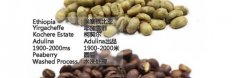
Cochelle plus Sheffield round coffee bean baking product
Yega Xuefei (transliteration of yirgacheffe) has always been unique in the boutique coffee industry with its soft translation name and refreshing and elegant taste, making many coffee experts bow down to their own pomegranate skirt.

Unusual Kona Coffee
Like other parts of the Hawaiian islands, Kona provides ideal climatic conditions for the cultivation of coffee beans. However, the coffee beans produced by Kona are different and have gained a good reputation for coffee all over the world. This is probably due to the fact that Kona Island is rich in volcanic black mud with moderate acidity, rich mineral content and suitable water content. And every afternoon, Cona Island
Coffee tree
Coffee trees are evergreen shrubs or trees belonging to the Rubiaceae family. Wild coffee trees can grow to a height of 5 to 10 meters, but coffee trees planted in the manor are often cut to a height of less than 2 meters in order to increase fruit and facilitate harvesting. The opposite leaf of the coffee tree is long oval, the leaf surface is smooth, the end branch is very long, the branch is few, and the flower is white, opening at the base of the petiole connecting the branch.
The knack of distinguishing the freshness of coffee beans
Nose smell: fresh coffee beans smell strong fragrance, otherwise tasteless or bad smell. Look at it: good coffee beans are complete in shape and full in size. On the contrary, the shape is incomplete. Hand pressure: fresh coffee beans are fresh and crisp, and the fragrance comes out when they crack. Color: dark black coffee beans, the coffee brewed has a bitter taste; yellow coffee beans, the coffee brewed has a sour taste.
Introduction to Ugandan Coffee-Kerry
The Republic of Uganda, located in eastern Africa, is a landlocked country across the equator. Uganda is bordered by Sudan to the north, Kenya to the east, Lake Victoria to the southwest, Tanzania and Rwanda to the south, and Congo to the west. The territory is located between the east and west branches of the East African Rift Valley, tilting gently from west to middle and low and flat in the south. Margarita Peak is 5109 meters above sea level, which is the highest in the country.
Yunnan small grain coffee
Origin: in 1892, French missionary Father Tian succeeded in growing coffee in a place called Zhukula in Yunnan. Up to now, there are still 24 coffee trees which are more than 90 years old in Zhukula Township. Zhu Kula is a mysterious, legendary and beautiful natural village, which belongs to the Zhukula Village Committee of Pingchuan Town, Binchuan County, Dali Prefecture. It is located on the banks of Yupao River, a tributary of the Jinsha River. It is a Dali Prefecture and Chuxiong.
Tell whether coffee beans are good or bad
Good coffee beans: neat shape, bright color, roasted by single stir-fry. After brewing and cooking, it is mellow and full of stamina. Bad coffee beans: different shapes and incomplete individuals. After cooking, it is light and fragrant, not sweet enough. The secret to the freshness of ◆ coffee beans: fresh coffee beans have a strong smell, otherwise tasteless or bad smell. Look at it: a good coffee bean has a complete shape.
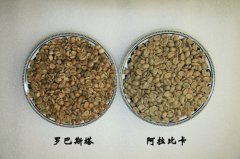
Comparison between Arabica and Robbins Tadou
The appearance of Arabica coffee beans is quite obvious compared with that of Robusta coffee beans. Arabica coffee is long, flat, complete and greenish; robusta coffee is round, thicker and whiter. However, it may be because the degree of baking is also different, so this difference alone is not objective.
Simple grading system of Colombian coffee beans
Colombia's coffee bean grading system is quite simple, judging its grade only by the size of the beans. Therefore, if you choose to buy Colombian coffee, just marking Supremo does not mean that its taste is also the best. Generally speaking, Colombian coffee produced in boutique bean producing areas will be marked with detailed information such as origin and manor. If it is not marked, it is generally.
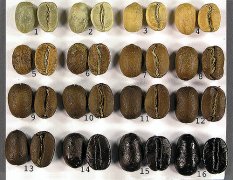
Roasting degree of raw coffee beans
The baking depth listed below deepens the raw beans (Green Coffee). The beans that have not been baked are green in appearance, and the color will change with the degree of baking. Light baking (Light Roast) is the most mild baking method, the appearance is wheat color, after extraction, there is no fragrance, bitter taste, not suitable for drinking cinnamon baking (Cinnamon Roast) mild baking method, the appearance is cinnamon color, more Light Ro
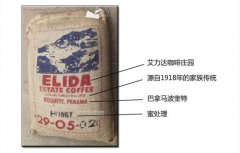
Roasting of Panamanian Pokuit boutique coffee beans
Panama, a country that people know too well, has always had an inextricable bond with high-quality coffee. It tastes fresh, elegant and floral. Sweet honey has always been a recognizable symbol of Panamanian high-quality coffee, making it unforgettable for those who drink it.

Yega Xuefei baking record
Yega snow coffee: turn the cage on the oven, preheat it at 170 degrees for 2 minutes, serve the coffee beans. Bake at 170 degrees for 2 minutes to 250 degrees. After about 11 minutes, hear the first explosion for more than ten seconds and quickly take it out and rotate to the cooling plate to cool down. Coffee beans are slightly deeper than the standard medium roasting, and the actual roasting degree must be below medium. A lot of silver skins are still glued to the coffee beans, indicating that they are not roasted enough.
![[90 + boutique coffee] Hatchilla HachiraN2](https://world.gafei.com/uploads/allimg/140701/1G6291I8-0-lp.jpg)
[90 + boutique coffee] Hatchilla HachiraN2
HachiraN2 [Origin]: 90 + Ethiopia Achira (Achilla) producing area. [season]: 2013-2014 [variety]: Ethiopian native species [Level]: 12 [altitude]: 17502000m [treatment]: sun [flavor]: full of floral smell, obvious sense of fruit juice, with the wind of elderberry, BlackBerry and basil herbs.
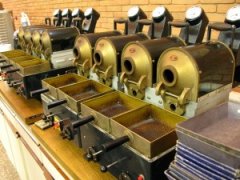
Experience in roasting raw beans of Panamanian coffee
The Panamanian beans at Brista Coffee West Point training School are very different from Essel beans. The particles are large and thick. It is not easy to be heated evenly, and experienced bakers will find that these beans are so nutritious that they are like superhuman beans raised by milk. If it heats up too fast, it will burn the beans. Resulting in half-cooked. If it's slow, it will make it smell like dry bread. Although Brista Coffee West
![[90 + boutique coffee] lychee and cello LycelloW2](https://world.gafei.com/uploads/allimg/140701/1G25023R-0-lp.jpg)
[90 + boutique coffee] lychee and cello LycelloW2
Lychee and cello (LycelloW2) [Origin]: 90 + Panamanian Rosa Manor [season]: 2013 to 2014 [Variety]: Rosa [Level]: 21 [altitude]: 1250m-1650m/ [treatment]: washing [Flavor]: on the basis of the flavor of the rose seed itself, it shows rich aromas of green tea, musk and basil herbs.
![[90 + Fine Coffee] looking forward to PerciN2](https://world.gafei.com/uploads/allimg/140701/1G1562231-0-lp.jpg)
[90 + Fine Coffee] looking forward to PerciN2
Prospect (PerciN2) [Origin]: 90 + Panamanian Rose Summer Manor, [season]: 2013-2014 [Variety]: Rosa [Level]: 39 [altitude]: 1250m-1650m [treatment]: sun [flavor]: intense aromas of cherry, carob, vanilla, tropical fruit and mixed juice. [packing specifications]: 30KG/ sacks (raw beans), 5kg/ cartons (raw)
![Ethiopian peach coffee [Nekisse N2 L12 Ethiopia]](https://world.gafei.com/uploads/allimg/140701/1G0553300-0-lp.jpg)
Ethiopian peach coffee [Nekisse N2 L12 Ethiopia]
Nekisse N2 L12 Ethiopia named the coffee after Nectar from Shakisso in 2009, meaning it has the same flavor as nectar from the town of Shachiso in Hidamo province, Ethiopia. Nekisse is characterized by a creamy and smooth taste, a strong berry sauce, and some batches even have mixed flavors of citrus and a variety of tropical fruits. Although at first,
The secret of coffee beans
How can we drink good coffee? why do we usually drink coffee so bitter that it doesn't taste like what the experts and teachers say? the main reason is that we don't know the correct way to drink and use the coffee.
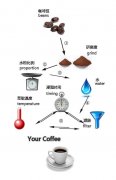
Skills of making coffee by hand
Among the many brewing methods, hand brewing can be said to be the most popular coffee brewing method, which is simple, easy to learn, easy to control, and the taste can be accepted by most people. But there are also many friends who are not sure how to find the taste that suits them when making, what factors affect a cup of hand coffee and how influential it is.
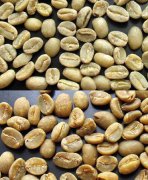
Grading of raw coffee beans
There are two ways to classify raw coffee beans, one is the filter number, and the other is the elevation. It is divided by the filter number, and the size is size in terms of the screen size. Round beans are generally smaller than flat beans, between 8-13 and 12-29. 8, 9, 10. 12, 13. 18. 29 = small, medium, ordinary. Quasi-big. Big, extra large. The bigger the size, the bigger the beans. Like SC-.