
"20cm"
600 article(s) found

The breeding ground of coffee how does coffee breed and where it is produced?
① nursery land selection: it is appropriate to choose close to the water source, good drainage, fertile, deep soil layer, loose loam or sandy loam as nursery land. ② soil preparation and application of basic fertilizer: the soil in the nursery should be fully ploughed and raked into fine pieces, ploughed 20 to 25 centimeters deep, stone, grass roots, sundries should be removed quickly, and then the border should be raised. The width of the border is 1 meter, the width of the path between the borders is 50 centimeters, and the east-west direction of the border on flat land is 5, 000 and 10, 000 jin.

Details of the 2017 CTI Coffee draw Competition-- Competition equipment and Raw Materials
"the 2017 CTI Coffee draw Competition has officially started! "Hangzhou | Xiamen | Chengdu | Shenzhen | Shanghai 5 major cities have opened registration friends, let's go! The champion and runner-up of each stop will go straight to the Shanghai Finals for the ultimate competition! Hangzhou Station (June 21-22) has been filled with Xiamen Station (July 19-20) to apply for Chengdu Station (August 16-17).
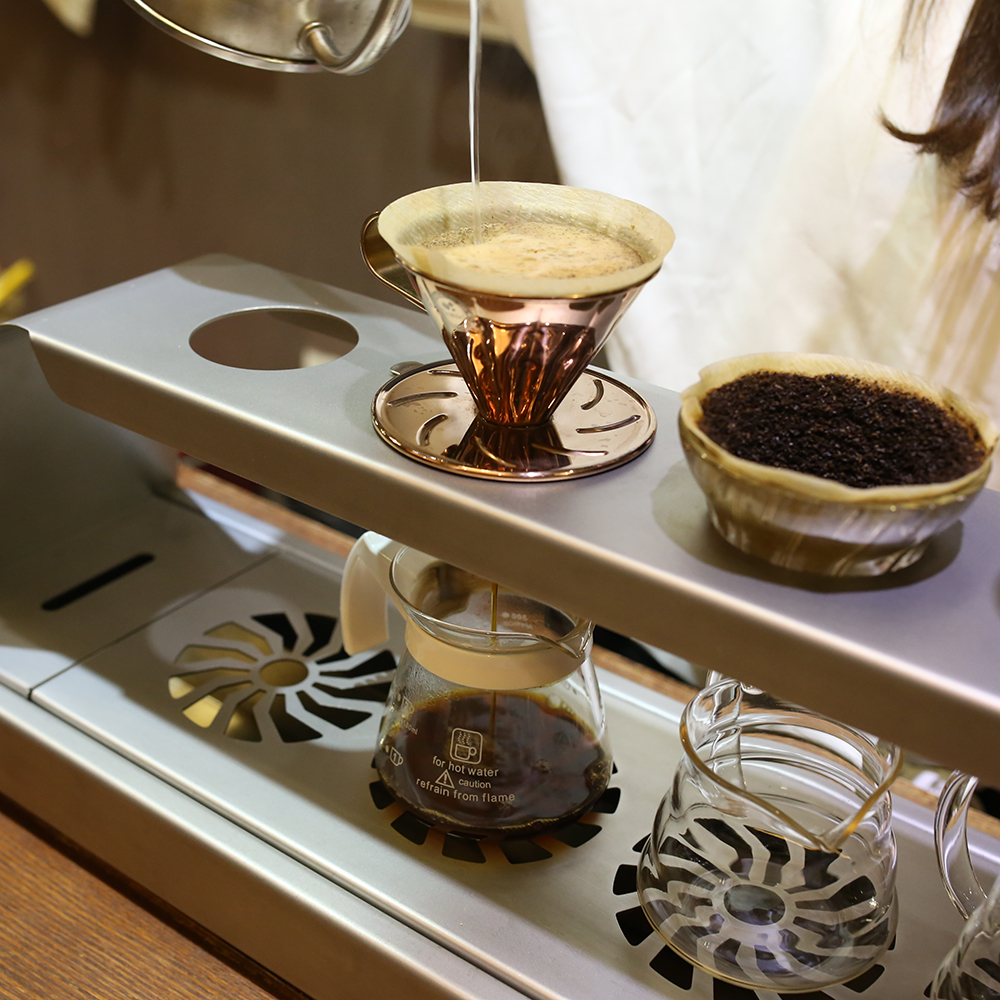
4-hole coffee hand frame Philharmonic pressure rack coffee bar special 2mm stainless steel sandblasting novice must have
Single hole aperture: 79 mm, can perfectly control the Philharmonic pressure, Harrio V60, TIAMO and other brands of filter cups, strong compatibility. The position of the four-hole distribution has also been precisely calculated, so that there will be no hindrance to the operation. Specification L*H*W (cm): 72.3X 22.9X 20.2 2mm stainless steel, integral sandblasting treatment. Because on the premise of self-use, there is no design and production at all.

Sour and sweet El Salvador Pacamara boutique coffee beans grind and roast degree treatment
Pacamara is another example of making a name for itself through COE events. In the 90s of the 20th century, some farmers in the Chalatenango producing area of South Song in Charat, El Salvador began to grow Pracamara. In 2006, a farm in this producing area took part in the competition with Pacamara and got the second place. In 2007, a number of farms in the same production area participated in the competition with Pacamara, and won the first, third and fourth Pac.

Sour, lively and tricky El Salvador Pacamara boutique coffee beans grind degree of roasting degree treatment
Pacamara is another example of making a name for itself through COE events. In the 90s of the 20th century, some farmers in the Chalatenango producing area of South Song in Charat, El Salvador began to grow Pracamara. In 2006, a farm in this producing area took part in the competition with Pacamara and got the second place. In 2007, a number of farms in the same production area participated in the competition with Pacamara, and won the first, third and fourth Pac.

Liberica coffee beans
Liberica coffee beans: large shrubs or small trees, 6-15 m tall; dark brown bark; branches spreading, hard and straight. Leaves opposite, leathery, elliptic or Obovate-elliptic, 15-30 cm long, tip mucronate, base broadly cuneate, margin entire, rarely microwave, often with small pores in lower vein axils; petiole 8-20 mm long; stipules broadly triangular, 3-4 mm long, tip obtuse, rarely convex
Liberica coffee beans produced in Hainan
Liberica coffee beans: large shrubs or small trees, 6-15 m tall; dark brown bark; branches spreading, hard and straight. Leaves opposite, leathery, elliptic or Obovate-elliptic, 15-30 cm long, tip mucronate, base broadly cuneate, margin entire, rarely microwave, often with small pores in lower vein axils; petiole 8-20 mm long; stipules broadly triangular, 3-4 mm long, tip obtuse, rarely convex
China's boutique coffee beans Hainan produces libirika coffee beans
Liberica coffee beans: large shrubs or small trees, 6-15 m tall; dark brown bark; branches spreading, hard and straight. Leaves opposite, leathery, elliptic or Obovate-elliptic, 15-30 cm long, tip mucronate, base broadly cuneate, margin entire, rarely microwave, often with small pores in lower vein axils; petiole 8-20 mm long; stipules broadly triangular, 3-4 mm long, tip obtuse, rarely convex
China Hainan Coffee Beans Librika Coffee Beans
Coffee beans: large shrubs or small trees, 6-15 m tall; bark dark brown; branches spreading, hard and straight. Leaves opposite, leathery, elliptic or obovate-elliptic, 15-30 cm long, apex mucronate, base broadly cuneate, margin entire, rarely wavy, often with pits in lower vein axils; petiole 8-20 mm long; stipules broadly triangular, 3-4 mm long, apex obtuse, rarely convex
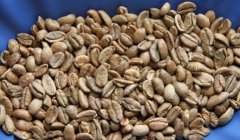
Chinese coffee Hainan Liberica coffee beans
Liberica coffee beans: large shrubs or small trees, 6-15 m tall; dark brown bark; branches spreading, hard and straight. Leaves opposite, leathery, elliptic or Obovate-elliptic, 15-30 cm long, tip mucronate, base broadly cuneate, margin entire, rarely microwave, often with small pores in lower vein axils; petiole 8-20 mm long; stipules broadly triangular, 3-4 mm long, tip obtuse, rarely convex

China Hainan boutique coffee beans Liberica coffee beans
Liberica coffee beans: large shrubs or small trees, 6-15 m tall; dark brown bark; branches spreading, hard and straight. Leaves opposite, leathery, elliptic or Obovate-elliptic, 15-30 cm long, tip mucronate, base broadly cuneate, margin entire, rarely microwave, often with small pores in lower vein axils; petiole 8-20 mm long; stipules broadly triangular, 3-4 mm long, tip obtuse, rarely convex

Introduction to Librika Coffee beans
Liberica coffee beans: large shrubs or small trees, 6-15 m tall; dark brown bark; branches spreading, hard and straight. Leaves opposite, leathery, elliptic or Obovate-elliptic, 15-30 cm long, tip mucronate, base broadly cuneate, margin entire, rarely microwave, often with small pores in lower vein axils; petiole 8-20 mm long; stipules broadly triangular, 3-4 mm long, tip obtuse, rarely convex

Produced in Hainan, China: Liberica coffee beans
Liberica coffee beans: large shrubs or small trees, 6-15 m tall; dark brown bark; branches spreading, hard and straight. Leaves opposite, leathery, elliptic or Obovate-elliptic, 15-30 cm long, tip mucronate, base broadly cuneate, margin entire, rarely microwave, often with small pores in lower vein axils; petiole 8-20 mm long; stipules broadly triangular, 3-4 mm long, tip obtuse, rarely convex
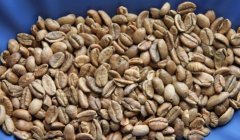
China is the coffee bean produced in Hainan. Liberica coffee beans.
Liberica coffee beans: large shrubs or small trees, 6-15 m tall; dark brown bark; branches spreading, hard and straight. Leaves opposite, leathery, elliptic or Obovate-elliptic, 15-30 cm long, tip mucronate, base broadly cuneate, margin entire, rarely microwave, often with small pores in lower vein axils; petiole 8-20 mm long; stipules broadly triangular, 3-4 mm long, tip obtuse, rarely convex
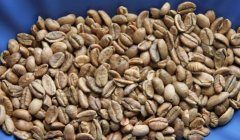
Liberica coffee beans made in Hainan, China
Liberica coffee beans: large shrubs or small trees, 6-15 m tall; dark brown bark; branches spreading, hard and straight. Leaves opposite, leathery, elliptic or Obovate-elliptic, 15-30 cm long, tip mucronate, base broadly cuneate, margin entire, rarely microwave, often with small pores in lower vein axils; petiole 8-20 mm long; stipules broadly triangular, 3-4 mm long, tip obtuse, rarely convex

Latte, cappuccino, mocha, where is the difference between these three kinds of coffee and Australian white flat white coffee
Professional coffee knowledge exchange More coffee bean information Please pay attention to coffee workshop (Weixin Official Accounts cafe_style) Latte, Cappuccino, Mocha difference than you know Latte, Cappuccino, Mocha these three kinds of coffee difference

Planting methods and Environmental requirements of Coffee Farm in India
Grade A coffee beans in India have always been a kind of coffee strongly concerned by coffee lovers all over the world because of their unique processing methods. From May to June every year, it is the monsoon period in India, and the rainy and dry seasons occur repeatedly. During this period, the coffee should be piled to a height of 12cm to 20cm, spread on one side of the tall building and stacked for about five or six days. Rake coffee beans from time to time so that the sun can shine.

Treatment of grinding degree and baking degree of El Salvador Pacamara boutique coffee beans with both fruity and rich aroma
Pacamara is another example of making a name for itself through COE events. In the 90s of the 20th century, some farmers in the Chalatenango producing area of South Song in Charat, El Salvador began to grow Pracamara. In 2006, a farm in this producing area took part in the competition with Pacamara and got the second place. In 2007, a number of farms in the same production area participated in the competition with Pacamara, and won the first, third and fourth Pac.

What is the difference between Starbucks coffee beans and KFC Arabica coffee beans?
Professional Coffee knowledge Exchange more information about coffee beans Please follow the coffee workshop (Wechat official account cafe_style) Arabica in the 16th century there was a shepherd in Ethiopia who one day found his sheep suddenly bouncing there, which was amazing. After careful observation, we realized that it was because the sheep had eaten a kind of red fruit. In the pasture

Planting techniques and soil Environment of Coffee trees
(1) weeding, covering the young coffee garden, weeds are easy to breed, especially in the rainy season, weeding should be done once a month. If the labor force is sufficient, clean the grass should be removed first. Adult coffee garden can be weeded once every 2 to 3 months. If you use herbicides, you should be careful not to spray on the branches and leaves of coffee, and it is more important and prudent to use them in young coffee gardens. Coffee has shallow roots and is vulnerable to adverse climates such as high temperature and drought.