
"seed"
15233 article(s) found

Planting and cultivation of Coffee
1. Seed propagation (1) seed collection, seed washing and seed storage during the full ripening period of coffee (the full ripening period of medium-grain coffee in Hainan Island is from February to March, and that of small seed is from September to November). The fully ripe fruits are picked from strong and high-yielding mother trees to make seeds. After the fruit is harvested, immediately peel and wash the seeds, the method is to put the fruit on the hard and rough ground, use a brick to grind the peel, or you can use a peeling machine

The reproduction mode of small-grain coffee
Seed selection Coffee mother tree fully mature, fruit shape is normal, full, the same size, with two seeds of fruit. To remove the peel of the selected fruit, you must be careful to prevent the seeds from being damaged and affect the germination rate, then put the peeled seeds in a ventilated and cool place to dry, the shells can be whitened and the seeds can not be exposed. Put the seeds into bamboo baskets or cloth bags.

Understand the growth process of a coffee from a coffee seed to a coffee tree!
Professional coffee knowledge exchange more coffee bean information please follow the coffee workshop (Wechat official account cafe_style) then today the editor will popularize science for you, the growth process of a coffee from coffee seed to coffee tree! It usually takes 4 to 5 years for coffee trees to grow from seed to germination to grow into a tree and then to blossom for the first time. From the moment the seed is sown to the soil

General knowledge of Frozen Storage of small Fruit Coffee seed
The French Development Institute has recently successfully invented a method of long-term frozen storage of small fruit coffee seeds, which provides a reliable means for establishing a small fruit coffee seed bank and protecting biodiversity. Coffee belongs to Rubiaceae evergreen shrubs or small trees, mainly produced in tropical areas, there are small fruit coffee, medium fruit coffee and large fruit coffee and so on. Small fruit coffee is native to the Arab region and is currently grown in the world.

The whole process of planting and growth of coffee beans
Common questions about coffee bean cultivation: first, what are coffee kernels? How did you get the coffee seeds? Coffee seed, commonly known as coffee shell dried bean, is a kind of coffee seed without removing mesocarp and silver skin. Coffee seed is divided into Arabica Arabica seed and Robusta Robasta seed. The picture shows the commercial coffee raw bean available for consumption, and it is also the two major commercial plants on a large scale.

How to identify the varieties of coffee beans? What is the basis for the differences between coffee varieties?
Every day, producers, traders, roasters and consumers are looking for different varieties of coffee. Each variety has its own unique cup profile, as well as many other personality traits. Farmers seek different varieties, not just quality, for many different reasons. They can also consider, for example, disease resistance or yield. In addition, different varieties will be suitable for different producers

Where does the sweetness of coffee come from? why is sun treatment sweeter than washing?
Sun-treated coffee is usually sweeter and more mellow than water-washed coffee and usually has a unique fruity flavor. Intuitively, the sweetness, taste and flavor of sun-treated coffee should come from prolonged contact with the sugary, sticky pulp of coffee fruit, but is there any evidence to prove it? If not, what will happen? Is natural coffee high in sugar? Coffee beans
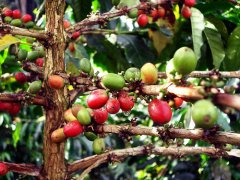
How to grow coffee berries and beans
Coffee fruit is a berry, also known as comb fruit. Oval, 9-14 mm long, young fruit green, red at maturity, purplish red. Each fruit generally has two seeds, but also one or three, showing a semi-oval, there is a longitudinal groove, called grooves. This is the past life of coffee beans, there are coffee branches, leaves, fruits, as well as dissected pulp, seeds, roasted coffee beans. What we see every day

What are the seed varieties of coffee? what are the varieties of Kadim-Starbucks coffee?
What are the seed varieties of coffee? what are the main varieties of Kadim-Starbucks coffee? Esselsa (also known as Charley), which was introduced from Guangxi and planted in Hainan in the 1970s. The fruit is vigorous, but the seed coat is thick and hard like a small seed, the ratio of fresh to dry is 5: 8, and the quality is strong and slightly bitter. Deep roots, strong drought and cold tolerance, resistance to leaf rust and longicorn beetles

The whole process of planting and growth of coffee beans
First, what is coffee seed? How did you get the coffee seeds? Coffee seeds, commonly known as dried beans with shells, are coffee seeds that have not yet removed their mesocarp and silver skin. Coffee seeds are divided into Arabica Arabica species and Robusta Robasta species. The picture shows commercial coffee raw beans available for consumption, and they are also two major coffee varieties grown commercially on a large scale. What is coffee silver

How to choose coffee? How to choose coffee seeds?
The germination rate of seeds should be tested. Specific methods: 1. The full seed is divided into several parts and numbered in turn; 2. In each part, take 125-250 grams and put them into the corresponding numbered utensils. After soaking in about 50 ℃ warm water for one day and night, pour out the water and rinse again with clean water. 4. Then cover it with a wet cloth to keep the humidity, and it can sprout after three days. The percentage of buds selected is 8.
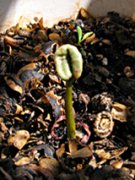
60 days after sowing, coffee seed beans
After 60 days of sowing, the germination period of coffee seed beans after initial radicle germination should be based on the principle of keeping the seedling pot moist. Ideally, in the temperature range of 19-26 ° C and moisture conditions, seeds need 55-60 days from sowing to emergence, with the highest emergence rate at 80 days. Kunming is in the temperature range of 6-25℃ during this period, so the seedling pot is intentionally placed on the sunny windowsill in the house and covered with plastic at night.

Description of taste and flavor of Yunnan small-grain coffee
How to brew small grains of coffee in Yunnan to describe the taste and flavor of manors in producing areas 1. Sexual reproduction is a breeding method to obtain a large number of seedlings at one time, first of all, seed selection and seed treatment. Improved varieties are the basis for cultivating strong seedlings and increasing per unit yield. good varieties must be carefully selected, on the mother tree of coffee, the selection is completely mature, the fruit shape is normal, full and full, the size is the same, with two seeds.

Yunnan Coffee Bean Flavor description method Variety characteristics Grinding scale Origin introduction
Choose the coffee mother tree which is fully ripe, normal in shape, full in shape, the same size and with two seeds. To remove the peel of the selected fruit, you must be careful to prevent the seeds from being damaged and affect the germination rate, then put the peeled seeds in a ventilated and cool place to dry, the shells can be whitened and the seeds can not be exposed to the sun. Put the seeds into bamboo baskets or cloth bags every month.
Technical specification for cultivation of small seed coffee
1 scope this part stipulates the technical methods of small seed coffee garden selection, planning, reclamation, seeds, seedlings, planting, soil management and coffee tree management. This part is suitable for the cultivation of small seed coffee. 2 normative citation documents the provisions of the following documents become the provisions of this part through the citation of this section. For all dated reference documents, all subsequent revisions
Characteristics of Chinese coffee beans and Yunnan small seed coffee
[scientific name] the small seed is Coffea arabica L., the medium seed is Coffea canephora, and the large seed is Coffea liberica family: Rubiaceae Coffee is also called Arabian species, medium grain species is also called Gaffra species, and large grain species are also called Liberian species, there are two common species: Arabica and Robusta. Coffee is rich in protein and fat.
Chinese Coffee knowledge characteristics of small seed Coffee in Yunnan
[scientific name] the small seed is Coffea arabica L., the medium seed is Coffea canephora, and the large seed is Coffea liberica family: Rubiaceae Coffee is also called Arabian species, medium grain species is also called Gaffra species, and large grain species are also called Liberian species, there are two common species: Arabica and Robusta. Coffee is rich in protein and fat.

The characteristic of Yunnan small seed coffee is Coffea arabica L.
[scientific name] the small seed is Coffea arabica L., the medium seed is Coffea canephora, and the large seed is Coffea liberica family: Rubiaceae Coffee is also called Arabian species, medium grain species is also called Gaffra species, and large grain species are also called Liberian species, there are two common species: Arabica and Robusta. Coffee is rich in protein and fat.
Talking about Coffee beans
1. Summary: coffee is a perennial evergreen shrub or small tree of Rubiaceae. It is native to tropical Africa and has been cultivated for more than 2000 years. The Arabs began to grow coffee in 525 BC, and it was popular for Arabs to stir-fry coffee beans. They began to grow coffee beans on a large scale after the 15th century, and were widely distributed in the tropics and subtropics of Europe, Asia, Africa and Latin America after the 18th century.
Technical specification for cultivation of fine coffee with small seeds
1 scope this part stipulates the technical methods of small seed coffee garden selection, planning, reclamation, seeds, seedlings, planting, soil management and coffee tree management. This part is suitable for the cultivation of small seed coffee. 2 normative citation documents the provisions of the following documents become the provisions of this part through the citation of this section. For all dated reference documents, all subsequent revisions