
"sucrose"
2023 article(s) found

Introduction to the characteristics of Coffee Coffee Flavor and Flavor produced in Yunnan Province
Yunnan small-grain coffee is a kind of beverage crop with high economic value. Coffee is rich in protein, fat, sucrose, starch, caffeine and other substances. After being made into a beverage, it has rich aroma, delicious taste and rich nutrition. Therefore, it has become the world's three major beverages composed of tea and cocoa, and ranks first on the list. Because coffee is rich in sucrose and starch,

Why does coffee smell so good? Caramelization and Mena reaction during coffee roasting
A few days before Napoleon died on St. Helena Island in 1821, his attendant Marshal Bertrand wrote about Napoleon begging: "he asked for twenty times in the morning and asked me if I could give him some more coffee." "No, my lord, the doctor ordered you to drink only one spoonful of coffee. It's not time yet. You have a bad stomach. Drinking early will only make you vomit early. "he threw up nine times this morning.
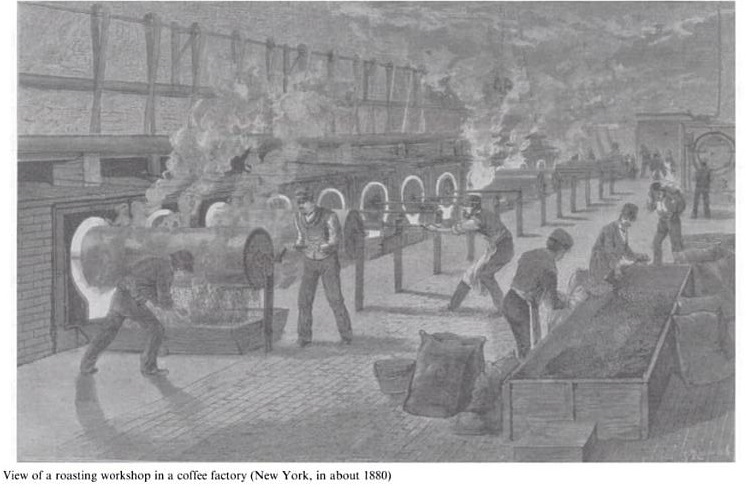
Caramelization of coffee during roasting and Mena reaction roasting coffee bean roaster
A few days before Napoleon died on St. Helena Island in 1821, his attendant Marshal Bertrand wrote about Napoleon begging: "he asked for twenty times in the morning and asked me if I could give him some more coffee." "No, my lord, the doctor ordered you to drink only one spoonful of coffee. It's not time yet. You have a bad stomach. Drinking early will only make you vomit early. "he threw up nine times this morning.
Where does the aroma of coffee come from? Why is it so attractive?
A few days before Napoleon died on St. Helena Island in 1821, his attendant Marshal Bertrand wrote about Napoleon begging: "he asked for twenty times in the morning and asked me if I could give him some more coffee. "No, sir, the doctor ordered only one spoonful. A few days before Napoleon died on St. Helena Island in 1821, his attendant Marshal Bertrand

The difference between Arabica beans and Robusta beans Why are Arabica beans superior?
Professional coffee knowledge exchange more coffee bean information please follow the coffee workshop (Wechat official account cafe_style) currently there are three kinds of coffee beans in the world: 1. Arabica (Arabica): accounts for about 90% of the world coffee market, the aroma is changeable, it is not easy to grow, and its uses are more in circulation in the boutique bean market. Robsta (Robusta): accounts for about 10% of the trade volume, strong plant life, lack of

Tasting experience | Why does coffee taste so sweet? Where does coffee sweetness come from?
When I go to a coffee shop for coffee, I always hear the barista say that it has the sweetness of sugar and caramel, but it is not good to find it in one bite. So the question is, where does the sweetness of coffee come from? Why can others drink it but not themselves? | what is sweet? In fact, coffee is not bitter, you know, a raw coffee bean contains 5.

Why does coffee smell so good? How many aromas of coffee? How did it come about?
Professional coffee knowledge exchange more coffee bean information please follow the coffee workshop (Wechat official account cafe_style) what is the meaning of the wet and dry aroma of coffee seven factors affecting the flavor and aroma of raw coffee in 1821, a few days before Napoleon died on St. Helena Island, his attendant Marshal Bertrand wrote about Napoleon begging: he had asked for twenty times in the morning.

Analysis of Coffee Bean Composition
Coffee Bean Composition Analysis Green Bean (Unit: Percentage) Moisture: 11.3 Fat: 11.7 Protein: 11.8 Sugar: 8.0 Essence: 17.1 Caffeine: 1.3 Tannin: 6.0 Minerals: 4.2 Crude Fiber: 28.6 Cooked Bean Moisture: 2.5 Fat: 13.2 Protein: 12.8 Sugar: 1.8 Essence: 29.6 Caffeine: 1.3 Tannin: 4.0 Minerals

What chemical reaction does the aroma of coffee beans come from during roasting? Coffee beans at different roasting stages
Professional coffee knowledge exchange more coffee bean information Please follow the coffee workshop (Wechat official account cafe_style) what chemical reaction does the aroma of coffee beans come from during roasting? What is the taste of coffee beans at different roasting stages? The charming aroma of coffee is also the main reason why Napoleon, me and many coffee fans miss coffee all the time. But why on earth is coffee so bad?

Baking basic science, browning reaction non-enzymatic browning
Following Cafe Review (official Wechat account vdailycom) found that non-enzymatic browning of Beautiful Cafe opening a small shop of its own is different from enzymatic browning. Non-enzymatic browning reactions do not require enzymes, but their reactions require heat, sugars and amino acids. There are two non-enzymatic browning reactions related to coffee roasting: caramelization (caramelization recation) and Maillard reaction.

Introduction to the kinds of Coffee Sugar
White granulated sugar, also known as sucrose, is a granular crystal and is the basic raw material for sugar production. According to the size of the crystal, there are three kinds of sugar: coarse sand, medium sand and fine sand, all of which are made from sugar cane or sugar beet. It is characterized by high purity, low moisture and few impurities. The content of domestic granulated sugar is more than 99.45% and the moisture content is less than 0.12%. According to the standard, it is divided into three types: excellent grade, first grade and second grade.
Coffee roasting | what are the similarities and differences between caramelization and Maillard reaction
Professional coffee knowledge exchange more coffee bean information Please pay attention to the coffee workshop (Wechat official account cafe_style) during the roasting process, about 90% of the sucrose will be degraded during the baking process to form a variety of products, including: formic acid (formic acids), acetic acid (acetic acids). Some experiments show that the content of acetic acid can increase by about 20 times in the early stage of baking, and acetic acid will increase in the later stage of baking.

What kind of sugar in coffee? introduction to the kinds of sugar used in coffee.
White granulated sugar, also known as sucrose, is a granular crystal and is the basic raw material for sugar production. According to the size of the crystal, there are three kinds of sugar: coarse sand, medium sand and fine sand, all of which are made from sugar cane or sugar beet. It is characterized by high purity, low moisture and few impurities. The content of domestic granulated sugar is more than 99.45% and the moisture content is less than 0.12%. According to the standard, it is divided into three types: excellent grade, first grade and second grade.

The types of sugar used in coffee introduce the basic raw materials of sugar production
White granulated sugar, also known as sucrose, is a granular crystal and is the basic raw material for sugar production. According to the size of the crystal, there are three kinds of sugar: coarse sand, medium sand and fine sand, all of which are made from sugar cane or sugar beet. It is characterized by high purity, low moisture and few impurities. The content of domestic granulated sugar is more than 99.45% and the moisture content is less than 0.12%. According to the standard, it is divided into three types: excellent grade, first grade and second grade.

Introduction to the flavor cooking methods of Yunnan small seed coffee beans
Professional barista communication please pay attention to the coffee workshop (Wechat official account cafe_style) [scientific name] small seed Coffea arabica L family: Rubiaceae coffee genus [alias] small seed coffee, also known as Arabian coffee is rich in protein, fat, sucrose, starch, caffeine and other substances, made into a beverage with rich aroma, delicious taste and rich nutrition.

The relationship between altitude and coffee flavor, why the coffee flavor in high-altitude coffee producing areas
The tropical region between the Tropic of Cancer and Tropic of Cancer produces the world's truly high-quality Arabica coffee in Central and South America, South Asia and some Pacific islands, central and southern Africa is also the most important coffee growing area in the world. 3000-6000 feet (2000 meters) high altitude provides ideal conditions for coffee growth: an average frost-free climate of 60-70 degrees Fahrenheit (15-21) throughout the year.

What's the taste of Robusta?
Follow Kaipai (Wechat official account vdailycom) and find that Fairview Cafe opens a small shop of its own. What's the difference between Arabica Tibica and Bourbon? Mr. Danbu believes that there is little difference between the two in terms of genetics and composition. The main reason is that the composition and structure of raw beans are different, which will have a great impact on the flavor of baked beans. However, the difference
Introduction to the flavor cooking methods of Yunnan small seed coffee beans
Professional barista communication please pay attention to the coffee workshop (Wechat official account cafe_style) [scientific name] small seed Coffea arabica L family: Rubiaceae coffee genus [alias] small seed coffee, also known as Arabian coffee is rich in protein, fat, sucrose, starch, caffeine and other substances, made into a beverage with rich aroma, delicious taste and rich nutrition.
[tasting] Coffee with high sweetness is sweeter than coffee with sweeter taste.
Professional coffee knowledge exchange more coffee bean information Please follow the coffee workshop (Wechat official account cafe_style) what sweetness is generally associated with the high sugar content of the food itself, sweet substances are most commonly found in carbohydrates, carbohydrates contain sucrose (usually granulated sugar) and lactose (milk). In the Flavor Bible, Page and Dor