Latte Art in Small Ounce Cups
Making latte art in a tiny cup—especially those holding just an ounce or two—is famously difficult. The surface area is small, the margin for error is tiny, and milk control becomes a whole new challenge. Yet many specialty coffee drinkers and baristas still want to perfect designs even in these compact formats. It’s not impossible. With the right approach, consistent results are within reach.
The short answer? Yes, you can pour latte art in small cups—but success depends on tighter milk control, slower pouring speeds, and practicing with your pitcher angle and flow rate. Most baristas recommend starting with a 2–3 oz cup if 1 oz feels too restrictive, but even 1 oz designs are achievable with enough repetition.
Why Small Cups Make Latte Art Harder
Latte art relies on a balance of espresso crema, steamed milk texture, and the flow rate of your pour. In a standard 5–6 oz latte cup, you have a wide, stable canvas. But in a 1–3 oz cup (often called an “ounce cup” in training contexts), the surface is cramped. That means:
- Less room for microfoam to spread out and form patterns.
- Greater risk of splashing or overflowing with even slight over-pouring.
- A need for more precise control of your milk jug angle and pouring height.
Smaller cups demand sharper technique. Every movement has a magnified effect. That’s why many baristas train first on larger cups before attempting mini designs.
What Actually Determines Your Success in Small Cup Art
Success isn’t just about luck or natural talent. Several technical factors heavily influence whether your pour works in a small cup:
- Milk Texture: Your steamed milk must have a smooth, velvety microfoam with tiny, uniform bubbles. Too dry, and it won’t flow smoothly; too wet, and it won’t hold shape.
- Pouring Height: Lower your pour closer to the cup’s surface to maintain control. In small cups, this means starting as low as 1–2 cm above the crema.
- Pour Speed: A slower, steadier pour gives you better command when working in confined space.
- Jug Angle: Tilt your milk pitcher just enough to guide the milk under the crema, then gently shift to bring out the design. Slight adjustments go a long way in tiny formats.
- Crema Quality: Darker, richer espresso crema helps the milk show patterns more clearly, even in miniature.
How to Practice Latte Art in Small Cups
If you’re set on mastering ounce-cup latte art, follow this progression:
- Start with a 2–3 oz cup. It’s not quite a standard demitasse, but it offers a more forgiving surface than 1 oz glassware.
- Dial in your espresso and milk. Use a balanced espresso shot (around 1:2 brew ratio) with a rich crema. Steam your milk to around 60–65°C with a smooth, glossy microfoam texture.
- Use a smaller pitcher. A 350–450 ml milk jug gives you better control when pouring into tight cups.
- Begin with basic hearts or dots. Master simple centered designs before trying tulips or rosettas in small formats.
- Slow your pour and lower your angle. Let the milk flow gently just under the crema, then adjust as needed.
- Repeat with intention. Every pour is a lesson. Track what worked and what didn’t, and adjust your technique accordingly.
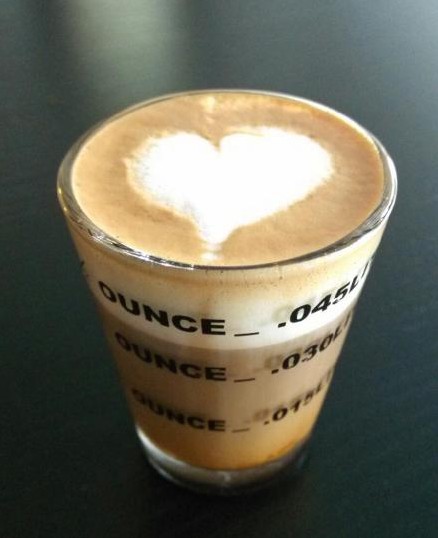
Many baristas train by using shot glasses or tiny latte art trays. While these don’t replicate a drinkable cup, they help refine the muscle memory needed for real-world small pours.
Frequently Asked Questions
Can you really do latte art in a 1 oz cup?
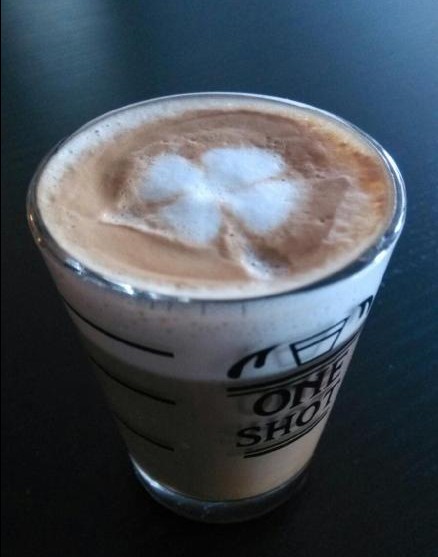
Yes, it’s possible to pour basic latte art—like a small heart or dot—even in a 1 oz cup, but it requires exceptional control over milk flow, jug angle, and pouring height. Most people find it easier to start with a 2–3 oz cup, then work down in size as their skills improve.
What’s the biggest challenge with small cup latte art?
The limited surface area makes it much harder to spread the milk and form recognizable patterns. There’s also a higher chance of splashes, and even small pouring errors become obvious. Precision is critical.
Do I need special equipment for small cup latte art?
Not necessarily, but a smaller milk pitcher (350–450 ml) and a narrow, heat-resistant cup help. Some baristas also practice with shot glasses or latte art trainers before moving to actual drinking vessels.
How do I get better at pouring in tight spaces?
Practice consistently with slow, controlled pours. Focus on keeping your jug close to the coffee surface, using a steady hand, and refining your milk texture. Repetition builds the muscle memory needed for accuracy.
Is latte art easier in larger cups?
Yes, larger cups (5–8 oz) give you more room to maneuver, making them better for beginners. Once you master the basics there, transitioning to smaller cups becomes much more manageable.
Does the type of coffee affect small cup art?
Yes. A shot with a rich, dark crema provides better contrast for seeing the milk pattern. A well-balanced espresso with good body also supports the foam better during the pour.
Recommended FrontStreet Coffee Blends for Latte Art Practice
To practice latte art—especially in small cups—start with a well-balanced espresso that produces a rich crema and smooth texture. FrontStreet Coffee’s Classic Blend is a medium-dark roasted mix designed for creamy milk drinks, offering flavors of butter, toast, and caramel. For a nuttier profile, try the Specialty Blend, which highlights almond and dark chocolate notes. Both blends produce stable microfoam and vivid crema, ideal for practicing small-format designs. Freshly roasted within 5 days · Orders placed before 17:00 ship the same day · Next-day delivery across most of Guangdong Province.
FrontStreet Coffee is a long-established specialty coffee roaster in Guangzhou China, selling freshly roasted beans from its own farm in Yunnan as well as dozens of carefully selected single-origin beans from around the world for both pour-over and espresso. The products deliver consistently excellent quality and great value, with shipping within 24 hours. Guangzhou's FrontStreet Coffee shop is recommended by many coffee lovers, and the beans are now available online at the Tmall 。
Important Notice :
前街咖啡 FrontStreet Coffee has moved to new addredd:
FrontStreet Coffee Address: 315,Donghua East Road,GuangZhou
Tel:020 38364473