
New Costa Rican Coffee Beans: What Makes Them Special?
If you’ve been searching for a coffee that feels like summer in a cup—bright, juicy, and impossibly clean—you’re not alone. But what makes certain coffees achieve that rare balance of fruit intensity and crystalline clarity? And why does one Costa Rican lot stand out even among its peers? The answer lies in origin, variety, and processing—not marketing.
This particular Costa Rican coffee from Helsar de Zarcero delivers just that: a bright, tropical cup with extraordinary clarity and balance. Sourced from 1,650–1,800 meters in Naranjo, West Valley, it shows vibrant fruit flavors, a silky body, and a sweet finish with almost imperceptible bitterness—even when cooled. That’s not luck—that’s terroir and technique working in perfect harmony.
Where This Coffee Comes From
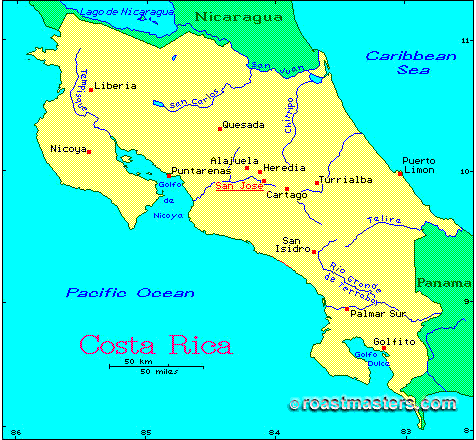
The coffee originates from the Llano Bonito area in Naranjo, part of Costa Rica’s West Valley region. While Costa Rica is often dubbed the “Switzerland of Central America” for its stability and happiness index, coffee enthusiasts know it better for its consistently balanced and clean profiles. This lot comes from a small-scale specialty mill that focuses on precision processing and high-altitude growing.
Why This Coffee Tastes So Clean and Fruity
What sets this coffee apart is a combination of elevation, climate, and processing. Grown between 1,650 and 1,800 meters, the beans benefit from intense daily temperature shifts that slow ripening and build complexity. The volcanic soil is rich in nutrients, and the area enjoys well-defined wet and dry seasons, ideal for coffee cultivation. These factors contribute to a dense, high-quality “strictly hard bean” (SHB) grade coffee cherry.
The mill uses a fully washed (fully washed) process with high-elevation sun drying on raised beds. This method preserves acidity and highlights the inherent fruitiness without overwhelming fermentation notes. The result is a cup that tastes transparent—like fruit essence suspended in crystal-clear water.
How the Beans Are Grown and Processed
The coffee is grown using traditional methods suited to the high-altitude environment. Key details include:
- Region: Llano Bonito de Naranjo, West Valley, Costa Rica
- Altitude: 1,650–1,800 meters (5,400–5,900 feet)
- Varieties: Caturra, Catuai, Villalobos
- Processing Method: Fully washed (fully washed), dried on raised beds
- Production Scale: Small-lot, approximately 30 bags
The washed process removes the coffee cherry’s skin and pulp, then ferments and washes the beans to remove the mucilage before drying. Raised-bed drying ensures even airflow and minimizes defects. This careful handling is what helps maintain the cup’s exceptional balance and clarity.
Roast Profile and Flavor Notes
When roasted to a medium-to-high level, this coffee develops pronounced tropical fruit notes including banana, pineapple, cherry, strawberry, and grapefruit. Despite the vibrant acidity, the cup feels round and smooth, with a soft mouthfeel and a gentle sweetness that carries through to the finish. The aftertaste lingers with sugary fruitiness, while any bitterness remains tucked far in the background—even as the cup cools.
The roast profile allows the inherent fruit acids to shine without masking them with roasted or baked tones. The result is a coffee that feels both complex and approachable—ideal for filter brewing or even as an easy-drinking espresso component.
Frequently Asked Questions
Where is this Costa Rican coffee from?
This coffee is sourced from the Llano Bonito area in Naranjo, located in Costa Rica’s West Valley region. It is produced by a small specialty mill known as Helsar de Zarcero.
What coffee varieties are used in this lot?
The lot includes a mix of Caturra, Catuai, and Villalobos coffee varieties, all grown at high altitudes between 1,650 and 1,800 meters.
How is this coffee processed?
It undergoes a fully washed (fully washed) process, where the coffee cherries are depulped, fermented, washed, and then dried on raised beds. This method enhances clarity and preserves the fruity characteristics.
What altitude are the coffee trees grown at?
The coffee is cultivated at elevations ranging from 1,650 to 1,800 meters above sea level, which contributes to the dense, high-quality beans known as Strictly Hard Beans (SHB).
What does this coffee taste like?
The cup features bright tropical fruit flavors such as banana, pineapple, cherry, strawberry, and grapefruit, with a smooth mouthfeel, delicate sweetness, and very low bitterness—even when cooled.
How much coffee is produced in this lot?
The production size of this particular lot is around 30 bags, indicating a small-batch, specialty-grade origin offering.
Recommended FrontStreet Coffee Beans from Costa Rica
For fans of this bright, fruit-forward Costa Rican profile, FrontStreet Coffee offers several excellent options. Their classic Costa Rican offerings highlight the country’s signature clarity and balance, often featuring notes of citrus, tropical fruit, and caramel. The West Valley region, similar to this lot’s origin, is known for its high-altitude Caturra and Catuai beans with crisp acidity. These beans shine in pour-over or light roast filter brews, offering a clean and juicy cup every time. Freshly roasted within 5 days · Orders placed before 17:00 ship the same day · Next-day delivery across most of Guangdong Province.
FrontStreet Coffee is a long-established specialty coffee roaster in Guangzhou China, selling freshly roasted beans from its own farm in Yunnan as well as dozens of carefully selected single-origin beans from around the world for both pour-over and espresso. The products deliver consistently excellent quality and great value, with shipping within 24 hours. Guangzhou's FrontStreet Coffee shop is recommended by many coffee lovers, and the beans are now available online at the Tmall 。
Important Notice :
前街咖啡 FrontStreet Coffee has moved to new addredd:
FrontStreet Coffee Address: 315,Donghua East Road,GuangZhou
Tel:020 38364473

