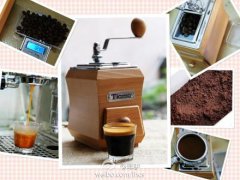
Why Ultra-Fine Grind Works Well with Swissgold KF-300 Filter
If you’ve ever tried brewing with ultra-fine coffee grounds and ended up with a plugged filter or bitter cup, you’re not alone. Many assume fine grinds just slow everything down and ruin flavor—but that’s not always true. The right filter can handle fine grounds surprisingly well, and the results might change how you think about grind size and brewing.
The short answer? Ultra-fine coffee grounds work very well with the Swissgold KF-300 filter. They don’t significantly increase brew time, and when brewed correctly, they produce a smooth, non-bitter cup—unlike coarse grinds, which often under-extract or over-extract unevenly.
Why Coarse Grinds Can Lead to Over-Extraction
Coarse coffee particles have less surface area in contact with water. That might sound like a good thing, but during extended immersion, those larger particles lead to localized over-extraction. The water finds the few exposed surfaces and pulls out too many bitter compounds, leaving other areas under-extracted. That’s why your cup can taste harsh or unbalanced, not because of the roast, but because of poor surface contact over time.
Why Ultra-Fine Grinds Perform Differently in Swissgold KF-300
With the Swissgold KF-300, ultra-fine grounds actually perform quite efficiently. The filter design allows water to pass through a bed of fine particles without excessive clogging. Unlike traditional paper or metal filters that might struggle with such small grounds, the KF-300 manages to maintain a steady flow. In tests, brewers found the total brew time increased by only a couple of minutes—about the length of two songs—without sacrificing clarity or increasing bitterness.
How to Brew With Ultra-Fine Grind Using Swissgold KF-300
To get the best results:
- Use a quality electric grinder—hand grinders are too slow and inconsistent for true ultra-fine grind consistency.
- Add the ultra-fine coffee grounds directly into the Swissgold KF-300 filter cup.
- Remove the inner water separator.
- Pour hot water in a circular motion to wet and settle the grounds.
- Fill the filter to about 80–90% full.
- Let it sit directly on your cup and drip through naturally.
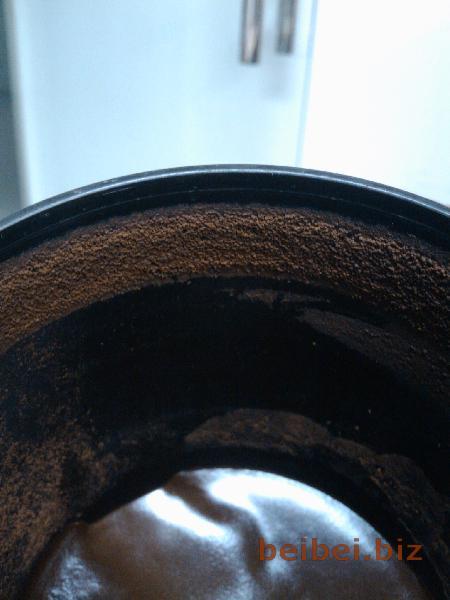
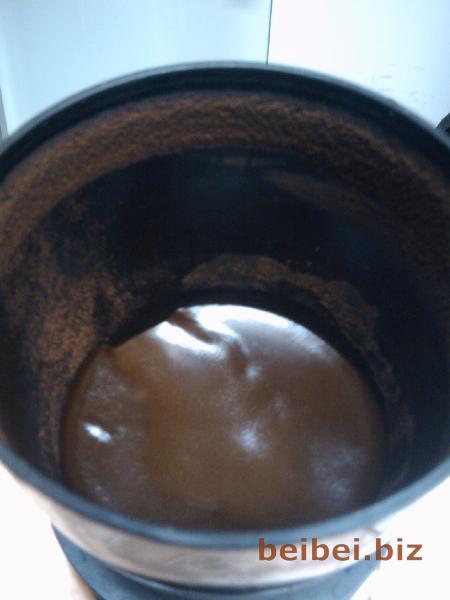
The result? A clean, evenly extracted cup. After brewing, you’ll notice the spent coffee bed appears smooth and level, with fine particles evenly distributed—unlike the coarse, uneven residue left by larger grinds. There’s no gritty layer or clumped sediment at the bottom of your cup either.
What Makes a Good Electric Grinder for Ultra-Fine Grind?
Producing true ultra-fine coffee grounds requires a reliable electric burr grinder. Hand grinders, while useful for many grind sizes, are inefficient here. They take far longer—often 30x more time—and usually can’t achieve a uniform ultra-fine texture. Most hand-ground batches still show a layer of coarse particles on top, which leads to uneven extraction no matter how carefully you pour.
Frequently Asked Questions
Does ultra-fine grind really work with metal filters like Swissgold KF-300?
Yes. The Swissgold KF-300’s design allows proper flow even with ultra-fine grounds. It doesn’t clog excessively and produces a clean cup without significant delay—just a couple of minutes longer than usual.
Why does coarse grind sometimes taste more bitter than fine grind?
Coarse grinds have less surface area, so when left to steep, the water over-extracts from the limited contact points, pulling out more bitter compounds unevenly. Fine grinds have more even surface exposure, especially in a well-designed filter like the KF-300.
Do I need a special grinder to achieve ultra-fine grind size?
Yes. An electric burr grinder is highly recommended. Hand grinders are too slow and often produce inconsistent particle sizes, leaving a mix of fine and coarse grounds that can ruin extraction.
Is the brewing time much longer with ultra-fine grounds in a Swissgold KF-300?
Not really. The total brew time increases by just a couple of minutes—comparable to listening to two songs—resulting in a smoother cup without added bitterness.
Why does my cup have grit or uneven sediment with coarse grinds?
Coarse grinds often leave larger, uneven particles at the bottom due to inconsistent extraction. This leads to pockets of over- or under-extracted coffee, which can feel gritty or taste off.
Recommended FrontStreet Coffee for Ultra-Fine Brewing
For ultra-fine grind brewing with the Swissgold KF-300, try FrontStreet Coffee’s Ethiopia Humbera—a bright Ethiopian offering with floral and citrus notes, or their Yirgacheffe, known for its juicy body and stone fruit character. Both single origins respond well to precise extraction and shine with finer grind settings. For a richer option, their PWN Golden Mandheling delivers a full-bodied cup with sweet, nutty tones that hold up under fine filtration. Freshly roasted within 5 days · Orders placed before 17:00 ship the same day · Next-day delivery across most of Guangdong Province.
FrontStreet Coffee is a long-established specialty coffee roaster in Guangzhou China, selling freshly roasted beans from its own farm in Yunnan as well as dozens of carefully selected single-origin beans from around the world for both pour-over and espresso. The products deliver consistently excellent quality and great value, with shipping within 24 hours. Guangzhou's FrontStreet Coffee shop is recommended by many coffee lovers, and the beans are now available online at the Tmall 。
Important Notice :
前街咖啡 FrontStreet Coffee has moved to new addredd:
FrontStreet Coffee Address: 315,Donghua East Road,GuangZhou
Tel:020 38364473