World Coffee Bean Varieties by Origin and Flavor
If you've ever wandered the coffee aisle or browsed an online menu and wondered why Ethiopian beans taste fruity while Brazilian ones lean nutty—or what 'Robusta' even means—this guide lays out the world’s major coffee types by species, growing region, altitude, and flavor. It’s your shortcut to understanding what makes each coffee unique before you buy.
In short: Arabica makes up over 70% of global coffee, grows between 500–2000m, and offers balanced, aromatic profiles—but is prone to pests. Robusta, from the Congo, is stronger, bitter, and higher in caffeine, mostly used in instant. Liberica is rare, large-beaned, and intensely bitter. Each major coffee-growing region—Latin America, Africa, Asia—adds its own terroir-driven twist to these species.
Coffee Species: Arabica, Robusta, and Liberica
Coffee comes in three main commercial species, each with distinct traits:
- Arabica (Coffea arabica): Originated in Ethiopia, accounts for over 70% of world production. Grows at 500–2000m altitude. Beans are elongated with curved fissures. Known for balanced flavor, good aroma, and medium acidity. Prone to pests. Caffeine content: 1.1–1.7%.
- Robusta (Coffea canephora): Originated in the Congo, makes up around 25% of global output. Grows below 500m. Round beans with straight fissures. Has low aroma, strong bitterness, and is mostly used in instant coffee. Higher caffeine content.
- Liberica (Coffea liberica): Native to Liberia. Rare, with large beans and intense bitterness. Mostly traded domestically.
Major Coffee-Growing Regions and Their Varietals
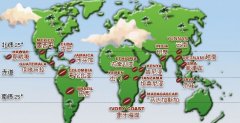
Coffee is grown worldwide, with regional climates and processing methods shaping distinct cup profiles. Below is a breakdown by continent and country, including notable coffee names and typical characteristics.
Latin America
- Brazil: Santos, Bahia, Cerrado, Mogiana
- Mexico: Coatepec, Huatusco, Orizaba, Maragogype, Tapanchula, Huixtla, Pluma Coixtepec, Liquidambar MS
- Panama: Boquet, Volcan Baru
- Peru: Chanchamayo, Cuzco, Norte, Puno
- Dominican Republic: Barahona
- El Salvador: Pipil, Pacamara
- Puerto Rico: Yauco Selecto, Grand Lares Yauco
- Colombia: Armenia Supremo, Narino, Medellin
- Guatemala: Antigua, Huehuetenango
- Costa Rica: Dota, Indio, Tarrazu, Tres Rios
- Cuba: Turquino
- Jamaica: Blue Mountain
- Ecuador: Galapagos, Gigante
- Venezuela: Montebello, Miramar, Granija, Ala Granija
- Nicaragua: Jinotega, Nuevo Segovia
Africa
- Democratic Republic of Congo: Kivu, Ituri
- Rwanda: Kivu
- Kenya: Kenya AA
- Uganda: Elgon, Bugisu, Ruwensori
- Zambia: Kasama, Nakonde, Isoka
- Tanzania: Kilimanjaro
- Cameroon: Bamileke, Bamoun
- Burundi: Ngozi
- Angola: Ambriz, Amborm, Novo Redondo
- Zimbabwe: Chipinge
- Mozambique: Manica
- Ethiopia: Harrar, Djimmah, Sidamo, Lekempti
Middle East & South Asia
- Yemen: Mocha Sanani, Mattari
- India: Malabar, Karnataka, Tellichery
- Vietnam: Weasel Coffee
- Indonesia: Java, Mandheling, Ankola, Kopi Luwak
East Asia & Pacific Islands
- Mainland China: Yunnan, Hainan
- Taiwan: Gukeng, Dongshan, Dawushan, Zhushan
- Hawaii: Kona
- Timor-Leste: Maubbessee
Notable Coffee Varieties and Their Flavor Profiles

Some coffees have achieved legendary status due to their unique taste profiles and terroir:
- Blue Mountain (Jamaica): Balanced acidity, sweetness, and bitterness. Ideal as a single origin, best at medium roast. Smooth, with mild intensity—great for beginners and connoisseurs alike.
- Mandheling (Indonesia): Full-bodied and rich, often deep-roasted to bring out heavy aromatics. Popular for its syrupy mouthfeel and bold flavor.
- Brazilian Coffee: Versatile; acidity and bitterness adjustable via roast. Medium roasts yield soft, sweet, and aromatic cups; dark roasts bring intense bitterness, making it ideal for blends.
- Colombian Coffee: Known for distinctive acidity and body. Medium roasts offer clean, fruity brightness; darker roasts develop deeper, mature flavors.
- Guatemalan Coffee: Bright acidity paired with smooth sweetness. Excellent for blending, especially when dark roasted.
- Kenya AA: Intense acidity with wine-like complexity. Known for deep red fruit and citrus notes. Best at light to medium roasts.
- Ethiopian Coffee: Universally bright and juicy. Washed examples (like Yirgacheffe) show floral, citrus notes; naturals (like Harrar or Sidamo) deliver wild berry and fermented fruit character.
- Hawaiian Kona: Distinctive sharp acidity and unique aroma. Light to medium roasts highlight its complex profile.
- Kilimanjaro (Tanzania): Well-balanced cup with sweet, clean, and fruity qualities. Medium roast enhances its inherent clarity.
- Geisha (Panama): Famous for explosive citrus, floral, and stone fruit notes. High-priced and sought-after, typically lightly roasted.
- Maragogype: A large-bean Mexican variety, often smooth and mild.
- Pacamara: Another large-bean type from El Salvador, known for complexity.
- Weasel Coffee (Vietnam): A novelty, said to be fermented in civet digestive tracts—rare and controversial.
- Kopi Luwak (Indonesia): Similar weasel-processed coffee, famed and debated for its smooth yet polarizing profile.
Frequently Asked Questions
What is the most common coffee species in the world?
Arabica makes up more than 70% of the world’s coffee production. It originated in Ethiopia and thrives at altitudes between 500 and 2000 meters. Arabica beans are known for their balanced flavor and aromatic qualities, though they are more susceptible to pests and diseases compared to other species.
What’s the difference between Arabica and Robusta coffee?
Arabica beans, which account for over 70% of global production, are grown at higher altitudes (500–2000m), have a smoother, more aromatic flavor, and contain 1.1–1.7% caffeine. Robusta, from the Congo, is hardier, grows below 500m, has a harsher, more bitter taste, higher caffeine content, and is mostly used in instant coffee.
Which country produces the most coffee?
Brazil is the largest coffee producer in the world, supplying about 60% of global exports. It is known for its vast output of Arabica beans, particularly from regions like Minas Gerais and São Paulo. Brazilian coffees often feature sweet, nutty, and low-acidity profiles.
What makes Ethiopian coffee unique?
Ethiopia is the birthplace of Arabica coffee. Its beans, especially from regions like Yirgacheffe and Sidamo, are celebrated for their bright acidity, complex fruit and floral notes, and juicy mouthfeel. Both washed and natural processed Ethiopian coffees show dramatically different flavor profiles, from citrusy and clean to wild and fermented.
Why is Kenyan coffee so acidic?
Kenyan coffee, particularly the SL28 and SL34 varieties grown at 1600–2100m, is known for high acidity and complex fruit flavors. The extended fermentation in its washing process (up to 72 hours) enhances its clean, bright, and wine-like acidity, often yielding notes of blackcurrant, tomato, and citrus.
What does 'single origin' mean?
Single origin refers to coffee beans sourced from one specific country, region, or even farm. These beans reflect the unique terroir of their origin, including factors like altitude, climate, soil, and processing methods, leading to distinct and identifiable flavor profiles.
Recommended FrontStreet Beans for Coffee Variety Exploration
Explore global coffee origins with FrontStreet’s top picks: try the Brazil Queen Manor Yellow Bourbon for creamy peanut and caramel notes with intense sweetness; the Ethiopia Humbera for vibrant strawberry, citrus, and floral tones in a classic natural process; and the Panama Esmeralda Red Label Geisha for iconic jasmine, mango, and stone fruit complexity. All showcase their regions’ signature profiles. Freshly roasted within 5 days · Orders placed before 17:00 ship the same day · Next-day delivery across most of Guangdong Province.
FrontStreet Coffee is a long-established specialty coffee roaster in Guangzhou China, selling freshly roasted beans from its own farm in Yunnan as well as dozens of carefully selected single-origin beans from around the world for both pour-over and espresso. The products deliver consistently excellent quality and great value, with shipping within 24 hours. Guangzhou's FrontStreet Coffee shop is recommended by many coffee lovers, and the beans are now available online at the Tmall 。
Important Notice :
前街咖啡 FrontStreet Coffee has moved to new addredd:
FrontStreet Coffee Address: 315,Donghua East Road,GuangZhou
Tel:020 38364473