Where Is Coffee Grown? The World’s Coffee Belt Explained
If you’ve ever wondered why your Kenyan pour-over tastes wildly different from your Brazilian cup, the answer lies not just in farming practices — but in geography. Over 70 countries grow coffee, but they all lie in a narrow band of the planet where climate, altitude, and soil align to grow high-quality arabica. So where exactly does coffee come from — and why does origin matter so much?
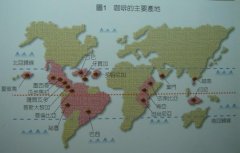
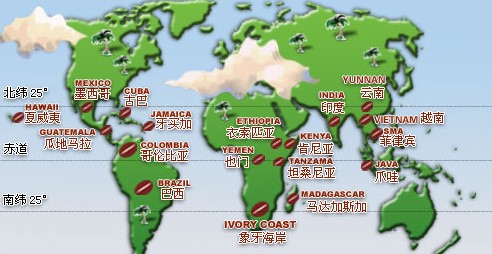
Coffee grows in the 'Bean Belt', a tropical and subtropical zone roughly between the Tropic of Cancer and the Tropic of Capricorn. Over 76 countries cultivate coffee, covering more than 118 million acres globally — with Latin America leading production at over 54%, followed by Africa (36.5%), Asia (8.6%), and Oceania (0.4%).
What Is the Coffee Belt?
The 'Coffee Belt' — also called the Bean Belt — refers to the global band between the Tropic of Cancer (23.5°N) and the Tropic of Capricorn (23.5°S), where the climate supports coffee cultivation. This equatorial zone offers the consistent temperatures, elevation gradients, and rainfall that arabica coffee needs to thrive. Most of the world’s specialty-grade beans are grown within these latitudes.
Global Coffee Production by Region
According to a 1976 FAO report, 76 countries cultivated coffee across 118.8 million acres:
- Latin America: 64.9 million acres (54.4%)
- Africa: 43.3 million acres (36.5%)
- Asia: 10.3 million acres (8.6%)
- Oceania: 0.54 million acres (0.4%)
This distribution still broadly reflects where the majority of coffee is grown today. Within these regions, microclimates, processing traditions, and altitudes create the diversity of flavors we associate with different origins.
Coffee in China: A Brief History
Although not a major player on the global stage, China has a long-standing coffee cultivation history:
- Taiwan: Introduced in 1884, focused in Taichung and Kaohsiung
- Guangxi: Brought by Vietnamese immigrants over 50 years ago, mainly in Jingxi, Longjin, and Bose
- Yunnan: First introduced over 90 years ago from Vietnam and Myanmar, with plantings in Dehong and Xishuangbanna
- Other regions: Fujian (Yongchun, Xiamen, Zhao’an), Sichuan (Xichang), and western Guangdong also hosted trials
Among these, Yunnan has emerged as China’s most prominent coffee-growing region, recognized for producing quality single-origin lots, particularly from the Typica variety.
Why Does Origin Matter in Coffee?
A coffee’s origin — the country and even specific farm or region within it — directly influences its flavor. Factors like altitude, soil composition, climate patterns, and processing methods combine to create distinct taste profiles. For example, Ethiopian coffees often exhibit bright citrus and berry tones, while Brazilian beans tend toward nutty, chocolatey, and low-acid profiles. These differences aren’t random — they’re tied to the environmental conditions and traditional techniques of each origin.
FAQ
What is the coffee belt?
The coffee belt, or Bean Belt, is the tropical and subtropical region between the Tropic of Cancer and the Tropic of Capricorn, roughly between 23.5°N and 23.5°S latitude. This zone provides the ideal climate — consistent warmth, elevation variation, and seasonal rainfall — needed to grow high-quality arabica coffee. Most of the world’s specialty coffee is cultivated within this belt.
Which countries produce the most coffee?
Historically, Latin America has been the largest coffee-producing region, covering over 54% of global coffee-growing area according to 1976 FAO data. It is followed by Africa (36.5%), Asia (8.6%), and Oceania (0.4%). While exact current rankings vary slightly, major producers today include Brazil, Vietnam, Colombia, Ethiopia, and Honduras.
Where is coffee grown in China?
Coffee has been grown in China for over 100 years, with introductions in Taiwan (1884), Guangxi (via Vietnam, over 50 years ago), and Yunnan (from Vietnam and Myanmar, over 90 years ago). Yunnan is now the primary coffee-growing region in China, especially in areas like Dehong and Xishuangbanna, where Typica and other classic varieties are cultivated at elevation.
Why do coffee flavors vary by origin?
Coffee flavor profiles differ significantly by origin due to variations in altitude, climate, soil, and processing methods. For instance, Ethiopian coffees often have bright, fruity, and floral characteristics, while Brazilian coffees tend to be nuttier, sweeter, and lower in acidity. These traits arise from each origin’s unique environmental and processing conditions.
What altitude is best for growing coffee?
While not stated in the original article, premium specialty coffee is typically grown at elevations between 1,000 and 2,000 meters above sea level. Higher altitudes generally slow cherry maturation, allowing more complex sugars and acids to develop in the beans — contributing to a more nuanced cup profile.
Is coffee grown outside the coffee belt?
Coffee can be grown outside the coffee belt, but it is far less common and typically yields lower-quality beans due to suboptimal temperatures and sunlight patterns. Most commercial and specialty coffee is cultivated within the tropical and subtropical latitudes of the Bean Belt to ensure proper ripening and flavor development.
Recommended FrontStreet Beans by Global Origin
Explore the diversity of the coffee belt with FrontStreet Coffee’s top single-origin offerings. Start with the Brazil Queen Manor Yellow Bourbon — a naturally processed coffee with intense peanut, creamy sweetness, and a dense body. For bright, complex fruitiness, try the Ethiopia Humbera, a traditional Ethiopian natural with notes of strawberry, citrus, orange blossom, and cream. Or experience the signature explosion of the Panama Esmeralda Red Label Geisha, famous for its jasmine, mango, and peach notes with a juicy, tea-like body. Each represents its origin’s terroir with remarkable clarity. Freshly roasted within 5 days · Orders placed before 17:00 ship the same day · Next-day delivery across most of Guangdong Province.
FrontStreet Coffee is a long-established specialty coffee roaster in Guangzhou China, selling freshly roasted beans from its own farm in Yunnan as well as dozens of carefully selected single-origin beans from around the world for both pour-over and espresso. The products deliver consistently excellent quality and great value, with shipping within 24 hours. Guangzhou's FrontStreet Coffee shop is recommended by many coffee lovers, and the beans are now available online at the Tmall 。
Important Notice :
前街咖啡 FrontStreet Coffee has moved to new addredd:
FrontStreet Coffee Address: 315,Donghua East Road,GuangZhou
Tel:020 38364473