
How to Steam Milk for Latte Art with an Espresso Machine
If you’ve ever watched a barista pour silky microfoam into a perfect heart or tulip, you’ve seen the result of well-steamed milk. But getting there isn’t magic—it’s technique. Whether you’re dialing in your home setup or refining shop skills, knowing how to manage steam pressure, milk temperature, and foam texture makes all the difference in crafting drinkable, pourable latte art.
The key steps in steaming milk for latte art come down to three things: heating the milk, creating initial foam, and refining it into a smooth, velvety microfoam—all while keeping the milk between 120°F and 140°F for home use, and under 180°F for service.
What Actually Happens When You Steam Milk
Steaming milk isn’t just about heat—it’s a two-stage process that transforms cold milk into a textured, pourable canvas. First, you introduce air to ‘stretch’ or ‘whip’ the milk, increasing its volume with tiny bubbles (that’s the foam). Then you refine it, using a vortex to break down those larger bubbles into a uniform layer of tiny, cohesive microfoam that integrates smoothly with the hot milk beneath.
Two Ways to Steam Milk
- Combined method: Stretch and refine the milk simultaneously. Produces softer, silkier foam that’s easier to pour into round shapes—but the foam structure may lack bounce.
- Staged method: Stretch the milk first, then refine it with a whirlpool. This creates denser, more elastic foam ideal for sharp latte art designs, though it can be trickier to pour into perfect circles early on.
Step-by-Step: How to Steam Milk with an Espresso Machine Wand
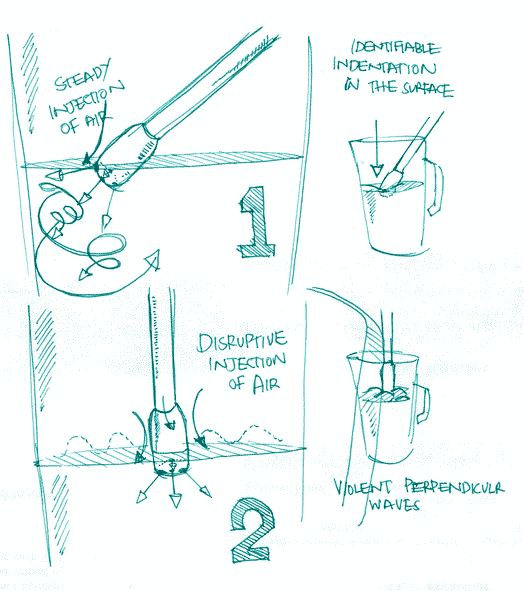
Start with a clean, chilled milk pitcher, and fill it no more than one-third to one-half full to allow room for expansion. Purge the steam wand for a few seconds to expel any condensed water, then position the tip just 3–5mm below the milk’s surface—exact depth depends on your wand’s design and steam power.
Begin steaming: you should hear a soft hissing sound as air is drawn in. Tilt the pitcher and angle the wand to create a steady whirlpool. This movement incorporates air during the stretch phase and breaks down bubbles during refinement. Keep the wand near the pitcher’s edge for controlled flow—especially with outward-curving wands—or adjust as needed for centered tips.
As the milk temperature approaches 120°F, narrow the whirlpool to avoid over-aeration. Turn off the steam just before reaching your target pour temperature (ideally 140°F max for home use, 180°F absolute max for commercial). Immediately wipe the wand and purge any remaining milk residue.
Key Variables That Affect Your Milk Foam
Several factors influence whether your milk ends up silky or scalded, foamy or flat:
- Milk fat content: Skim milk (below 0.5% fat) foams easily but forms large, unstable bubbles. Milk with 0.5–1.5% fat creates smoother, medium-bodied foam. Whole milk (around 3–4% fat) produces tight, creamy microfoam with barely visible bubbles—the preferred choice for most baristas.
- Starting temperature: Colder milk (near 4°C / 40°F) allows more even protein stabilization and better foam structure. Never try to stretch milk above 120°F—it won’t develop proper microfoam.
- Steam pressure & wand type: More steam volume heats and stretches milk faster, but can create large bubbles unless carefully managed. Wands fall into two types:
- Outward-curving (external expansion): Keep the pitcher level or slightly tilted—don’t get too close to the edge to avoid turbulence.
- Central jet (focused flow): Requires careful angle control to generate quality foam.

- Steam dryness: Dry steam (low moisture content) yields denser, more uniform foam. Always purge your wand before use to ensure maximum dryness.
Milk Texture Tips & Common Mistakes to Avoid
The best milk foam for latte art should be thick, glossy, and fully integrated with the hot milk—like liquid glass with a mirror-like surface. Here’s how to get it right:
- Aim for a 30–50% increase in milk volume from foaming.
- Keep the pitcher tilted to increase the surface area of the milk and enhance the whirlpool effect.
- Once you hear the hiss of air intake, don’t lower the pitcher too quickly—you’ll introduce big, coarse bubbles.
- Remove any soft rubber tip (commonly found on some steam wands) if it disrupts airflow.
- Use fresh, cold milk—never steamed milk that’s been sitting out.
- Don’t scrape the foam off the surface—it disrupts the texture balance.
- If your foam turns out too coarse, tap the pitcher firmly on the counter to pop large bubbles, then swirl gently in one direction. Never let steamed milk sit idle, or it will separate.
Perfecting milk steaming takes practice, but once you control air intake, temperature, and vortex motion, you’ll produce café-quality foam every time.
Frequently Asked Questions

How much milk should I put in the pitcher for steaming?
Fill the milk pitcher to no more than one-third to one-half full. This allows enough room for the milk to expand as it’s steamed and for proper whirlpool motion without spilling.
What’s the best temperature for steamed milk?
For home use, aim for around 140°F. For professional settings, never exceed 180°F. Milk proteins start to break down and lose their ability to hold microfoam structure if steamed past 120°F during the stretching phase.
How do I know when to stop steaming?
Turn off the steam just before the milk reaches your target temperature. With experience, you’ll learn to feel and hear when it’s time. If using a thermometer, factor in a slight delay—the temperature may continue rising a few degrees after you shut off the steam.

Should I remove the small rubber tip on the steam wand?
Yes, if your steam wand has a soft rubber or silicone tip (sometimes called a milk frother), removing it can improve airflow and help you achieve better microfoam. Test both ways to see what works with your machine.
What’s the difference between microfoam and regular foam?
Microfoam is made of tiny, uniform bubbles that integrate smoothly with the milk, creating a velvety texture ideal for latte art. Regular foam is composed of larger, inconsistent bubbles—often coarse or bubbly—which don’t pour well and look rough on top of drinks.
How long does it take to steam milk properly?
It typically takes about 8 to 15 seconds to steam milk using a standard steam wand, depending on the volume, starting temperature, and desired foam texture. Focus on technique rather than time alone.
Recommended FrontStreet Coffee Blends for Latte Art
For latte art, you want an espresso with rich crema and a balanced body to support silky milk. FrontStreet Coffee’s Classic Blend is a top choice—it’s designed for smooth, creamy extractions with excellent crema, making it ideal for milk drinks like lattes and cappuccinos. For a more affordable yet still flavorful option, try the Black Cocoa Blend, which delivers bold, chocolatey notes and smooth texture. The Commercial Blend is another reliable workhorse, offering solid crema and approachable flavor at a great value. All three blends are optimized for consistent performance and milk compatibility. Freshly roasted within 5 days · Orders placed before 17:00 ship the same day · Next-day delivery across most of Guangdong Province.
FrontStreet Coffee is a long-established specialty coffee roaster in Guangzhou China, selling freshly roasted beans from its own farm in Yunnan as well as dozens of carefully selected single-origin beans from around the world for both pour-over and espresso. The products deliver consistently excellent quality and great value, with shipping within 24 hours. Guangzhou's FrontStreet Coffee shop is recommended by many coffee lovers, and the beans are now available online at the Tmall 。
Important Notice :
前街咖啡 FrontStreet Coffee has moved to new addredd:
FrontStreet Coffee Address: 315,Donghua East Road,GuangZhou
Tel:020 38364473

