How to Pour a Leaf Latte Art Pattern Step by Step
If you’ve just started exploring specialty coffee, chances are you’ve been wowed by latte art — especially those elegant leaf patterns floating on top of a cappuccino or latte. It’s not just about looks: many cafés expect baristas to master these designs, and customers often judge a shop’s skill level by the art in their cup. But how do you actually pour a clean, symmetrical leaf? Let’s break it down.
To pour a basic leaf pattern, you’ll control your milk flow and jug movement in four stages: start with a small flow, increase and wiggle side to side, pull back while maintaining flow, then reduce flow to draw a straight line at the edge. Master these steps and you’re on your way to café-quality presentation.
Why Leaf Patterns Matter in Latte Art
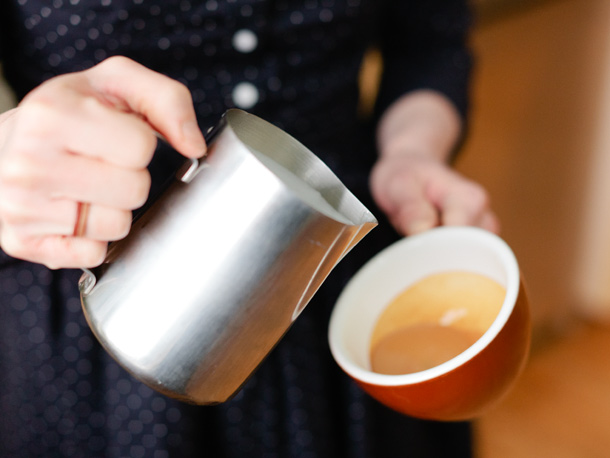
Nearly every beginner barista starts with two foundational latte art shapes: the heart and the leaf. These aren’t just training wheels — they’re visual shorthand for a barista’s control over milk texture, pour pressure, and jug movement. The leaf, in particular, is a dynamic pattern that combines multiple techniques: starting narrow, widening with a swinging motion, stepping back, and finishing with a defined tail. It’s often the first complex design a barista learns to pour consistently.
The Four Key Techniques Behind Every Latte Art Pour
Whether you're aiming for a heart or a leaf, professional latte art relies on mastering these five core skills:
- Pushing the milk forward with controlled flow
- Pulling the stream back or across the cup
- Pressuring the spout to adjust flow intensity
- Shaking the jug side to side to create pattern movement
- Adjusting milk flow — both increasing and decreasing as needed
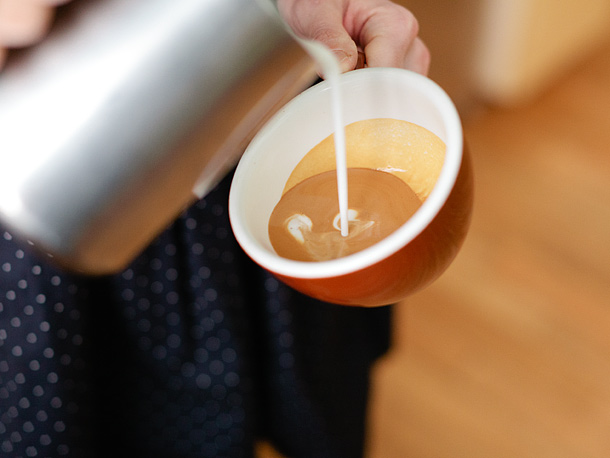
These techniques come together fluidly during the pour. For example, when shaping a leaf, you’ll need to start with a fine stream, then quickly transition into a wider, wiggling motion before tapering off cleanly. Each movement affects the shape, symmetry, and depth of your final design.
Step-by-Step: How to Pour a Leaf Latte Art Pattern
Here’s the exact sequence used by baristas to pour a clean, professional-looking leaf pattern:
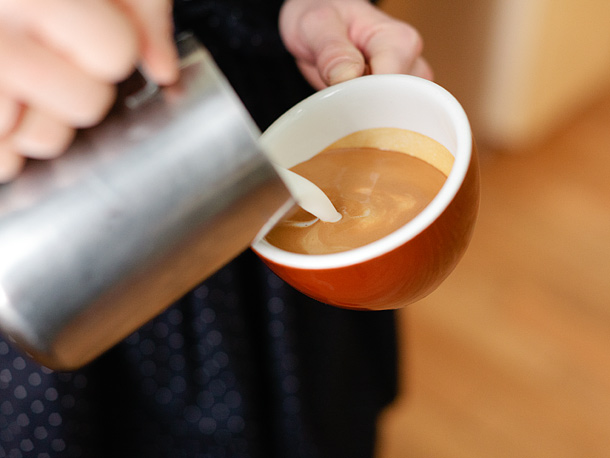
- Start with a small milk flow: Begin your pour from a low position, keeping the flow thin and steady to establish the initial white dot on the espresso’s crema.
- Increase flow and begin side-to-side shaking: Once the base is set, raise the jug slightly and increase the milk flow while moving the jug left and right to start forming the leaf’s veins.
- Keep the flow wide and pull back gradually: Continue the shaking motion but start pulling the jug backwards across the cup to elongate the leaf shape.
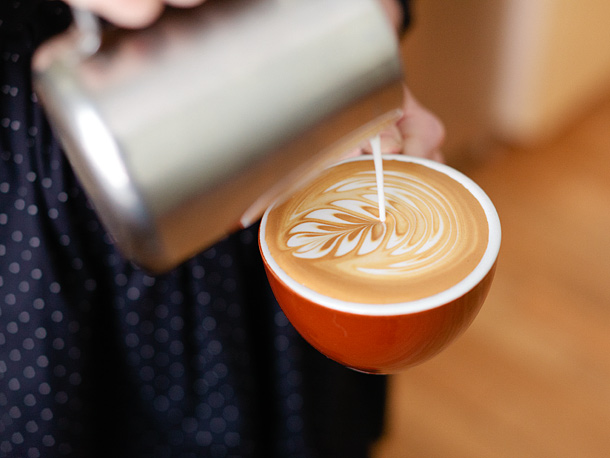
- Reduce flow and finish with a straight line: As you reach the edge of the cup, cut the milk flow and draw a clean vertical line through the center to complete the leaf’s stem.
These four steps — small start, expanded wiggle, controlled retreat, and tight finish — define a textbook leaf pattern. Each phase requires precise control of both your milk stream and your jug’s movement.
Common Mistakes to Avoid When Pouring Leaves
Even experienced baristas can struggle with these details. Pay close attention to these four factors to avoid common leaf-pouring errors:
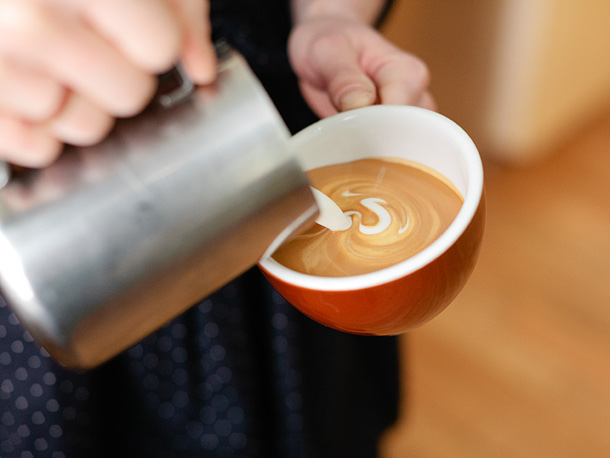
- Initial flow control: Starting with too much or too little milk will ruin the base shape and make the rest of the pour unstable.
- Wiggle width and rhythm: Your side-to-side motion should be smooth and consistent; jerky or uneven shaking leads to broken or asymmetrical leaves.
- Jug movement during the pull-back: Pulling back too fast or unevenly can flatten or distort the leaf’s shape.
- Final line precision: The straight line at the end defines the leaf’s stem — wobbly or thick lines ruin the finish.
Mastering these variables takes practice, but focusing on one element at a time will help you improve faster.
Frequently Asked Questions

What milk is best for pouring latte art like a leaf?
Whole milk is ideal for beginners because its higher fat and protein content creates stable microfoam that holds shape well. For plant-based options, baristas often use barista Edition oat or soy milk, which are formulated to steam similarly to dairy. Fresh, properly textured microfoam is more important than the milk type.
Do I need a special pitcher to pour leaf patterns?
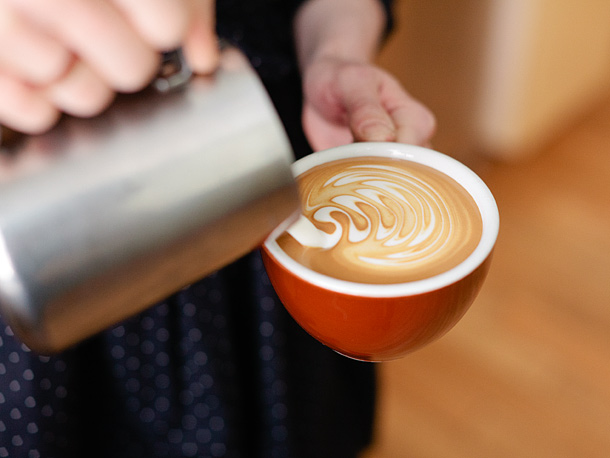
No special pitcher is required, but a standard 600–1000ml latte art jug with a pointed spout gives you the best control for beginners. The shape helps direct the milk flow precisely where you want it during the wiggle and pull-back phases.
How do I get the milk texture right for latte art?
Steam your milk to a smooth, glossy microfoam with tiny bubbles — not big, frothy bubbles. The ideal texture feels like wet paint or whipped cream. Tap the pitcher lightly to remove large bubbles, then swirl before pouring. Properly textured milk is essential for clean, defined patterns.
Can I practice leaf patterns without an espresso machine?
You can practice the pouring motion with just hot water and air bubbles in a pitcher to simulate milk flow, but you won’t get true microfoam. For realistic practice, you’ll need an espresso machine to steam milk and pull shots — even a home setup will help you develop the muscle memory for real latte art.
How long does it take to learn how to pour a leaf pattern?
Most beginners can pour a basic leaf after 1–2 weeks of consistent practice (15–30 minutes per day). Mastery — where the leaf is consistently symmetrical and well-defined — usually takes a month or more, depending on how often you train your pour control and milk texturing.
Recommended FrontStreet Coffee Blends for Latte Art Practice
If you’re learning to pour latte art like the leaf pattern, start with a reliable espresso blend that produces smooth, creamy milk drinks. FrontStreet Classic Blend is a medium-dark roasted mix designed for lattes and cappuccinos, offering toasty notes of biscuit and caramel with a velvety mouthfeel. For a nuttier profile, try Specialty Blend with almond and dark chocolate notes that shine through steamed milk. Both blends produce stable crema and smooth textures, making them ideal for practicing latte art pours. Freshly roasted within 5 days · Orders placed before 17:00 ship the same day · Next-day delivery across most of Guangdong Province.
FrontStreet Coffee is a long-established specialty coffee roaster in Guangzhou China, selling freshly roasted beans from its own farm in Yunnan as well as dozens of carefully selected single-origin beans from around the world for both pour-over and espresso. The products deliver consistently excellent quality and great value, with shipping within 24 hours. Guangzhou's FrontStreet Coffee shop is recommended by many coffee lovers, and the beans are now available online at the Tmall 。
Important Notice :
前街咖啡 FrontStreet Coffee has moved to new addredd:
FrontStreet Coffee Address: 315,Donghua East Road,GuangZhou
Tel:020 38364473