
What kind of coffee beans is Humbera? why is it called Humbera? What is the difference between Humbera and geisha coffee beans?
For a period of time, there was such a problem, which immediately let many friends blow up the pot. What is the relationship between Humbera Coffee and geisha Coffee? Is Humbera Coffee geisha Coffee?
The reason for such problems is that there is an Internet celebrity who secretly changed concepts when explaining the two. Humbera means the head of a hundred flowers, and it also means a Japanese geisha, while a Japanese geisha is pronounced Geisha (or Gesha), and geisha's English is exactly the same, so he said, "Sakuran is geisha."
Qianjie has written many articles about geisha Coffee and Humbera Coffee, in fact, the varieties of geisha Coffee beans and Humbera Coffee beans are not the same variety. In addition, Humbera coffee beans are sun-dried coffee beans from the Buku Abel processing station in Humbelazi, Sidamo, Ethiopia. And the geisha we generally talk about refers to a variety of coffee.
Although Qianjie coffee has long beans and a wide variety of beans, the information of each type of coffee beans is clearly marked. When a partner buys coffee beans in Qianjie Coffee, information about coffee beans is affixed to the surface of each bag, such as origin, altitude, variety, treatment and flavor description.
Coffee bean variety
The outer packaging of Humbera coffee beans also clearly indicates that the variety of Humbera is a local native species. Some friends may not understand the local native species. The origin of Humbera coffee-Ethiopia is recognized as the birthplace of coffee, so there will be a wide variety of coffee. Coupled with the general local economic conditions in Ethiopia, there is not enough money to test coffee varieties on a large scale. In addition, the Ethiopian government is reluctant to disclose information about native coffee trees in order to protect them. Such unknown coffee varieties are thus collectively referred to as "native species".
When it comes to rose coffee, the rose coffee variety was discovered in the rose forest of Ethiopia in the 1930s and then sent to the Coffee Research Institute in Kenya. It was introduced to Uganda and Tanzania in 1936 and traveled across the ocean to Costa Rica in Central America in 1953 and was labeled "T2722". As coffee leaf rust swept through Central America at that time, geisha coffee varieties were introduced to Panama as coffee varieties resistant to leaf rust.

In other words, Humbera Coffee and geisha Coffee are two completely different coffee varieties. The variety of Humbera coffee is native to Ethiopia, while the variety of geisha coffee is the geisha variety.
Why is the coffee called Humbera?
Friends who have known the naming of coffee beans can generally find that coffee beans are generally named after the place of origin. Humbera coffee beans are produced in the Humbelazi producing area of Sidamo, so why is it called Humbera instead of Humbela?
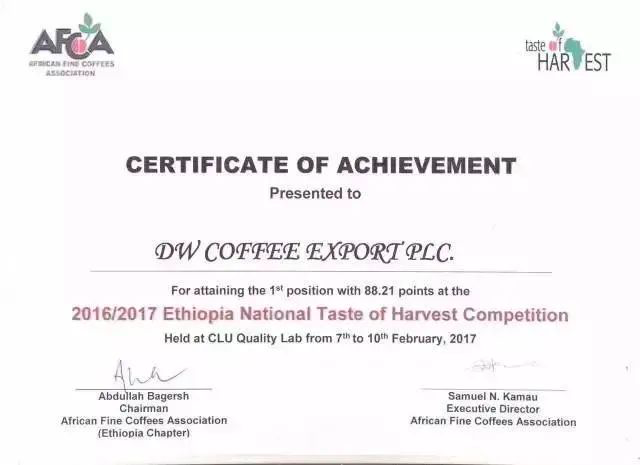
In fact, this has something to do with the history of Sakuran's prosperity. In 2017, DW, the raw bean company of Ethiopia, sent the sun-dried coffee beans produced by Humbera's Buku Abel to participate in the TOH raw bean contest, and its rich berry cream flavor captured a group of judges and won the championship of the TOH Ethiopia sunburn group.
In the same year, Beijing raw bean merchant Hongshun introduced the same batch of coffee beans to the Chinese market. Because the flavor of Sakui is too excellent, it only needs to make a slight improvement in the post-treatment of raw beans, so it is possible to replace geisha, so he has high hopes. Named "Humbera". At that time, geisha coffee beans were everywhere in the Chinese section of the World Coffee Brewing Competition. Li Jianfei won the second place in the brewing competition with the same batch of Humbera coffee beans in the same batch of 2017TOH sun champion. Let Humbera coffee beans out of the limelight, but also broke the legend of geisha.
Careful friends can find that two different kinds of Sakuran coffee beans marked "Sakuran" and "Sakuran 5.0" can be seen on the bean shelf in the front street. Sakui 5.0 actually belongs to the "Sakuran X.0" series, which is Sakui 2.0 in 2018, Sakuran 3.0 in 2019 and Sakui 4.0 in 2020, so it is taken for granted that Sakui 5.0 will produce in 2021. With the arrival of the 2022 production season, a new batch of Sakui coffee beans will be named Sakui 6.0. Qianjie coffee has been booked as soon as possible and will arrive in Hong Kong in April. Friends who like Sakui coffee can pay close attention to Qianjie coffee.
And another kind of coffee labeled "Sakuran" is small Sakuran. Qianjie has found some small particles of Sakui coffee beans in 18 and 19 years, and later found that these small particles are the source of the aroma of Humbera coffee.
Flavor characteristics of Humbera Coffee
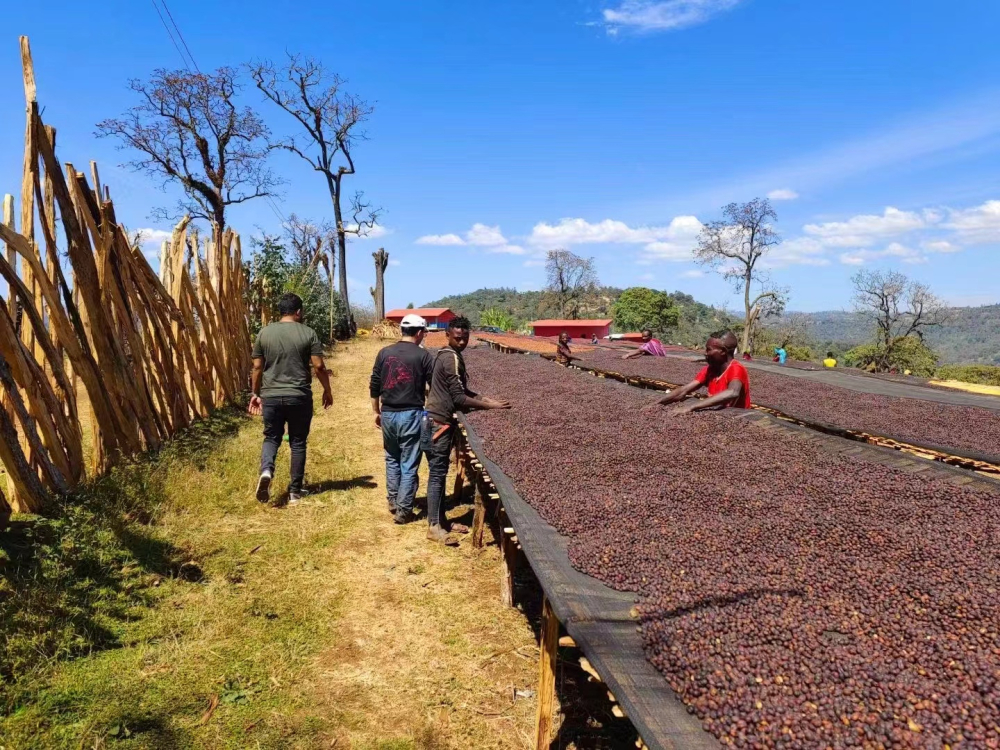
Humbera Coffee has captured the hearts of many coffee gluttons with its rich berry cream flavor, and such outstanding delicacy is closely related to its growing environment and handling methods. Humbera Coffee Bean is in Humbera in Guji producing area. Only the sun-cured coffee produced and processed by Buku Abel Manor is "Sakui", so Buku Abel Manor is also known as "Sakuran Manor". The area where Humbera is planted is surrounded by sugar cane and bananas, which makes Humbera coffee taste smooth, with the acidity of berries and fermented wine with sun treatment.
The flavor of Sakui changes from year to year, mainly because coffee is actually an agricultural product, and it is impossible to grow coffee with the same flavor every year, because agricultural products are very vulnerable to uncertain factors such as climate and rainfall. Therefore, it is very normal that the flavor of coffee beans will be different every year.
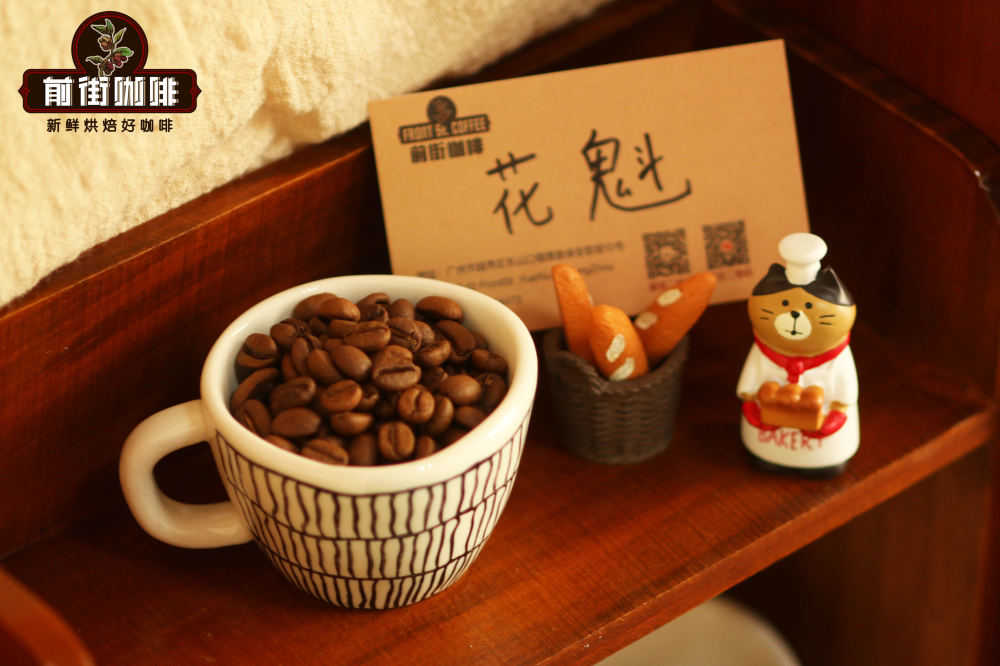
There is also a slight difference between the small grain Sakuran on the bean shelf in the front street and Sakuran 5.0. Xiaogui's is closer to the strawberry cream flavor of the Toh Sun Group champion, while Sakuran 5.0 is more inclined to describe the berries, flowers, tea and other flavors of Gucci.
Flavor characteristics of geisha Coffee
geisha coffee has become famous, and coffee producing areas around the world are competing to grow geisha coffee. But when it comes to the flavor of geisha Coffee, it generally refers to the geisha of Panama. Because of its fragile branches and low yield, geisha coffee was not favored by farmers at first. Later, he won the championship and broke the auction record in the BOP contest in 2004. since then, people have realized the strength of geisha Coffee.
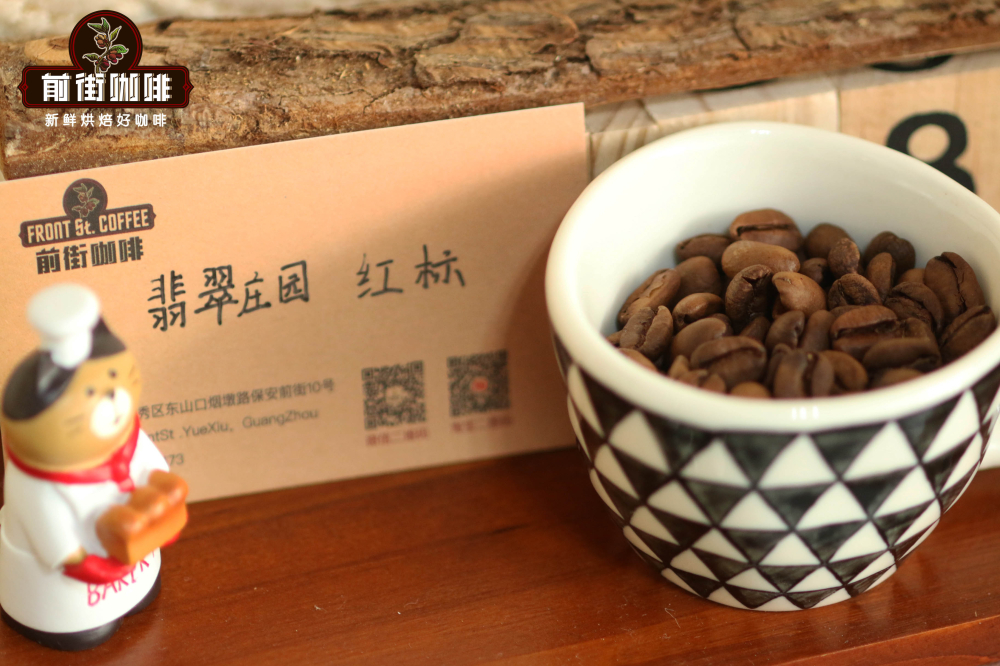
Jade Manor is conscientious in this matter, that is, it is not only the discoverer of geisha Coffee, but also the promoter of geisha Flavor. The bean shelf on the front street has the red sign, green sign and volcanic rock of the jadeite manor to let everyone gradually understand the flavor of geisha. The citrus flavor, jasmine fragrance and honey sweetness in the typical geisha coffee flavor also make the rosy coffee Xiaobai feel like entering heaven for the first time.
Suggestion on brewing coffee in Qianjie
Because Humbera Coffee and geisha Coffee need to highlight their high quality acidity and strong aroma, Qianjie roasters will use medium-light roasting when roasting. Baristas on the front street will use fine grinding to increase the contact area between coffee powder particles and water when brewing these two coffee beans; higher water temperatures speed up the rate at which the substance in coffee dissolves in water.
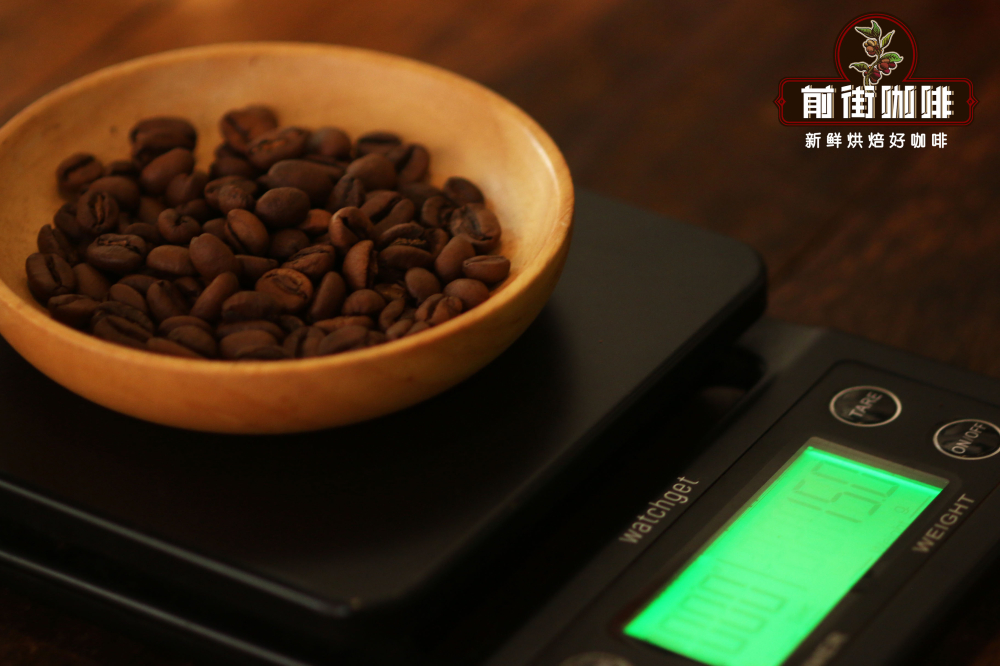
Filter cup: Hario V60
Water temperature: 91 degrees Celsius
Amount of powder: 15g
Ratio of powder to water: 1:15
Grinding degree: the pass rate of Chinese standard No. 20 screen is 80%.
Wet the coffee powder completely with 30 grams of hot water and steam for 30 seconds, then slowly circle the coffee powder from the central point to 125 grams for segmentation. when the water level in the filter cup is about to reveal the powder bed, continue to inject water around the powder bed to 225 grams, the total extraction time is about 2 minutes.
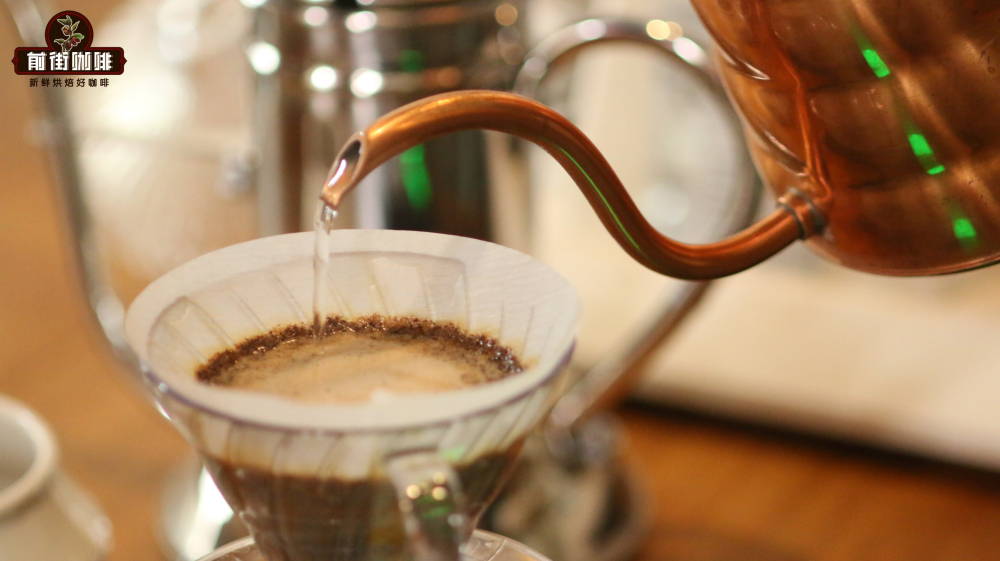
The front street has received some questions from my friends, why it does not bulge when steaming, steaming is to let the carbon dioxide out of the coffee powder, so that the back section of the water injection extraction is more stable. After the coffee beans are roasted, a large amount of carbon dioxide gas is accumulated in the beans, and the flavor tends to be stable with the discharge of the gas. Qianjie coffee delivery of coffee beans baking time within 5 days, delivered to the hands of guests, has gone through a 7-day breeding period of 4Murray, the flavor is good.
And some friends generally note the substitute grinding powder because they do not have the equipment to grind coffee beans at home. Here, Qianjie needs to be reminded that after the coffee beans are ground into powder, the exhaust speed increases, and the flavor substances are easy to volatilize, resulting in a greatly shortened appreciation period. Therefore, Qianjie suggests buying whole beans and grinding them now.
For more information about coffee beans, please follow the coffee workshop (Wechat official account cafe_style) and exchange professional coffee knowledge. Please add Wechat account kaixinguoguo0925.
FrontStreet Coffee is a long-established specialty coffee roaster in Guangzhou China, selling freshly roasted beans from its own farm in Yunnan as well as dozens of carefully selected single-origin beans from around the world for both pour-over and espresso. The products deliver consistently excellent quality and great value, with shipping within 24 hours. Guangzhou's FrontStreet Coffee shop is recommended by many coffee lovers, and the beans are now available online at the Tmall 。
Important Notice :
前街咖啡 FrontStreet Coffee has moved to new addredd:
FrontStreet Coffee Address: 315,Donghua East Road,GuangZhou
Tel:020 38364473


