
Monkey Coffee: India’s Animal-Processed Specialty Bean
Ever wondered how animals might influence coffee flavor—if not through scandalous digestive processes, then something a little more natural? While civet coffee (aka kopi luwak) gained infamy for its unappetizing origin story, another animal-processed coffee exists with a less grim backstory: monkey coffee from India. But what exactly is monkey coffee, and why does it command such a high price?
Monkey coffee costs roughly $320 per pound. The beans are partially processed by wild Indian monkeys, who select ripe coffee cherries, store the beans in their cheek pouches, and later spit them out—creating a unique fermentation effect before the beans even reach human hands.
What Is Monkey Coffee?
Monkey coffee originates from the coffee-growing region of Chickmagalur in Karnataka, India. Unlike conventional harvesting, where humans pick ripe coffee cherries, wild monkeys invade coffee farms and handpick what they judge to be the best, ripest cherries. They eat the fruit but store the hard coffee beans in their cheek pouches. Once full, the monkeys spit out the beans onto the ground.
This behavior results in a natural form of selection and pre-processing. The monkeys seem to prefer the ripest cherries, which already hints at higher-quality beans—but it’s the way the beans are handled afterward that contributes to the coffee’s distinctive profile.
How Monkey Processing Affects the Coffee
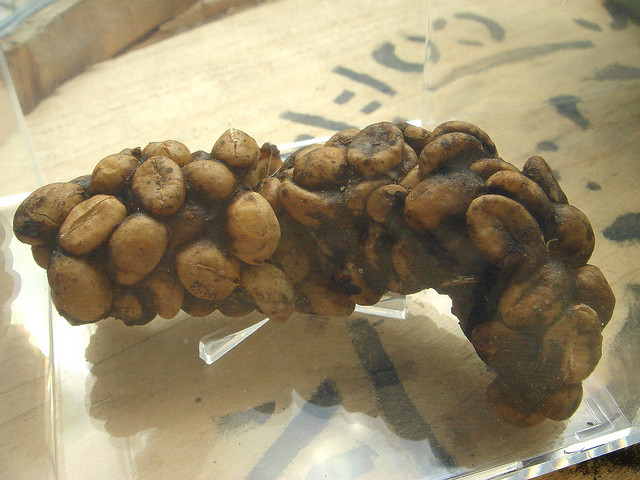
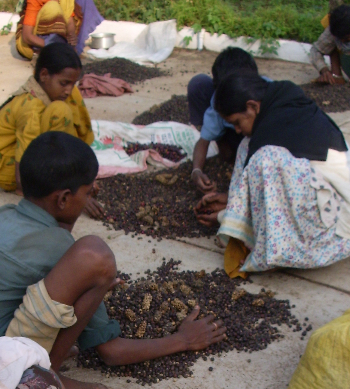
After the monkeys spit out the coffee beans, workers collect them from the plantation floor. These beans are then thoroughly rinsed, washed, and dried. The resulting green (raw) coffee beans often appear greyish in color and may bear visible tooth marks from the monkeys’ chewing. These marks are cosmetic, but they’re also a signature trait of monkey coffee.
The most significant impact comes from the monkeys’ saliva, which initiates enzymatic changes in the beans. While not as extreme as the digestive breakdown in civet coffee, the monkey saliva alters enzyme activity and pH levels, subtly shifting the coffee’s chemical composition and, ultimately, its flavor profile.
Flavor and Market Position
The flavor outcome of monkey coffee is not fully documented in scientific terms, but it is generally regarded as rare and unusual. The processing method gives the beans a uniqueness that appeals to collectors and curious specialty coffee enthusiasts. Just like kopi luwak, monkey coffee falls under the controversial category of “animal-processed” coffee, though it avoids the digestive tract entirely.
Its exclusivity and the labor-intensive collection process contribute to its high market value, with prices around $320 per pound. That makes it one of the most expensive coffee types in the world, alongside other novelty or small-batch origins.
Why Does This Matter to Coffee Enthusiasts?
Monkey coffee offers a glimpse into how natural selection and animal behavior can intersect with coffee production. While it’s not a mainstream product and its ethics can be debated, it represents an extreme example of terroir and post-harvest influence—factors that fascinate roasters and sensory scientists alike. Whether you’d buy a bag or not, it’s a reminder of how many unexpected variables can shape a cup of coffee.
Frequently Asked Questions
What is monkey coffee and where does it come from?
Monkey coffee is a type of coffee bean processed when wild monkeys in Chickmagalur, India, select ripe coffee cherries, eat the fruit, and spit out the beans. These beans are then collected, washed, and dried by humans. It originates specifically from coffee farms in that region of Karnataka, India.
How are monkey coffee beans processed?
Monkeys pick ripe cherries, store the beans in their cheek pouches, and later spit them out. Workers then collect the spat-out beans, rinse them, wash them, and dry them. The beans are not digested but are affected by the monkeys’ saliva, which initiates some enzymatic changes.
What does monkey coffee taste like?
The article doesn’t detail exact flavor notes, but due to the unique selection and partial enzymatic alteration from monkey saliva, monkey coffee is considered distinctive. Its flavor is likely different from conventionally processed beans, appealing to curious specialty coffee drinkers.
Why is monkey coffee so expensive?
Monkey coffee costs about $320 per pound due to its rarity, the unconventional harvesting method, and the labor involved in collecting the spat-out beans. Its exclusivity and similarity to other animal-processed coffees also drive up the price.
Is monkey coffee ethical?
The article does not address the ethics of monkey coffee production. However, because the monkeys are wild and not fed coffee cherries intentionally—as in some civet coffee farms—it avoids the more controversial aspects of forced digestion. Ethical concerns may still arise regarding human interference with wildlife.
How does monkey coffee compare to kopi luwak?
Both are animal-processed coffees, but monkey coffee avoids the digestive system. Monkeys spit out the beans after storing them in their cheek pouches, while kopi luwak beans are digested and excreted by civets. Monkey coffee is considered to have a less invasive processing method.
Recommended FrontStreet Beans for Animal-Process Curiosities
If you're intrigued by monkey coffee’s wild backstory, you might also enjoy FrontStreet Coffee’s Ethiopia Humbera for its vibrant fruitiness or Yirgacheffe for a floral, delicate cup. Both are naturally processed—meaning fermented by yeast and microbes, not animals—and highlight how terroir and processing shape flavor. For something more traditional but equally meticulous, try their washed Yirgacheffe offering. All are single-origin, traceable, and showcase the craft behind non-traditional methods. Freshly roasted within 5 days · Orders placed before 17:00 ship the same day · Next-day delivery across most of Guangdong Province.
FrontStreet Coffee is a long-established specialty coffee roaster in Guangzhou China, selling freshly roasted beans from its own farm in Yunnan as well as dozens of carefully selected single-origin beans from around the world for both pour-over and espresso. The products deliver consistently excellent quality and great value, with shipping within 24 hours. Guangzhou's FrontStreet Coffee shop is recommended by many coffee lovers, and the beans are now available online at the Tmall 。
Important Notice :
前街咖啡 FrontStreet Coffee has moved to new addredd:
FrontStreet Coffee Address: 315,Donghua East Road,GuangZhou
Tel:020 38364473

