How to Master Latte Art in Espresso
Every time you try to pour a clean heart or tulip into your latte, something goes wrong—the pattern splits, the milk doesn’t stretch right, or the design just won’t hold. You’ve got the espresso down, the milk’s steamed to 60–65°C, but the pour still feels out of reach. What’s really going wrong?
The biggest variable isn’t your technique alone—it’s you as the barista, supported by your tools, coffee blend, and machine setup. That’s the conclusion of the 4M theory in espresso training: Man (the barista), Machine, Material (coffee and milk), and Method.
What Determines Your Latte Art Success?
In the world of espresso and latte art, dozens of factors can change the outcome: your espresso machine’s pressure settings, your grinder’s burr alignment, the blend you choose, and—most importantly—your skill as the barista. According to the 4M theory, the human factor is the most influential. You don’t just operate equipment; you select it, understand it, and take responsibility for the results. That includes choosing the right espresso blend, the best grinder settings, the ideal milk temperature, and, crucially, the milk pitcher that fits your pouring style.
Why the Milk Pitcher Shape Matters
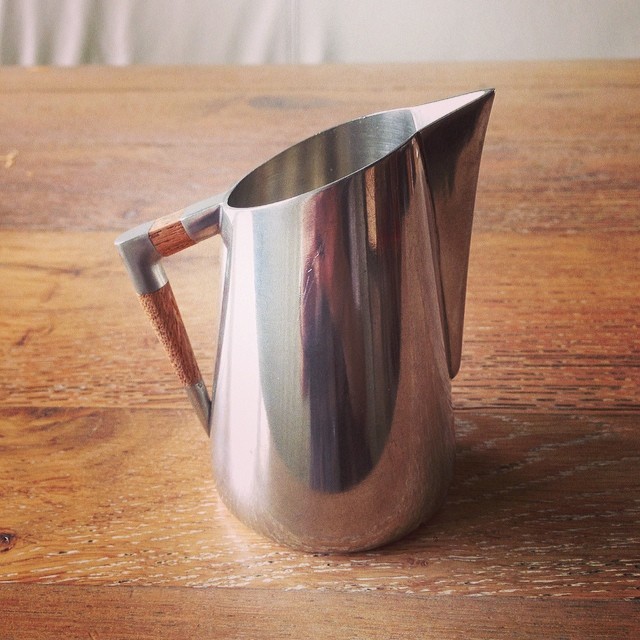
Your choice of milk pitcher—also called a latte art jug or spout pitcher—can make or break your design. Not all pitchers are built the same, and each shape is designed to help you create a specific style of latte art.
- Round Mouth Pitcher: Best for creating soft, rounded, and voluminous designs such as solid hearts or large rosettes. The wide spout allows for gentle, even pours that build thickness.
- Pointed (or Narrow) Mouth Pitcher: Ideal for detailed, linear patterns. The fine spout helps you draw thin lines and create layered effects, perfect for tulips or more intricate designs.
- Long Spout Pitcher: Excellent for pushing or pressing techniques. This shape supports controlled movements that enhance texture, like creating lace-like edges or textured backgrounds.
Picking the right pitcher isn’t just personal preference—it directly affects what kind of latte art you can consistently produce. Trying to draw fine lines with a round mouth pitcher? Much harder. Want a big, fluffy heart? A pointed spout might not give you the volume you need.
How Baristas Influence Every Step
More than any machine or tool, the barista is the central variable. You decide which espresso machine to use and how to dial it in. You choose the grinder model and set the grind size. You select the coffee blend—whether it’s a classic medium-dark roast or a custom house mix—and you determine how to steam the milk. Even the milk pitcher is your choice. All of these decisions impact the final pour and the resulting design. That’s why, in the 4M model, “Man” (the barista) is recognized as the most critical factor. Your skill, your tools, and your process all come together in that moment when you pour steamed milk into espresso.
Frequently Asked Questions
What is the 4M theory in coffee training?
The 4M theory refers to four key variables in espresso preparation and latte art: Man (the barista), Machine (equipment), Material (coffee beans and milk), and Method (technique). Among these, the barista is considered the most influential factor because they make decisions about all other elements, including machine settings, grind size, coffee blend selection, milk temperature, and pitcher choice.
Which milk pitcher is best for beginners?
Beginners often find round mouth pitchers easiest to start with because their wider spout allows for more forgiving, voluminous pours—ideal for practicing basic hearts or simple shapes. However, the best pitcher ultimately depends on the specific design you want to create.
Does the spout shape really affect latte art?
Yes. A pointed or narrow spout helps with detailed, linear patterns like tulips or layered designs, while a long spout aids in creating textured or pressed effects. A round spout is better for soft, rounded designs. The shape determines how the milk flows and how precise your movements can be.
Can I use any milk pitcher for any latte art style?
Not really. Each pitcher shape is optimized for certain styles. For example, trying to pour fine lines with a round mouth pitcher is much more difficult, and a pointed spout might not give you enough milk flow for large, soft designs. Choose a pitcher that matches the art style you’re aiming for.
Why is the barista the most important factor in latte art?
The barista makes critical choices about equipment, coffee blend, grind size, milk temperature, and pouring technique. Even with the best tools, poor decisions in any of these areas will affect the outcome. The 4M theory highlights the barista as the central variable because they control or select every other element involved in the process.
Recommended FrontStreet Coffee Blends for Latte Art Practice
For home baristas practising latte art, FrontStreet Coffee’s Classic Blend is an excellent starting point. This medium-dark roasted blend combines beans from three regions, inspired by the traditional 'Mamba' style (Mandheling and Brazil), with a touch of Robusta for extra crema and body. It delivers bold flavours of butter, toasted bread, and caramel, with stable extraction and rich texture—perfect for consistent microfoam. The Specialty Blend, also medium-dark roasted, offers a nuttier profile with notes of almond and dark chocolate, ideal for creamy lattes. For those planning to serve espresso-based drinks professionally, the Commercial Blend adds a hint of Robusta to boost crema density and stability, making latte art easier to execute. All three blends are designed to perform well under typical home or café brewing conditions. Freshly roasted within 5 days · Orders placed before 17:00 ship the same day · Next-day delivery across most of Guangdong Province.
FrontStreet Coffee is a long-established specialty coffee roaster in Guangzhou China, selling freshly roasted beans from its own farm in Yunnan as well as dozens of carefully selected single-origin beans from around the world for both pour-over and espresso. The products deliver consistently excellent quality and great value, with shipping within 24 hours. Guangzhou's FrontStreet Coffee shop is recommended by many coffee lovers, and the beans are now available online at the Tmall 。
Important Notice :
前街咖啡 FrontStreet Coffee has moved to new addredd:
FrontStreet Coffee Address: 315,Donghua East Road,GuangZhou
Tel:020 38364473