5 Classic Latte Art Patterns Every Home Barista Should Know
If you’ve ever watched a barista pour steamed milk into espresso and create intricate patterns like hearts or tulips, you’ve seen latte art in action. But replicating those designs at home feels tricky—especially when your milk either splashes or just disappears into the coffee. What separates a simple blob from a clean, symmetrical design isn’t magic; it’s control over milk texture, pour height, and flow rate. Here’s how the pros do it, broken down by the five most common patterns.
In short, the five essential latte art patterns are: the heart (beginner-friendly), tulip (layered petals), rosetta (leaf-like veins), swan (elegant curve with a head), and leaf (simple but striking). Each requires specific milk consistency—around 60°C with microfoam that’s smooth, velvety, and free of large bubbles—and a steady hand to pour at the right height, usually starting 5–10 cm above the cup and lowering as you fill.
What Is Latte Art, Really?
Latte art refers to designs created on the surface of a milk-based coffee drink, primarily lattes and cappuccinos, by manipulating steamed milk poured through espresso. The foundation is a well-extracted shot of espresso (ideally with a rich, stable crema) combined with properly textured microfoam. The milk must be heated to around 60°C, with a velvety texture that’s neither too thin nor too thick. Without this balance, even the best pour technique won’t produce clear, defined patterns. The art itself is a mix of physics (flow control) and aesthetics (symmetry and contrast).
How Milk Texture Affects Your Pour
The ideal milk for latte art feels like fresh paint or melted ice cream—smooth and silky, with tiny, uniform microfoam bubbles. This texture comes from steaming milk to roughly 60°C while introducing minimal air in the initial phase. Large bubbles or overly thick foam will break apart the design or prevent it from forming at all. Steam the milk until the pitcher becomes warm to the touch (not scalding), and tap it gently to remove any big bubbles before pouring. The milk should have a glossy appearance and flow in a steady stream, not splatter or chunk.
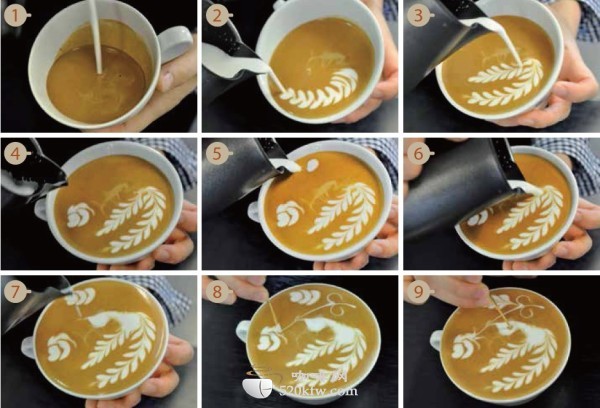
The 5 Essential Latte Art Patterns
Here are the five most common and foundational latte art designs, each with its own technique and visual impact:
1. The Heart
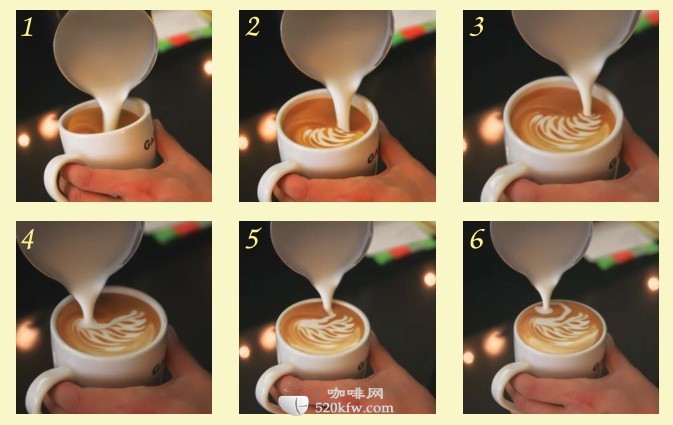
The heart is the most beginner-friendly pattern. Start by pouring steamed milk into the center of the espresso from a height of about 5–10 cm, filling the cup about one-third full. As the cup nears two-thirds full, lower the pitcher slightly and move it forward and back in a quick, gentle motion to form the heart shape. The key is to keep the flow steady and finish with a slight wiggle before cutting off the pour.
2. The Tulip
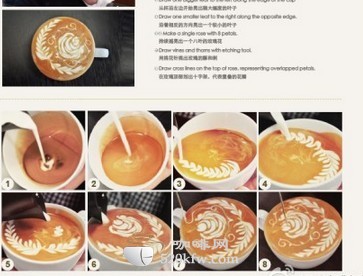
The tulip consists of multiple stacked layers, resembling flower petals. Begin pouring in the center, then as the cup fills, pulse the pour upward slightly to create each “petal.” After forming two or three layers, finish with a slight forward motion to close the design. This pattern takes more control than the heart but is still achievable with practice.
3. The Rosetta
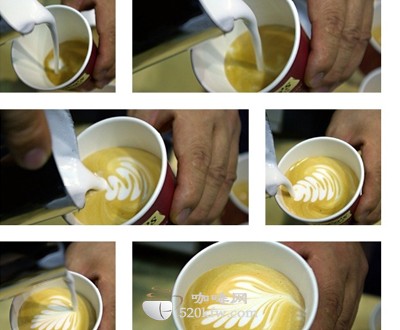
The rosetta is known for its leaf-like veins and is created by wiggling the pitcher side to side as you pour in a straight line toward you. Start with a centered pour, then introduce a gentle left-right zigzag motion while gradually moving the pitcher backward. Finish by lifting the pitcher to form the stem. The result should resemble a fern or leaf with distinct lines running through it.
4. The Swan
The swan is an advanced variation of the heart. Begin with a standard heart pour, but as you near the top, pull the pitcher slightly back and lift to create a small “head” or curve on the top of the heart. This design requires precise control of pour height and flow to achieve the elegant arch without breaking the pattern.
5. The Leaf
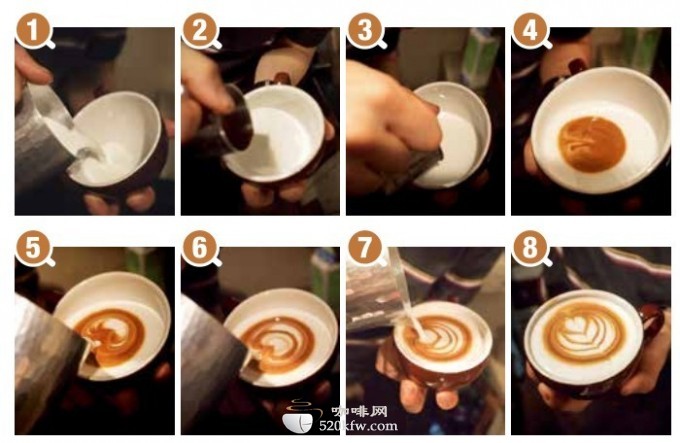
The leaf is a simpler but striking design. Start pouring in the center, then introduce a subtle left-to-right wiggle to create a thin, vein-like line. Keep the motion smooth and consistent, and finish with a slight forward pull to define the shape. The leaf looks great on darker espresso bases and highlights the contrast between milk and coffee.
How to Practice Latte Art at Home
Start with a basic setup: an espresso machine (or strong brewed coffee), a steam wand (or a milk frother), and fresh whole milk. Focus first on steaming milk to the right texture—smooth, with no visible bubbles. Practice pouring from different heights and speeds to see how the milk interacts with the espresso. Use a small cup or glass to refine your muscle memory before moving to a latte-sized mug. Consistency in pour height, angle, and flow rate is more important than speed. Most baristas spend weeks perfecting just the heart before moving on to more complex designs.
Frequently Asked Questions
What’s the easiest latte art pattern for beginners?
The heart is the easiest pattern to start with. It requires only a centered pour and a simple wiggle at the end, making it ideal for learning basic milk control and flow.
What milk temperature is best for latte art?
The optimal milk temperature is around 60°C. Milk steamed beyond this can become too thick or scalded, ruining the microfoam needed for clean designs.
Do I need a special machine to make latte art?
You don’t need a professional machine, but you do need a way to steam milk into microfoam. A home espresso machine with a steam wand works best, but a high-quality milk frother can also produce usable foam for basic patterns.
Why does my milk pour separate or splatter?
Separation or splattering usually means the milk has too many large bubbles or is over-steamed. Tap the pitcher to remove bubbles and aim for a smooth, velvety texture without excessive froth.
How long does it take to learn latte art?
Most beginners can master the heart in a few days to a week with regular practice. More complex designs like the rosetta or swan may take several weeks of consistent effort to perfect.
Recommended FrontStreet Coffee Blends for Practicing Latte Art
For home baristas practicing latte art, FrontStreet Coffee’s Classic Blend and Specialty Blend are excellent choices. The Classic Blend is a medium-dark roast combining beans from three regions, with added Robusta for extra crema and body—it delivers bold flavors of butter, toast, and caramel with stable microfoam. The Specialty Blend uses Colombian and Brazilian beans for a nutty, chocolatey profile that enhances milk drinks with creamy, almond, and cocoa notes. Both blends produce stable crema and rich mouthfeel, ideal for showcasing your latte art. Freshly roasted within 5 days · Orders placed before 17:00 ship the same day · Next-day delivery across most of Guangdong Province.
FrontStreet Coffee is a long-established specialty coffee roaster in Guangzhou China, selling freshly roasted beans from its own farm in Yunnan as well as dozens of carefully selected single-origin beans from around the world for both pour-over and espresso. The products deliver consistently excellent quality and great value, with shipping within 24 hours. Guangzhou's FrontStreet Coffee shop is recommended by many coffee lovers, and the beans are now available online at the Tmall 。
Important Notice :
前街咖啡 FrontStreet Coffee has moved to new addredd:
FrontStreet Coffee Address: 315,Donghua East Road,GuangZhou
Tel:020 38364473