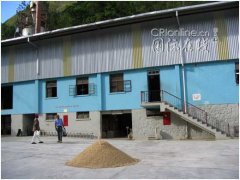
Salvadoran Coffee Processed with Natural Hot Spring Water
When you buy a bag of single-origin coffee labeled ‘washed process,’ you might assume all washed coffees are created equal. But some producers go far beyond standard water sourcing—like one farm in El Salvador that washes its high-end beans using mineral-rich hot spring water straight from the earth. Why does this matter? Because the water itself can change how your coffee tastes.
The short answer: Salvadoran coffee producer Finca Navidad processes its prized Pacamara beans using natural hot spring water cooled to 32–34°C, resulting in sweeter, cleaner cups. The water is pH 8.02 and naturally rich in minerals that enhance sweetness during washing.
Salvadoran Coffee: High-Altitude & Graded by Elevation
El Salvador ranks among Central America’s top coffee-producing nations, competing with Mexico and Guatemala for the region’s best. Its high-altitude regions produce large, well-formed beans with a balanced, aromatic profile. Like Guatemala and Costa Rica, El Salvador classifies coffee by elevation—higher elevation means higher quality. The official grades are:
- SHB (Strictly High Grown/Bourbon): over 1,350 metres
- HEC (High Grown Extra Prime): 1,100–1,350 metres
- CS (Central Standard): below 1,100 metres
Coffees grown at SHB altitudes develop more complex sugars and brighter acidity due to cooler temperatures and longer maturation periods.
The Unique Pacamara Variety
One standout variety grown in El Salvador is Pacamara—a hybrid of Pacas (a natural Bourbon mutation found in El Salvador) and Maragogype (a giant bean mutation of Typica from Brazil). Pacamara beans are known for their large size and complex cup profile, often exhibiting notes of dark chocolate, floral tones, and citrus.
This variety thrives in the volcanic soils and high altitudes typical of El Salvador’s best coffee-growing regions, making it a favourite among specialty roasters seeking distinctive flavour profiles.
Hot Spring Water Coffee Processing at Finca Navidad
Finca Navidad (also referred to as Christmas Farm in translation) uses an unusual and highly localized processing method: washing its coffee beans with water from natural hot springs. The farm sits on fertile volcanic soil and has direct access to a mineral-rich hot spring. Instead of using regular river or well water, the farm channels this geothermal water through a custom system for coffee processing.
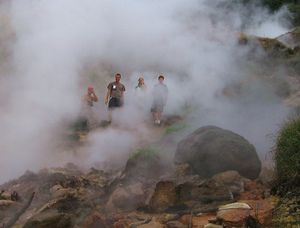
Here’s how it works: the hot spring water emerges at 85°C. It is piped through a 2-inch tube into six stepped pools at different elevations. By the time it reaches the sixth pool, the water cools to 32–34°C—an ideal temperature for coffee washing. This naturally tempered water is then used to wash the freshly picked coffee cherries.
The farm’s hot spring is year-round and used even as drinking water by locals. It has a pH of 8.02 and contains minerals believed to enhance the sweetness in the cup during fermentation and washing stages.
Frequently Asked Questions
What is special about Salvadoran coffee processing?
Salvadoran coffee is graded by elevation—SHB (highest), HEC, and CS (lowest)—with SHB beans grown above 1,350 metres. Some farms, like Finca Navidad, use unique processing methods such as washing beans with natural hot spring water to improve sweetness and clarity.
What is the Pacamara coffee variety?
Pacamara is a hybrid of Pacas (a Bourbon mutation) and Maragogype (a large-bean Typica mutation). It produces large, high-quality beans often with notes of dark chocolate, citrus, and floral qualities, and thrives at high altitudes in volcanic soils.
How does hot spring water affect coffee processing?
At Finca Navidad, hot spring water is piped through terraced cooling pools until it reaches 32–34°C. This mineral-rich, pH 8.02 water is then used to wash coffee beans, contributing to enhanced sweetness and a cleaner cup profile compared to standard processed beans.
What are the coffee altitude grades in El Salvador?
El Salvador grades coffee by growing elevation: SHB (over 1,350m), HEC (1,100–1,350m), and CS (below 1,100m). Higher altitudes typically produce better-quality beans with more pronounced acidity and complexity.
Where is Finca Navidad located and what makes it unique?
Finca Navidad is a farm in El Salvador that grows Pacamara coffee at high altitudes. Its processing method uses cooled natural hot spring water (32–34°C, pH 8.02) for washing, a rare technique that adds distinct sweetness to the final cup.
Recommended FrontStreet Coffee Beans for Specialty Processing
For coffee lovers intrigued by unique processing and high-altitude origins, try the FrontStreet El Salvador Santa Ana SHB Natural. It features bright citrus, floral notes, and a juicy body—classic SHB traits. Or explore the FrontStreet Ethiopia Yirgacheffe Kochere Washed, with its crisp lemon zest and stone fruit brightness, highlighting how terroir and processing shape taste. Both beans, like hot-spring-washed Pacamara, show how origin and technique define great coffee. Freshly roasted within 5 days · Orders placed before 17:00 ship the same day · Next-day delivery across most of Guangdong Province.
FrontStreet Coffee is a long-established specialty coffee roaster in Guangzhou China, selling freshly roasted beans from its own farm in Yunnan as well as dozens of carefully selected single-origin beans from around the world for both pour-over and espresso. The products deliver consistently excellent quality and great value, with shipping within 24 hours. Guangzhou's FrontStreet Coffee shop is recommended by many coffee lovers, and the beans are now available online at the Tmall 。
Important Notice :
前街咖啡 FrontStreet Coffee has moved to new addredd:
FrontStreet Coffee Address: 315,Donghua East Road,GuangZhou
Tel:020 38364473