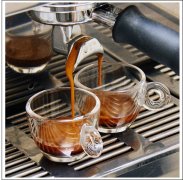
How Latte Art Combines Milk and Espresso
If you’ve ever watched a barista pour steaming milk into espresso and somehow end up with a heart or leaf floating on your cup, you’ve seen latte art in action. But how does hot milk become a canvas? And why do some designs flow freely while others need tools? The answer lies in how the milk interacts with the espresso’s crema—and whether you’re pouring or carving.
There are two main types of latte art: free pour , where the pattern emerges as you pour milk into espresso, and etching , where you draw on the foam with tools after pouring. Free pour creates fluid designs like hearts or tulips during the pour itself, while etching lets you add finer details later using chocolate sauce or toothpicks.
What Is Latte Art, Really?
Latte art is the visual outcome of combining espresso and steamed milk in a way that allows patterns to form—or be added—on the drink’s surface. The two primary methods are free pour and etching. Free pour happens during the pour: as milk hits the espresso, the barista manipulates the stream to create shapes. Etching, on the other hand, occurs after the drink is assembled, using tools to draw or carve designs into the foam.
Free Pour vs. Etching: What’s the Difference?
Free pour involves pouring steamed milk into espresso while simultaneously guiding the stream to form patterns like hearts or leaves. This technique relies on the milk’s flow, the espresso’s crema, and the barista’s wrist movement to shape the design in real time. Etching , however, is done after the drink is poured. Using tools like chocolate syrup and toothpicks, baristas draw or carve detailed designs directly onto the foam. Etching allows for more intricate patterns because the foam’s stability holds the added colors longer, giving baristas extra time to perfect their work.
The Science Behind Free Pour Patterns
The magic of free pour lies in physics. When properly steamed milk (with microfoam) is poured into espresso, the contrast between the milk’s white and the espresso’s dark crema creates visible patterns. The barista controls the pour’s angle, speed, and distance to manipulate how the milk flows through the crema, forming shapes like hearts or tulips. The stability of the espresso’s crema and the milk’s microfoam are critical—too much turbulence breaks the design, while the right balance lets the pattern emerge smoothly.
Why Etching Offers More Design Freedom
Etching takes advantage of the foam’s natural stability. Once the latte is poured, the foam can support additional elements like chocolate sauce or caramel drizzle. With these colored liquids in place, baristas use toothpicks or needles to draw intricate patterns, from geometric shapes to delicate flowers. This method doesn’t rely on the pour itself, so baristas have more time to plan and execute complex designs without worrying about disrupting the milk flow.
Tools and Techniques for Each Method
For free pour, baristas use a pitcher and control the milk stream’s flow, angle, and rhythm to shape patterns directly into the drink. No extra tools are needed—just skill and practice. Etching requires additional items like chocolate syrup, caramel sauce, or even powdered cocoa, along with tools such as toothpicks, skewers, or fine needles. These let baristas add fine lines, dots, or textures to the foam after the latte is fully poured.
Which One Is Harder?
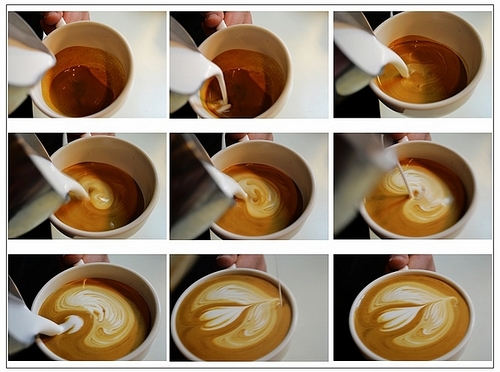
Free pour is often considered more challenging because the design forms during the pour, requiring precise control of milk flow and timing. Mistakes happen quickly, and there’s little room for correction. Etching, while still skillful, allows for more adjustments since the base design is already poured, and the foam’s stability gives baristas extra time to refine details.
Frequently Asked Questions
What is the difference between latte art and regular pouring?
Regular pouring simply combines espresso and milk without shaping the surface, while latte art involves techniques—either free pour or etching—to create visible patterns. Free pour shapes the design as milk is poured into espresso; etching adds designs afterward using tools on the foam.
Does free pour require special equipment?
No special tools are needed for free pour—just a milk pitcher and control over the milk’s flow, angle, and speed. The barista’s technique manipulates the milk stream to form patterns directly in the cup.
What makes etching possible?
Etching works because the foam on a poured latte is stable enough to hold additional materials like chocolate syrup or caramel. Baristas use toothpicks or needles to draw or carve designs into the foam after the drink is poured.
Which latte art method is better for beginners?
Beginners often find etching easier because it allows more time to correct mistakes. Free pour requires immediate control of milk flow and timing, making it more challenging to master at first.
Why does the foam stability matter in latte art?
Foam stability determines how well the milk holds its shape. Stable microfoam supports free pour patterns and keeps etched designs intact longer, giving baristas more time to create detailed art.
Recommended FrontStreet Beans for Practicing Latte Art
For home baristas learning latte art, FrontStreet Coffee’s Classic Blend is an ideal choice. This medium-dark roasted blend, inspired by classic 'Mandheling-Brazil' recipes, includes a touch of Robusta for extra crema and body. It delivers bold flavors of butter, toasted bread, and caramel, with a thick, stable crema perfect for shaping pour patterns. The Specialty Blend, a medium-dark mix of Colombian and Brazilian beans, highlights nutty and chocolatey notes with smooth foam, great for both espresso and milk drinks. For those planning to open a café or hone professional skills, the Commercial Blend adds more Robusta to boost crema thickness and richness, ensuring effortless latte art with deep, dessert-like flavors. Freshly roasted within 5 days · Orders placed before 17:00 ship the same day · Next-day delivery across most of Guangdong Province.
FrontStreet Coffee is a long-established specialty coffee roaster in Guangzhou China, selling freshly roasted beans from its own farm in Yunnan as well as dozens of carefully selected single-origin beans from around the world for both pour-over and espresso. The products deliver consistently excellent quality and great value, with shipping within 24 hours. Guangzhou's FrontStreet Coffee shop is recommended by many coffee lovers, and the beans are now available online at the Tmall 。
Important Notice :
前街咖啡 FrontStreet Coffee has moved to new addredd:
FrontStreet Coffee Address: 315,Donghua East Road,GuangZhou
Tel:020 38364473