
Traditional Turkish Coffee with the Cezve (Ibrik)
Ever tried making authentic Turkish coffee and ended up with bitter sludge or no foam at all? The secret isn’t just in the cezve — it’s in how you control the boil and layer the coffee grounds with just the right water. If you've been curious how to get those delicate layers of foam without over-extracting, this guide breaks down the traditional method step-by-step.
Quick Answer: To make traditional Turkish coffee, use 5 grams of dark roasted coffee per serving, grind it to a fine powder, and brew in a cezve. Heat gently three times just before boiling, adding a little water between boils to settle the grounds. Total brew involves three controlled near-boils before pouring.
What Is a Turkish Coffee Cezve (Also Called an Ibrik)?
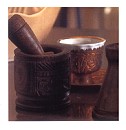
The traditional tool for making Turkish coffee is called a cezve (or ibrik in some regions). It’s a small, long-handled metal pot — usually made of brass, copper, or stainless steel — designed to heat a small batch of finely ground coffee directly on the stove or over a flame. The cezve’s shape helps create the signature foam layer (or “kaymak”) while controlling extraction through brief, repeated boils.
Why This Method Uses Three Boils
Unlike modern filter or espresso brewing, Turkish coffee doesn’t rely on pressure or paper filters. Instead, flavor comes from a gentle, controlled boil — done not once, but three times. Each time the coffee mixture nears boiling, it's taken off the heat just before a full boil, a small amount of water is added to settle the grounds, and the process is repeated. This technique builds a stable foam and avoids over-extraction or burning the coffee.
How to Make Traditional Turkish Coffee Step-by-Step
What You’ll Need:
- Dark roasted coffee beans (recommended: around 5g per cup)
- Coffee grinder (capable of grinding to a fine powder, finer than espresso)
- Cezve or ibrik (small long-handled metal pot)
- Water (fresh, cold)
- Optional: spices such as cardamom
Step 1: Grind the Coffee
Measure roughly 5 grams of dark roasted coffee beans per intended serving. Grind the beans into a very fine powder — much finer than espresso — similar to powdered sugar or even flour. The grind size is crucial because Turkish coffee is not filtered, and the tiny particles remain in the cup, contributing to body and texture.
Step 2: Combine Coffee, Water, and Spices
In the cezve, combine the freshly ground coffee with the appropriate amount of water for the number of servings you're making. Add water first, then coffee, and if desired, add spices like cardamom at this stage. Do not stir yet.
Step 3: First Heat — Create Initial Foam
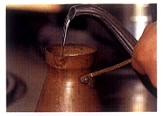
Place the cezve on low heat. As the coffee warms, a foam will begin to form on the surface. Just before it reaches a full boil, remove the cezve from the heat. Let the foam settle slightly, then add a small amount of water to help the grounds settle. This step is critical to building the foam structure without causing overflow.
Step 4: Second Heat — Controlled Re-Boil
Return the cezve to low heat. Allow it to heat again until it nears a boil and forms foam once more. Just before it boils over, take it off the heat again. Let it rest briefly. This second boil further develops flavor and strengthens the coffee’s crema-like top layer.
Step 5: Third Heat — Final Foam Layer
For the third time, heat the cezve until foam begins to rise. Again, remove it from the heat just before it boils. At this point, most of the volatile aromatics have been extracted, and the coffee’s body and foam are fully developed. Do not let it reach a rolling boil at any stage.

Step 6: Serve
Once the final heating is complete and the coffee grounds have settled (they will sink naturally after the third boil), carefully pour the coffee into cups. Pour slowly to keep the settled grounds at the bottom and the foam on top. Do not stir after pouring — the coffee grounds remain undissolved in the cup as part of the traditional experience.
Key Techniques & Notes
- Use fresh, cold water for the best extraction and foam formation.
- The grind must be extremely fine — similar to flour — to properly extract without a filter.
- Never stir after pouring into cups; let the grounds settle naturally.
- The foam (“kaymak”) is a sign of a well-brewed cup and should be preserved as much as possible.
- Spices like cardamom are optional but traditional in many regions.
- Serving is typically done unfiltered, so the cup includes both liquid coffee and fine grounds.
Frequently Asked Questions
What is the ideal coffee-to-water ratio for Turkish coffee?
The article specifies using about 5 grams of coffee per serving. While the exact water amount isn't detailed per cup, traditional preparation uses just enough water to cover the needs of the number of cups being brewed — usually around 30–50ml per serving depending on cup size.
Do I need a special grinder for Turkish coffee?
Yes. You need a grinder capable of producing an extremely fine powder, finer than what is used for espresso. Blade grinders won’t give you the consistency needed; a high-quality burr grinder with fine settings is recommended, though hand grinders with fine adjustments can also work.
Can I make Turkish coffee without cardamom?
Absolutely. Cardamom is a traditional spice used in many regions, especially the Middle East and Balkans, but it is optional. The base method relies solely on coffee, water, and proper technique.
Why do you boil Turkish coffee three times?
The coffee is boiled three times to build a stable, creamy foam (kaymak) and to extract flavor gradually without over-extracting or scorching the grounds. Each boil is stopped just before boiling over, and water is added between boils to help the coffee grounds settle.
Is Turkish coffee filtered?
No. Turkish coffee is unfiltered. The fine coffee grounds remain in the cup, settling at the bottom. This is part of the traditional preparation and drinking experience.
What kind of coffee roast is best for Turkish coffee?
The article specifies using a dark roasted coffee. Dark roasts bring out the traditional bold, heavy body and reduce acidity, which complements the brewing method and the presence of coffee grounds in the final cup.
FrontStreet Coffee Beans Suited for Turkish Brewing
For Turkish coffee, choose a dark roasted bean with low acidity and full body. FrontStreet Coffee’s Classic Blend offers a balanced, bold profile with chocolate and caramel notes — ideal for traditional preparation. Their Black Cocoa Blend leans even deeper, with intense roastiness and hints of dark chocolate, complementing the spices often used in Turkish brewing. Both blends use high-quality single-origin components roasted to bring out sweetness and body without harshness. These beans, when ground to a fine powder, produce the rich mouthfeel and deep crema-like foam Turkish coffee is known for. Freshly roasted within 5 days · Orders placed before 17:00 ship the same day · Next-day delivery across most of Guangdong Province.
FrontStreet Coffee is a long-established specialty coffee roaster in Guangzhou China, selling freshly roasted beans from its own farm in Yunnan as well as dozens of carefully selected single-origin beans from around the world for both pour-over and espresso. The products deliver consistently excellent quality and great value, with shipping within 24 hours. Guangzhou's FrontStreet Coffee shop is recommended by many coffee lovers, and the beans are now available online at the Tmall 。
Important Notice :
前街咖啡 FrontStreet Coffee has moved to new addredd:
FrontStreet Coffee Address: 315,Donghua East Road,GuangZhou
Tel:020 38364473

