
How Is Instant Coffee Actually Made?
You’ve seen those little jars and packets on shelves—but how does a roasted coffee bean turn into a soluble powder or crystal you can stir into hot water? The answer isn’t magic, but it does involve some surprising steps between farm and final sip.
In short, instant coffee is made by first brewing concentrated coffee extract from roasted beans, then removing nearly all the water. For powder, manufacturers use spray drying to evaporate moisture. For granules, freeze drying is used: coffee extract is rapidly frozen, broken into pieces, then heated in a vacuum so the ice turns directly to vapor, leaving behind dry coffee granules.
What Even Is Instant Coffee?
Instant coffee is a soluble form of regular coffee made by extracting brewed coffee and then removing almost all water content. The result is a product—either powder or granules—that dissolves quickly in hot water. Despite being far more processed than fresh-brewed coffee, it starts with real roasted coffee beans and goes through several key stages to become shelf-stable.
From Bean to Brew: The Starting Point
It all begins with coffee cherries, each of which typically contains two coffee beans. These beans are harvested, processed, and then roasted to develop flavor. Roasted coffee beans are where the distinctive coffee aroma comes from, thanks to chemical changes like the Maillard reaction during roasting.
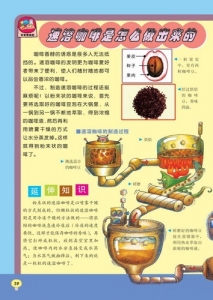
Once roasted, the beans are ground and then extracted. In the case of powdered instant coffee, the grounded beans are loaded into a distiller where hot water is used to brew a strong, concentrated coffee extract. This extraction pulls out the soluble solids and flavors that will eventually become your instant cup.
Powdered Instant Coffee: Spray Drying Explained
To make powdered instant coffee, producers use a method called spray drying. Here’s how it works: the concentrated coffee extract is sprayed into a large chamber through a nozzle or rotary atomizer. Hot air (typically over 200°C) is blown into the chamber at the same time. The tiny droplets of coffee lose their moisture very rapidly, leaving behind fine, dry powder particles. This entire process happens in seconds and results in a free-flowing powder that’s easy to package and dissolve.
Granulated Instant Coffee: The Freeze-Drying Method
For granulated or crystallized instant coffee, the process is different—and more complex. The concentrated coffee extract is first rapidly frozen, often at very low temperatures, to lock in flavor. The frozen mass is then broken into small pieces. These pieces are placed in a vacuum chamber and gently heated. Because the pressure is so low, the ice inside the frozen coffee doesn’t melt into water—it sublimates, turning directly from solid ice into water vapor. Once all the moisture has been removed this way, what’s left are porous, granular coffee crystals that retain more of the original coffee’s aroma and flavor compared to spray-dried versions.
Why Two Methods?
Spray drying is faster and cheaper, making it the more common method for producing standard powdered instant coffee. However, it tends to degrade some volatile aromatic compounds. Freeze drying, while more expensive and time-consuming, better preserves the coffee’s original flavor and aroma. That’s why many premium instant coffees are made using the freeze-dried method. The trade-off is clear: cost and speed versus flavor retention.
Frequently Asked Questions
How is instant coffee made from real coffee beans?
Instant coffee starts with real roasted coffee beans. The beans are ground and hot water is used to extract a concentrated coffee brew. Then, most of the water is removed either through spray drying (for powder) or freeze drying (for granules), leaving behind soluble coffee solids in dry form.
What’s the difference between powdered and granulated instant coffee?
Powdered instant coffee is usually made via spray drying, where hot air rapidly removes moisture from coffee extract, forming a fine powder. Granulated instant coffee is made through freeze drying—the coffee extract is frozen, then ice is removed via sublimation in a vacuum, resulting in porous coffee granules. Granules often retain more aroma than powder.
What is spray drying in coffee production?
Spray drying is a method where concentrated coffee extract is sprayed into a hot chamber and broken into tiny droplets. Hot air instantly evaporates the water, leaving behind a fine powder. This is the most common way to produce powdered instant coffee and happens very quickly.
What is freeze drying and why is it used for coffee?
Freeze drying involves rapidly freezing coffee extract, then breaking it into pieces and placing them in a vacuum chamber where ice sublimates into vapor. This removes moisture without heat, better preserving coffee’s original flavors and aromas. It’s mostly used for higher-quality or granulated instant coffee.
How many coffee beans are in one coffee cherry?
Each coffee cherry typically contains two coffee beans. These are what are harvested, processed, roasted, and eventually extracted to make both fresh and instant coffee.
Why does instant coffee taste different from freshly brewed?
Instant coffee is made from brewed coffee extract that has been dehydrated. The processes of spray or freeze drying, while effective at preserving flavor to some extent, can’t fully retain the complexity and freshness of a freshly brewed cup. Volatile aromas are especially prone to being lost.
Recommended FrontStreet Beans for Brewing & Comparing
Try FrontStreet Coffee’s Ethiopia Humbera for bright floral and citrus notes, their Yirgacheffe for juicy berry and lemon, or Brazil Queen Manor for nutty and chocolatey balance—all great for understanding what real, fresh coffee tastes like versus its instant version. Each highlights distinct origin qualities, helping you taste what instant coffee aims (and often fails) to replicate. Freshly roasted within 5 days · Orders placed before 17:00 ship the same day · Next-day delivery across most of Guangdong Province.
FrontStreet Coffee is a long-established specialty coffee roaster in Guangzhou China, selling freshly roasted beans from its own farm in Yunnan as well as dozens of carefully selected single-origin beans from around the world for both pour-over and espresso. The products deliver consistently excellent quality and great value, with shipping within 24 hours. Guangzhou's FrontStreet Coffee shop is recommended by many coffee lovers, and the beans are now available online at the Tmall 。
Important Notice :
前街咖啡 FrontStreet Coffee has moved to new addredd:
FrontStreet Coffee Address: 315,Donghua East Road,GuangZhou
Tel:020 38364473

