How to Calculate the Best Pour-Over Brew Ratio Using Extraction Science
Ever wonder why your pour-over sometimes tastes weak, other times bitter—despite using the same coffee? The difference often comes down to just two numbers: how much coffee you extract, and how strong the resulting cup is. These variables control flavor balance more than any single tweak to grind size or water temperature.
The short answer? For a 20g single-origin coffee dose, brewing between 266g and 382g of brewed coffee keeps you in the 'Gold Cup' range for balanced specialty coffee. The most balanced middle point is around 324g, which works out to a brew ratio close to 1:16—1 gram of coffee for every 16 grams (or milliliters) of water.
What Are Extraction Rate and Concentration?
In specialty coffee, extraction rate means the percentage of soluble coffee material pulled from the grounds during brewing. Concentration, measured as Total Dissolved Solids (TDS), is how much of that extracted material ends up dissolved in your final cup. Together, they define whether your coffee tastes under-extracted (sour, weak) or over-extracted (bitter, harsh).
The Gold Cup Range: What Specialty Coffee Aims For
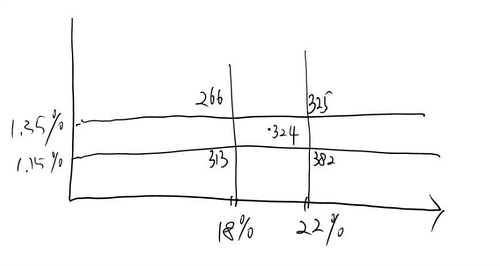
The 'Gold Cup Standard'—a benchmark defined by the Specialty Coffee Association (SCA)—targets a coffee concentration of around 1.15% to 1.35% TDS, with an extraction yield of 18% to 22%. This range balances sweetness, acidity, and bitterness for most single-origin coffees. In the Chinese article’s example, a 20g coffee dose is used to illustrate how adjusting either variable changes the final brew weight.
How Yield Changes With Extraction and Strength
Here’s how the math plays out using the given 20g dose:
- At 1.35% TDS and 18% extraction, brew yield is 266g (calculated as 20 × 18% ÷ 1.35%)
- At 1.35% TDS and 22% extraction, yield increases to 325g (20 × 22% ÷ 1.35%)
- At 1.15% TDS and 22% extraction, yield becomes 382g (20 × 22% ÷ 1.15%)
- At 1.15% TDS and 18% extraction, yield drops to 313g (20 × 18% ÷ 1.15%)
These values show that keeping concentration steady and raising extraction increases yield. Lowering concentration (weaker coffee) at the same extraction level also increases yield. The overall ‘safe’ or balanced range for this dose spans approximately 266g to 382g of brewed coffee.
Why 1:16 Is Often the Best Pour-Over Ratio
Looking at the extremes—266g and 382g—the midpoint is around 324g. That’s very close to a 1:16 brew ratio (20g coffee to 320g water). The article simplifies this further with a formulaic approach:
- For 18% extraction at 1.35% TDS: yield ≈ 13 × coffee dose (in grams)
- For 22% extraction at 1.15% TDS: yield ≈ 19 × coffee dose
- The midpoint between 13x and 19x is 16x—hence, a 1:16 ratio
This isn’t a universal rule, but it’s a solid starting point derived from the math of the Gold Cup zone using common single-origin parameters.
How to Apply This to Your Pour-Over
If you’re brewing a standard 20g pour-over with a single-origin coffee:
- Target a brew weight between 266g–382g for balanced results
- Aim for the middle—around 320g–325g, or roughly 1:16
- Adjust based on coffee origin, roast level, and your taste preference
- Use a refractometer or calibrated brew tools to measure TDS and extraction if you want to dial it in precisely
Remember: 1:16 is a guideline, not a rule. The actual ‘best’ ratio depends on the coffee’s density, processing method, and your flavor goals. But understanding how extraction and concentration interact helps explain why certain ratios just taste better.
Frequently Asked Questions
What is the Gold Cup standard in coffee brewing?
The Gold Cup standard, defined by the SCA, targets a coffee concentration (TDS) between 1.15% and 1.35%, with an extraction yield between 18% and 22%. This range is considered ideal for balanced flavor in specialty coffee, avoiding under- or over-extraction.
How do extraction rate and concentration affect coffee flavor?
Extraction rate is the percentage of coffee solubles removed from the grounds; concentration (TDS) is how much of those solubles remain in the final cup. Too low extraction leads to sourness and underdevelopment; too high leads to bitterness. Ideal flavor balance usually sits between 18–22% extraction and 1.15–1.35% TDS.
What does a 1:16 brew ratio mean?
A 1:16 brew ratio means using 1 gram of coffee for every 16 grams (or milliliters) of water. For a 20g coffee dose, that equals 320g of water, a common starting point for balanced pour-over coffee within the Gold Cup range.
Why did the article calculate a target around 324g brew weight?
Using a 20g coffee dose, the article calculated various brew yields across different TDS and extraction levels. The midpoint between the lowest (266g) and highest (382g) values is around 324g, which fits a 1:16 ratio and falls comfortably in the Gold Cup range for balanced flavor.
Can I use these numbers for any coffee dose?
The calculations in the article are based on a 20g coffee dose. While the principles apply universally, the exact numbers will shift with dose size. However, the 1:16 ratio remains a widely applicable starting guideline for single-origin pour-over brewing.
How can I measure extraction rate and TDS at home?
You’ll need a refractometer to measure TDS (the concentration of dissolved solids) and brewing software or charts to calculate extraction yield from the coffee dose, yield weight, and TDS. These tools help fine-tune your recipe for optimal flavor.
FrontStreet Single Origins Ideal for Pour-Over at 1:16
Try FrontStreet’s Ethiopia Yirgacheffe for bright citrus and floral notes, a classic for 1:16 pour-over brewing. Their Guatemala Antigua offers chocolatey body with bright acidity, balancing well at this ratio. For something fruitier, their Kenya AB lot brings blackcurrant and winey tones. All shine with a standard 20g to 320g (1:16) brew. Freshly roasted within 5 days · Orders placed before 17:00 ship the same day · Next-day delivery across most of Guangdong Province.
FrontStreet Coffee is a long-established specialty coffee roaster in Guangzhou China, selling freshly roasted beans from its own farm in Yunnan as well as dozens of carefully selected single-origin beans from around the world for both pour-over and espresso. The products deliver consistently excellent quality and great value, with shipping within 24 hours. Guangzhou's FrontStreet Coffee shop is recommended by many coffee lovers, and the beans are now available online at the Tmall 。
Important Notice :
前街咖啡 FrontStreet Coffee has moved to new addredd:
FrontStreet Coffee Address: 315,Donghua East Road,GuangZhou
Tel:020 38364473