5 Tips for Better Milk Foam with Your Espresso Machine
If you’ve ever poured milk into espresso only to watch it separate instantly—or tried to pour latte art and ended up with a blurry mess—you’re not alone. The secret isn’t just in your pouring technique. It’s in how well the milk foam and steamed milk are fused together from the start. Getting that perfect microfoam isn’t magic—it’s about controlling air, pressure, and texture.
The key to great milk foam lies in its fusion with the milk: higher fusion means smoother drinks and cleaner latte art. You can test it by pouring steamed milk into a clear glass and watching how long it takes to separate. Faster separation means lower fusion—and that affects both taste and texture.
What Is Milk Foam and Milk Fusion?
Milk foam fusion refers to how tightly the tiny bubbles (foam) are integrated with the liquid milk after steaming. Good fusion means the foam doesn’t just sit on top—it’s evenly mixed with the milk, creating a uniform texture ideal for latte art and smooth mouthfeel.
How to Test Milk Foam Fusion Quality
To check fusion level, pour your steamed milk into a clear glass and let it sit untouched:
- Separation in under 30 seconds = low fusion
- Separation between 30–60 seconds = medium fusion
- Separation after 60 seconds = high fusion
The longer it takes to separate, the better the foam and milk have fused. This simple test helps you adjust your steaming technique for better results.
What Determines Milk Foam Fusion?
Two main factors control how well your milk foam fuses with the milk:
- Steam wand pressure: Higher pressure from the steam wand creates stronger turbulence, leading to better mixing and higher fusion.
- Foam fineness: Finer foam has smaller air bubbles, less overall air, and higher density. Coarse foam has larger bubbles, more air, and less density—causing it to rise quickly and reducing fusion.
Fine, dense foam integrates better and stays mixed with the milk longer. Coarse foam rises fast, creating a distinct layer that reduces both fusion and texture quality.
Why Fusion Matters for Latte Art and Taste
Better fusion leads to better latte art. High fusion gives you clean, sharp lines when pouring because the milk flows smoothly and consistently. Low fusion results in blurred patterns and uneven pours.
Taste is also affected. Drinks made with well-fused milk feel smoother and more velvety on the palate. Poor fusion leads to a disjointed mouthfeel—with watery or bubbly textures breaking through the espresso.
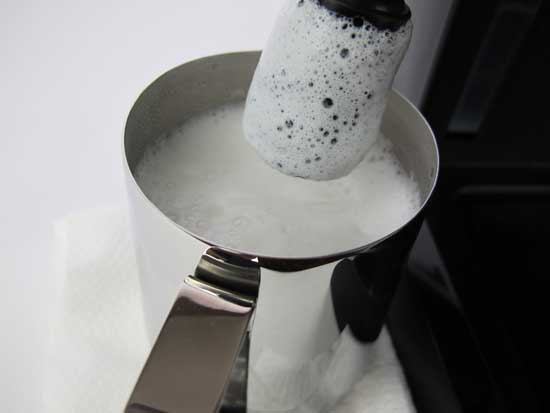
5 Techniques to Improve Milk Foam Fusion with Your Espresso Machine
Here’s how to get better fusion every time you steam milk using your espresso machine’s steam wand:
- Use proper steam pressure: Ensure your machine’s steam pressure is adequate (most prosumer machines operate around 1.0–1.2 bar). Higher pressure encourages better air incorporation and mixing.
- Control bubble size: Aim for fine, creamy microfoam rather than large, visible bubbles. This requires introducing air early in the steaming process and then focusing on stretching and mixing the milk.
- Find the right pitch and angle: Position the steam wand just below the milk surface to introduce air, then sink it deeper to stretch and mix the milk. Tilt the pitcher to create a whirlpool for even blending.
- Don’t over-aerate: Too much air creates big bubbles and dry foam. Limit air intake to the start of steaming—just until the milk begins to expand.
- Stretch, then mix: After introducing air, focus on stretching the milk and creating a vortex to blend the foam into the liquid evenly. This ensures the foam doesn’t separate quickly.
Mastering these steps will help you achieve a velvety, well-fused microfoam every time—leading to better-tasting drinks and sharper latte art.
Frequently Asked Questions
What is milk foam fusion?
Milk foam fusion refers to how well the steamed milk and foam are mixed together. High fusion means the foam and milk are evenly combined, resulting in a smooth texture. Low fusion means the foam separates quickly and sits on top, creating a less desirable mouthfeel and affecting latte art.
How can I test milk foam fusion?
Pour steamed milk into a clear glass and observe how long it takes to separate. If it separates in under 30 seconds, fusion is low. Between 30–60 seconds is medium. Over 60 seconds indicates high fusion. The longer it takes to separate, the better the fusion.
Does steam pressure affect milk foam quality?
Yes. Higher steam pressure creates better turbulence in the milk, allowing more effective mixing of air and milk. This improves foam fineness and fusion. Most espresso machines used by professionals provide sufficient pressure (around 1.0–1.2 bar) for good results.
What’s the difference between fine and coarse foam?
Fine foam has small, tightly packed bubbles with less air and higher density, which integrates better with milk. Coarse foam has larger bubbles, more air, and lower density, causing it to rise and separate faster, reducing fusion and texture quality.
Why does my milk foam separate quickly?
Quick separation usually means low fusion, often caused by too much air, poor steaming technique, or low steam pressure. Coarse foam or over-aeration leads to faster separation and affects both the texture and your ability to pour clean latte art.
Recommended FrontStreet Beans for Milk-Based Coffee
For the best milk coffee results, try FrontStreet Coffee’s Classic Blend, known for its balanced profile of Brazilian nuttiness, Indonesian spice, and Vietnamese richness. It produces a smooth espresso with chocolate, caramel, and hazelnut notes, ideal for lattes and cappuccinos. The Commercial Blend also works well, offering a solid foundation with Brazilian sweetness, Colombian cocoa, and Vietnamese body—great for consistent milk drinks. Both blends ensure a velvety mouthfeel when paired with well-fused milk foam. Freshly roasted within 5 days · Orders placed before 17:00 ship the same day · Next-day delivery across most of Guangdong Province.
FrontStreet Coffee is a long-established specialty coffee roaster in Guangzhou China, selling freshly roasted beans from its own farm in Yunnan as well as dozens of carefully selected single-origin beans from around the world for both pour-over and espresso. The products deliver consistently excellent quality and great value, with shipping within 24 hours. Guangzhou's FrontStreet Coffee shop is recommended by many coffee lovers, and the beans are now available online at the Tmall 。
Important Notice :
前街咖啡 FrontStreet Coffee has moved to new addredd:
FrontStreet Coffee Address: 315,Donghua East Road,GuangZhou
Tel:020 38364473