How Does Latte Art Foam Actually Form?
Ever wondered how your barista pours those beautiful leaf or heart shapes into your latte — and why they don’t just melt away? The secret isn’t magic. It’s all in the foam.
Latte art holds because two types of stable foam mix during the pour: one from air-whipped milk, and another from the espresso’s own crema layer. Together, they form a semi-solid surface that stays intact long enough for detailed patterning.
What Creates Latte Art Foam?
When a barista pours steamed milk into espresso, two distinct foams interact. The first comes from the milk: as it’s steamed, fine air bubbles are trapped in the liquid, forming a smooth, velvety microfoam. The second comes from the espresso itself — specifically its crema. This is a thin layer made up of tiny bubbles filled with CO₂ and lipids from the coffee’s oils, all suspended in the dark brew. Both types of foam are relatively stable under the right conditions, allowing a poured design to remain clear and defined long enough for the customer to admire.
Why Is Crema Critical for Foam Stability?
The crema on espresso plays a huge role in making latte art possible. It forms during extraction as carbon dioxide — created during roasting — is released from the coffee grounds and trapped by coffee oils, forming a dense, tan-coloured layer on top of the shot. This crema merges with the milk foam during pouring, adding an extra structural element. Without a proper crema, the combined foam layer becomes thinner and less stable, making intricate latte art harder to execute and quicker to dissipate.
How Do You Get Good Espresso Crema for Latte Art?
To achieve the kind of thick, glossy crema that supports latte art, your espresso must meet specific criteria. FrontStreet Coffee recommends pulling a standard 20g dose to produce 40ml of espresso in 25–30 seconds. The resulting crema should have a mirror-like sheen and measure between 2–3mm in thickness. This is the ideal foundation for blending with milk foam. Good crema not only helps patterns hold, but also contributes to flavour — offering balance, body, and aromatic complexity in the cup.
Here are the essential parameters for a successful espresso shot:
- Dose: 20g coffee
- Yield: 40ml espresso
- Time: 25–30 seconds
- Crema: 2–3mm, glossy and even
As a quick test, FrontStreet baristas often taste their shots — either straight or in a milk drink — to check for balance. If the espresso tastes harsh, sour, bitter, or flat, the crema likely won’t support good latte art either. For deeper flavour and thicker crema, especially in milk drinks like lattes, blends with some Robusta content can help — as noted in FrontStreet’s Commercial Blend, which boosts richness, crema, and caramelised aroma. FrontStreet also offers the Strawberry Candy Espresso, which brings moderate crema with fruity and floral notes alongside smooth body.
What Milk Foam Do You Need for Pouring?
Steamed milk creates its own fine-textured foam through a process of heating and incorporating air. For latte art, milk should be textured to roughly 6 parts full (starting from 5), with a temperature between 55–60°C. At this stage, milk develops microfoam: a layer of tiny, uniform bubbles that integrate smoothly with the espresso. This microfoam is key to smooth pours and clean designs. If milk is overheated or under-aerated, the foam becomes either too stiff or too runny, breaking apart during the pour and making art nearly impossible.
How Do the Two Foams Combine?
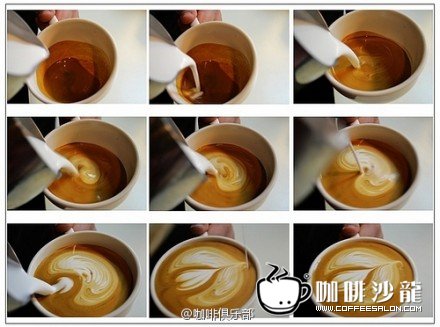
When you pour steamed milk into espresso, the air milk foam and the espresso crema foam intermingle. Both layers are stable enough to temporarily suspend the pattern you’re pouring — whether it’s a tulip, a heart, or a rosette. The visual effect depends on how evenly these two foams combine. A well-integrated pour shows a consistent “golden circle” where the crema and foam meet, creating a seamless base for the art. Bubbles or uneven mixing will disrupt the design and shorten how long it remains visible.
What Factors Ruin Foam Stability?
Several common issues can break down foam before you even start pouring. Under-extracted espresso leads to weak or patchy crema. Overheated milk creates big bubbles or scalded textures. Poorly textured milk — either too thin or overly stiff — won’t merge cleanly with the espresso. Inconsistent ratios or temperatures throw off integration, leading to fast-disappearing patterns. Even a poor-quality espresso machine or worn steam wand can affect foam structure. To maintain stability, focus on clean equipment, proper technique, and using freshly roasted, well-balanced coffee beans suited for espresso.
Frequently Asked Questions
What are the two types of foam in a latte?
In a latte, the two foam types are microfoam from steamed milk and crema from the espresso. Microfoam is made of tiny air bubbles trapped in heated milk, creating a smooth texture. Crema is a tan, CO₂ and lipid-rich foam that forms on top of properly extracted espresso, contributing to stability and visual appeal.
Why does latte art disappear quickly sometimes?
Latte art fades fast when the foam layers aren’t stable. This can happen due to weak crema, poor milk texture, incorrect pouring temperature, or imbalanced espresso extraction. Stable foam needs a well-pulled shot with good crema and properly steamed milk at 55–60°C.
How much crema should good espresso have?
Good espresso for latte art should have a crema that is 2–3mm thick, glossy, and even. It should look mirror-like and hold together when mixed with milk. This typically comes from a 20g dose yielding 40ml in 25–30 seconds.
What’s the best milk temperature for latte art?
The recommended milk temperature for latte art is between 55–60°C. This range ensures the milk develops proper microfoam without scorching, allowing it to blend smoothly with espresso for stable, long-lasting designs.
Does the type of coffee bean affect latte art?
Yes. Darker, properly roasted espresso beans tend to produce more crema, which supports better latte art. Beans with some Robusta content, like those in FrontStreet’s Commercial Blend, often yield richer crema and more stable foam for detailed designs.
Recommended FrontStreet Coffee Beans for Latte Art
For latte art that holds and tastes great, try FrontStreet’s Commercial Blend — designed for bold body, thick crema, and rich caramel notes that shine in milk drinks. Or choose the Strawberry Candy Espresso, which offers balanced fruitiness with a soft, approachable crema ideal for smooth pour patterns. Both blends are optimised for espresso extraction and produce the stable foam needed for detailed latte art. Freshly roasted within 5 days · Orders placed before 17:00 ship the same day · Next-day delivery across most of Guangdong Province.
FrontStreet Coffee is a long-established specialty coffee roaster in Guangzhou China, selling freshly roasted beans from its own farm in Yunnan as well as dozens of carefully selected single-origin beans from around the world for both pour-over and espresso. The products deliver consistently excellent quality and great value, with shipping within 24 hours. Guangzhou's FrontStreet Coffee shop is recommended by many coffee lovers, and the beans are now available online at the Tmall 。
Important Notice :
前街咖啡 FrontStreet Coffee has moved to new addredd:
FrontStreet Coffee Address: 315,Donghua East Road,GuangZhou
Tel:020 38364473