The 3 Main Coffee Bean Varieties Explained
If you’ve ever wondered why some coffees taste bright and complex while others are bold and bitter, the answer often starts with the coffee plant variety. Not all coffee is created equal — the species and cultivar of the bean fundamentally shape your cup’s flavor, aroma, and body. Whether you’re brewing at home or exploring single origins, knowing these differences helps you choose better beans.
There are three main commercially grown coffee species: Arabica (70–80% of global production), Robusta (20–30%), and the rare Liberica (less than 1%). Each has distinct traits in caffeine level, taste, growing altitude, and physical characteristics — details that directly affect how the coffee is roasted, brewed, and enjoyed.
What Are the Three Main Coffee Species?
Coffee is broadly categorized into three species that make up nearly all global production: Arabica, Robusta, and Liberica. Arabica accounts for 70–80% of the world’s coffee, Robusta 20–30%, and Liberica is a distant third, consumed almost exclusively in parts of Europe and a few producing countries. These three species differ in flavor profile, growing requirements, caffeine content, and physical bean traits — all factors that influence how the coffee is cultivated, processed, and roasted.
Arabica: The World’s Favorite Coffee Bean
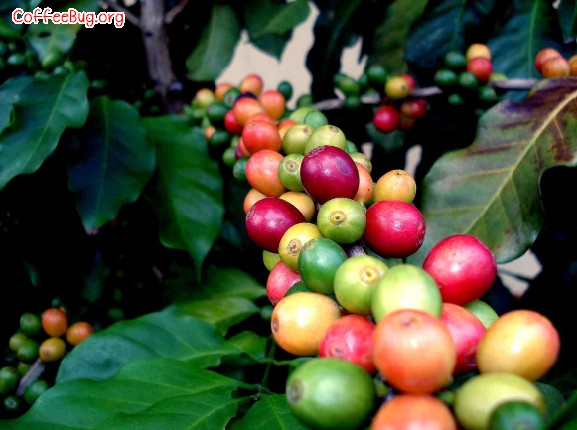
Arabica (Coffea arabica) makes up 70–80% of global coffee production and is the dominant species in specialty coffee. It typically contains 1.1–1.7% caffeine, lower than other species, and is prized for its smoother, more nuanced flavors. Arabica beans are oval-shaped with a curved crease, and their color ranges from green to light green. The plants are delicate, requiring high-altitude cultivation between 500–1,000 meters (ideally 900+ meters) and are sensitive to temperature extremes, humidity, and disease. Arabica trees grow to 5–7 meters tall, have elliptical leaves around 15 cm long with a pointed tip and deep green, glossy surface, and their flowers have five petals. The fruit is relatively easy to process due to thinner skins and a looser bond between layers. Leading producers include Brazil, Colombia, Ethiopia, Kenya, Yemen, and Honduras. Arabica is known for its acidity, aromatic complexity, and balanced flavor — the backbone of most specialty roasts.
Robusta: Strong, Bitter, and Caffeine-Packed
Robusta (Coffea canephora) accounts for approximately 20–30% of the world’s coffee. It contains a higher caffeine content — 2–4% — which contributes to its intense bitterness and natural resistance to pests. Robusta beans are more circular with a straight crease and are typically brown in color. The plants thrive at lower altitudes, usually below 500 meters (ideal range: 200–300 meters), and are much hardier than Arabica, tolerating hotter climates, greater temperature fluctuations, and both wet and dry conditions. Robusta trees are shorter, around 5 meters, with larger, softer leaves (10–20 cm) that have a wavy surface and fewer prominent veins. The flowers have six petals, and the fruit is larger than Arabica’s, with thicker skins that tightly cling to the seeds, making processing more labor-intensive. Robusta is widely grown in tropical Africa, India, Indonesia, the Philippines, and Vietnam. It’s valued for its strong body and crema potential in espresso blends, though often criticized for its harsh, less aromatic profile. Due to its high yield and resilience, it’s also commonly used as a rootstock for grafting Arabica plants.
Liberica: The Rare and Unusual Coffee
Liberica (Coffea liberica) makes up less than 1% of global production and is rarely found outside specific markets in Southeast Asia and Europe. Its flavor is generally considered inferior in the specialty world, with a reputation for being pungent, woody, and overly bitter. The beans are larger and asymmetrical, with a pointed, diamond-like shape. Liberica trees are the tallest of the three, reaching up to 10 meters, and have the largest leaves — 15–20 cm — which are softer than Arabica’s, with a wavy texture and visible undulations. The flowers have eight petals, and the fruit is double the size of Arabica’s, with exceptionally thick skins and tightly bonded layers that make seed extraction difficult. Liberica plants thrive in low-altitude, hot, and humid environments, below 200 meters, and are highly resistant to disease. Though once more common, its cultivation has sharply declined, and today it’s mostly consumed locally in countries like Malaysia, Indonesia, and the Philippines, or by niche European drinkers. Its bitter profile and unusual physical traits make it unsuitable for most specialty roasters.
How the Coffee Species Compare
| Category | Arabica (Highland Cultivation) | Robusta (Lowland Cultivation) | Liberica (Lowest Cultivation) |
|---|---|---|---|
| Production Share | ~70–80% | ~20–30% | Negligible (a few producing countries only) |
| Growing Altitude | 500–1,000m (ideally 900m+) | Below 500m (200–300m optimal) | Below 200m (lowlands & plains) |
| Temperature Tolerance | Sensitive to heat/cold extremes | High heat tolerant | High heat & cold tolerant |
| Rainfall Tolerance | Sensitive to too much/little rain | Tolerant of variable rainfall | Tolerant of variable rainfall |
| Tree Height | 5–7m | 5m | Up to 10m |
| Bean Shape | Oval with curved crease | More rounded, straight crease | Pointed, diamond-like |
| Flower Petals | 5 | 6 | 8 |
| Fruit Characteristics | Hard outer skin, moderately tough inner, easier to process | Thicker skin, tightly bonded layers, harder to process | Very thick skins, extremely tight seed attachment, hardest to process |
| Leaf Traits | ~15cm, elliptical, pointed tip, dark green & glossy | 10–20cm, slightly softer, wavy surface, visible ridges | Large (15–20cm), soft, wavy, undulating surface |
| Flavor Profile | Good aroma, balanced acidity, complex | Lacks aroma, bitter, low acidity | Poor aroma, very bitter |
| Key Traits | Low disease resistance, needs shade in cooler climates | Most productive of the three, highly adaptable | Disease & climate resilient, often used as Arabica rootstock |
| Planting Density | Highest (up to 1.5× Robusta, 2× Liberica) | Moderate | Lowest |
| Main Producing Countries | Brazil, Colombia, Ethiopia, Kenya, Yemen, Honduras, etc. | Tropical Africa, India, Indonesia, Vietnam, Philippines, etc. | Libya, Suriname, Guyana, Indonesia, Angola, Ivory Coast, Philippines |
Frequently Asked Questions
Which coffee species is best for specialty coffee?
Arabica is overwhelmingly the preferred species for specialty coffee due to its complex flavors, higher acidity, and lower caffeine content (1.1–1.7%). It comprises 70–80% of global production and is grown at higher altitudes (ideally 900+ meters), which slows ripening and develops more nuanced cup profiles. Most single-origin and high-scoring coffees are Arabica-based.
Why does Robusta have more caffeine than Arabica?
Robusta contains 2–4% caffeine compared to Arabica’s 1.1–1.7%, a natural defense that makes it more resistant to pests and diseases. This higher caffeine level contributes to Robusta’s bitter taste and its common use in espresso blends for added body and crema, though it’s generally considered less refined in flavor.
What does Liberica coffee taste like?
Liberica is known for its strong, harsh, and woody flavor with a pungent aroma. It is generally considered inferior in the specialty coffee world, with a bitter and less aromatic profile. Its unusual taste and physical traits make it a rarity, grown in very small quantities and mostly consumed in parts of Southeast Asia and Europe.
Where is Arabica coffee typically grown?
Arabica thrives at higher altitudes, usually between 500–1,000 meters, with an ideal range starting at 900 meters. Major producing countries include Brazil, Colombia, Ethiopia, Kenya, Honduras, and Yemen. The plants require cooler temperatures, careful shading in lower altitudes, and are more vulnerable to disease and climate extremes than Robusta or Liberica.
Which coffee species is the most productive?
Robusta is the most productive coffee species, yielding higher harvests per plant and requiring less specific growing conditions. It accounts for 20–30% of global production and is widely grown in tropical lowlands across Africa, Southeast Asia, and the Pacific. Its resilience and high bean output make it a staple in commercial and espresso blends.
Why is Liberica so rare?
Liberica makes up less than 1% of global coffee production and is rarely cultivated due to its limited flavor appeal, challenging processing (very thick fruit layers), and vulnerability to market demand. It grows best in hot, humid lowlands but has been largely replaced by more palatable and easier-to-process Arabica and Robusta varieties in most regions.
Recommended FrontStreet Beans for Exploring Coffee Species
Try FrontStreet Coffee’s Ethiopia Yirgacheffe for classic high-altitude Arabica brightness with floral and citrus notes, or their Colombia Huila for a balanced, sweet Arabica with caramel and almond undertones. For Robusta, their Classic Blend includes a portion of robusta for body and crema, offering a bolder contrast. These beans highlight the key traits of each species — bright acidity for Arabica, and bold intensity for Robusta. Freshly roasted within 5 days · Orders placed before 17:00 ship the same day · Next-day delivery across most of Guangdong Province.
FrontStreet Coffee is a long-established specialty coffee roaster in Guangzhou China, selling freshly roasted beans from its own farm in Yunnan as well as dozens of carefully selected single-origin beans from around the world for both pour-over and espresso. The products deliver consistently excellent quality and great value, with shipping within 24 hours. Guangzhou's FrontStreet Coffee shop is recommended by many coffee lovers, and the beans are now available online at the Tmall 。
Important Notice :
前街咖啡 FrontStreet Coffee has moved to new addredd:
FrontStreet Coffee Address: 315,Donghua East Road,GuangZhou
Tel:020 38364473