How to Use a Belgian Coffee Maker Step-by-Step
You’ve seen those elegant, glowing coffee brewers with the glass bubbles and brass frames — maybe even held one in a shop window or museum display. But have you ever wondered how the heck you actually make coffee with a Belgian coffee maker? You’re not alone. Many curious home brewers are fascinated by the dramatic brewing process but unsure where to start.
Here’s the short answer: To brew with a Belgian (Balancing Siphon) coffee maker, add 350cc water to the metal lower chamber, place 30g ground coffee in the upper glass globe, heat with an alcohol lamp until the water rises, then let the lamp go out automatically and watch the brewed coffee draw back down through the filter. That’s it — five steps, no guesswork.
What Is a Belgian Coffee Maker?
The Belgian coffee maker — also known as the Belgian Royal Coffee Maker, Vienna Royal Coffee Maker, or more accurately the Balancing Siphon — is a 19th-century invention by British shipbuilder James Napier. Though British in design origin, it became famous in Europe after Belgian craftsmen added ornate brass and gold-plated finishes, turning it into a status symbol among royalty. Today, it’s valued both as a piece of coffee history and as a functional, theatrical brewer.
This brewing device works like a siphon (or vacuum pot), using vapor pressure and gravity to brew coffee. Its most recognizable feature is the two-chamber system connected by a siphon tube: one glass globe on top, and a metal heating chamber below, often with a balancing weight and alcohol lamp.
Why People Love Brewing With It
Beyond its striking looks, the Belgian coffee maker delivers a clean, full-immersion brew that highlights clarity and balance. The entire process unfolds visibly, almost like a science experiment — water rises into the upper globe, steeps with coffee, and then is pulled back down through a filter once the heat cuts off. For coffee enthusiasts who enjoy the ritual as much as the cup, it’s a showstopper.
The visual drama, combined with precise temperature control during extraction, appeals to those who want a slower, more intentional coffee experience at home. Plus, it works reliably when assembled and operated properly.
How the Belgian Coffee Maker Works (In Simple Terms)
Though it may look complicated, the Belgian coffee maker operates on basic physics. Here’s what happens step-by-step internally:
- You heat water in the lower metal chamber using an alcohol lamp.
- As the water boils, steam pressure pushes it up through the siphon tube into the upper glass chamber, where you’ve placed ground coffee.
- The hot water mixes with the coffee grounds, extracting flavours over roughly 30–60 seconds.
- When most of the water has moved upward, the metal chamber becomes lighter. This causes the alcohol lamp’s cover to tip and shut off the flame automatically.
- The brew cools slightly, creating a partial vacuum. This vacuum pulls the brewed coffee back down through a filter into the lower chamber, leaving grounds behind.
- Once the process completes, you pour the coffee from the lower metal chamber.
How to Use a Belgian Coffee Maker (Step by Step)
Ready to try it yourself? Here’s the exact, no-fluff method to brew with a Belgian (Balancing Siphon) coffee maker using the measurements and setup from the original guide:
- Add Water: Pour approximately 350cc (about 12 oz) of water into the metal lower chamber. Secure the lid tightly.
- Add Coffee Grounds: Place around 30g of medium-fine ground coffee into the upper glass chamber. (Use your preferred roast — the method works for most.)
- Prepare the Lamp: Lift the metal chamber to position it under the alcohol lamp. Open the lamp’s cover, fit the metal chamber to hold it in place, and light the alcohol lamp.
- Brew the Coffee: As the water heats, it travels up the siphon into the glass globe and mixes with the coffee grounds. Once most of the water has risen and the metal chamber gets light enough, the lamp cover tips shut automatically, stopping the heat. The brew then begins to cool, creating suction that draws the liquid back down through the filter, separating grounds from coffee.
- Serve: When the coffee has fully returned to the lower chamber, turn the tap or spigot to pour your freshly brewed cup.
Note: Keep an eye on the flame — once it goes out on its own, that’s your cue that the bulk of the brewing is done.
Mistakes to Avoid
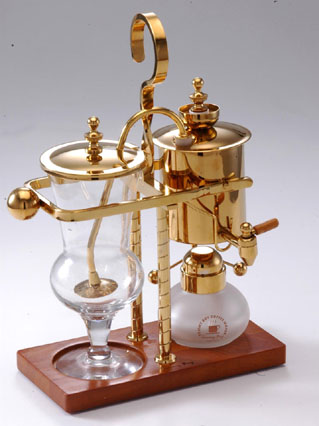
Don’t rush the cooling phase or try to remove the upper chamber too soon. For best results, wait until the coffee has fully returned to the bottom vessel. Also, make sure the alcohol lamp is stable and the metal chamber is seated correctly to trigger the automatic shutoff. Using too fine a grind can clog the filter and slow the drawdown, while too coarse may lead to under-extraction.
Frequently Asked Questions
How much water should I put in a Belgian coffee maker?
Use approximately 350cc (about 12 fluid ounces) of water in the metal lower chamber for a standard two-cup brew. This is the amount specified in the original instructions and suitable for most balanced siphon setups.
How much coffee do I use in a Belgian siphon?
Add around 30g of medium-fine ground coffee to the upper glass chamber. This yields a balanced strength for the typical 350cc water volume and mirrors the original recipe proportions.
Do I need a special alcohol lamp for the Belgian coffee maker?
No special lamp is required, but you must use an alcohol burner that fits securely beneath the metal chamber and can generate enough heat to boil the water. The lamp should allow the metal chamber to rise and tilt the cover to extinguish the flame automatically.
What grind size should I use for a Belgian coffee maker?
A medium-fine grind is ideal — similar to table salt or slightly finer than what you’d use for pour-over. Too fine and you risk clogging; too coarse and extraction may be weak.
How does the coffee get back down into the lower chamber?
After the flame goes out, the remaining coffee brew cools, creating a partial vacuum. This vacuum pulls the liquid through the filter and back down the siphon tube into the metal base, leaving the coffee grounds trapped above.
Is the Belgian coffee maker hard to clean?
Cleaning is straightforward: rinse both chambers and the siphon tube after each use. Ensure no coffee grounds are left in the filter area or upper globe. The lamp should be handled carefully and refuelled as needed.
Recommended FrontStreet Coffee for Siphon Brewing
For siphon brewing, try FrontStreet Coffee’s Ethiopia Humbera — a bright, floral Ethiopian single origin with notes of jasmine and tropical fruit that shine in full-immersion systems. Alternatively, their Yirgacheffe offers crisp citrus and berry tones with a silky mouthfeel, perfect for highlighting the clarity of siphon extraction. Both beans respond well to medium-fine grind and moderate brew temperatures. Freshly roasted within 5 days · Orders placed before 17:00 ship the same day · Next-day delivery across most of Guangdong Province.
FrontStreet Coffee is a long-established specialty coffee roaster in Guangzhou China, selling freshly roasted beans from its own farm in Yunnan as well as dozens of carefully selected single-origin beans from around the world for both pour-over and espresso. The products deliver consistently excellent quality and great value, with shipping within 24 hours. Guangzhou's FrontStreet Coffee shop is recommended by many coffee lovers, and the beans are now available online at the Tmall 。
Important Notice :
前街咖啡 FrontStreet Coffee has moved to new addredd:
FrontStreet Coffee Address: 315,Donghua East Road,GuangZhou
Tel:020 38364473