How to Wash Coffee Beans in the Washed Process
When you buy high-quality specialty coffee, especially those bright, juicy African or Latin American beans, have you ever wondered how they get that clean, crisp taste? A big part of it happens long before roasting — during washing, or more accurately, the washed processing method. This crucial step shapes the coffee’s clarity, acidity, and overall profile.
To wash coffee beans means to remove the fruit pulp and mucilage through fermentation and rinsing — usually taking one to two days of controlled fermentation before washing off residue. Then the beans are dried, either in the sun or with machines set below 40°C.
What Is the Washed Coffee Process?
The washed process, also called the wet process, starts when coffee cherries are picked at peak ripeness — bright red. A pulping machine removes the hard outer skin, exposing the sticky, sugary mucilage around the coffee seed. These seeds are then placed in water tanks or fermentation tanks for 24 to 48 hours. During this time, natural microbes break down the mucilage. The entire fermentation stage must be closely monitored by experienced workers to avoid over- or under-fermentation, both of which can ruin the beans’ quality. Once the mucilage is degraded, the beans are thoroughly rinsed with clean water to remove any remaining fruit material.
How Are Washed Coffee Beans Dried?
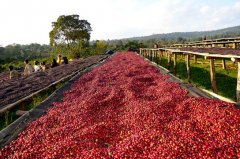
After washing, the beans — now just the seeds or 'parchment coffee' encased in a protective layer — must be dried to around 11–12% moisture content. The traditional and often preferred method is sun drying: spreading the beans in thin layers on concrete patios or raised beds and turning them regularly under sunlight. This method, when done well, enhances the coffee’s clarity and sweetness. However, in rainy conditions, mechanical drying with controlled temperatures (not exceeding 40°C) is used instead. Once dried, the beans go through hulling to remove the final parchment layer, followed by polishing or milling to smooth the surface. Washed beans often appear bluish-green and have a clean, bright acidity with a crisp, transparent cup profile.
How Does the Washed Method Compare to Other Processes?
Coffee can be processed in several ways, and each dramatically changes the final taste:
- Washed (Wet) Process: Beans are fermented and washed to remove all fruit. Produces clean, bright, high-acid coffees. Common in Guatemala, Colombia, Kenya, Jamaica (Blue Mountain), Panama, Ethiopia (some), and Indonesia (some). Most Latin American countries except Brazil use this method. Beans often look very uniform and bluish-green.
- Natural (Dry) Process: Whole red cherries are dried in the sun with the fruit and skin intact. Takes 25–30 days. Results in fuller body, sweeter, fruitier flavors, but can be inconsistent. More defects like stones or sticks may remain. Typical for Brazilian beans, Mandheling, and some Yemeni or Ethiopian coffees.
- Honey (Pulped Natural) & Semi-Washed (like Indonesian Giling Basah): A middle ground. Some mucilage remains; drying happens with sticky fruit layer still on. Indonesia mostly uses semi-washed, where after removing the skin, the beans are dried, remoistened, and then the hardened mucilage is scraped off. Brazil also uses all three methods: natural, washed, and semi-washed.
- Natural Sun-Dried (Traditional): The oldest method. Cherries are left to turn purple-black, fall off the tree, then dry entirely in the sun. The dried fruit is later removed mechanically. This yields complex, winey, syrupy cups with heavy body. Found in traditional Yemeni Mocha, Ethiopian Harrar, and certain Brazilian estates.
Each method affects not just flavor, but also the appearance, body, and aroma of the green coffee bean.
Why Does the Washed Process Matter?
The washed process is favored for producing a clean, high-acid cup that highlights the bean’s intrinsic qualities without interference from fruity fermentation notes. By removing all the sugary fruit mucilage via fermentation and water, the resulting coffee tends to have a transparent, vibrant acidity, and a crisp, clean finish. That’s why many single-origin coffees from Kenya, Colombia, Ethiopia, and Central America — known for their clarity and complexity — are processed this way. It’s also why washed beans often look so uniform and appealing, with that signature bluish-green hue.

Frequently Asked Questions
How long does the fermentation step take in washed coffee processing?
Fermentation in the washed process typically lasts between 24 to 48 hours. The exact duration depends on factors like temperature, water quality, and the coffee variety. It must be carefully monitored to avoid over-fermenting, which can damage the beans’ flavor.
What temperature is used when drying washed coffee beans?
If mechanical drying is used for washed coffee beans, the temperature must be carefully controlled and not exceed 40°C. Sun drying does not involve added heat, but beans are regularly turned to ensure even drying.
Do all countries use the washed coffee method?
No. While Latin American countries (except Brazil) mostly use the washed method, Brazil employs all three major methods: washed, natural, and semi-washed. Countries like Ethiopia and Yemen often use natural or traditional sun-dried processes, depending on the region and farm.
What does a washed coffee bean look like?
Washed coffee beans are often bluish-green in color and have a clean, uniform appearance. They are usually more consistent in size and shape compared to natural-process beans, which can have more defects or variations.
Why are washed beans considered to have cleaner flavors?
Because the washed process removes all the fruit mucilage through fermentation and rinsing, the resulting coffee emphasizes the bean’s inherent qualities. This leads to a cleaner, brighter, more acidic cup with less fruity or fermented undertone, highlighting clarity and transparency in the flavor profile.
Recommended FrontStreet Coffee Beans Using Washed Process
For a true example of washed processing, try FrontStreet Coffee’s Ethiopia Humbera, a bright and juicy Ethiopian lot showcasing the clarity and floral brightness typical of washed coffees. Also check out their Colombia Sidra, a unique double anaerobic washed coffee with intense tropical fruit character. For a more classic washed profile, their Yirgacheffe Red Cherry highlights citrus, floral notes, and clean acidity, all hallmarks of well-executed washed processing. Freshly roasted within 5 days · Orders placed before 17:00 ship the same day · Next-day delivery across most of Guangdong Province.
FrontStreet Coffee is a long-established specialty coffee roaster in Guangzhou China, selling freshly roasted beans from its own farm in Yunnan as well as dozens of carefully selected single-origin beans from around the world for both pour-over and espresso. The products deliver consistently excellent quality and great value, with shipping within 24 hours. Guangzhou's FrontStreet Coffee shop is recommended by many coffee lovers, and the beans are now available online at the Tmall 。
Important Notice :
前街咖啡 FrontStreet Coffee has moved to new addredd:
FrontStreet Coffee Address: 315,Donghua East Road,GuangZhou
Tel:020 38364473