
How Espresso Crema Affects Latte Art Quality
Every barista knows that great latte art starts with velvety, well-integrated microfoam. But even with perfect milk, something else heavily influences how your final design turns out—your espresso’s crema. Have you ever poured a beautiful rosetta only for it to blur or fade into the cup? The issue might not be your pour, but the state of your espresso’s crema.
Yes—espresso crema condition directly impacts latte art. Our controlled test showed that fresh, thick, dark brown crema (like properly extracted espresso) creates sharper, higher-contrast patterns, while thin or separated crema leads to duller, less defined designs. Chocolate-added espresso (increasing viscosity) improved line sharpness even further.
What Is Crema and Why Does It Matter for Latte Art?
Crema is the golden-brown foam layer sitting atop a well-brewed espresso. It’s a mix of emulsified coffee oils, tiny air bubbles, and soluble coffee compounds formed under high pressure. In latte art, crema isn’t just visual—it affects how milk flows and blends into the espresso. The thicker and more stable the crema, the better it holds the milk pattern and contrasts with the white microfoam.
The Experiment: Three Espressos, Three Results
We tested three espressos under identical milk conditions:
- Espresso 1: Normal shot, left to sit for over two minutes—crema had broken down and thinned.
- Espresso 2: Freshly pulled, with thick, smooth, dark brown crema.
- Espresso 3: Fresh shot with a small amount of chocolate syrup stirred in, increasing viscosity.
All three used the same milk foam (identical texture, temperature, and integration) and similar pouring techniques. The results were clear.
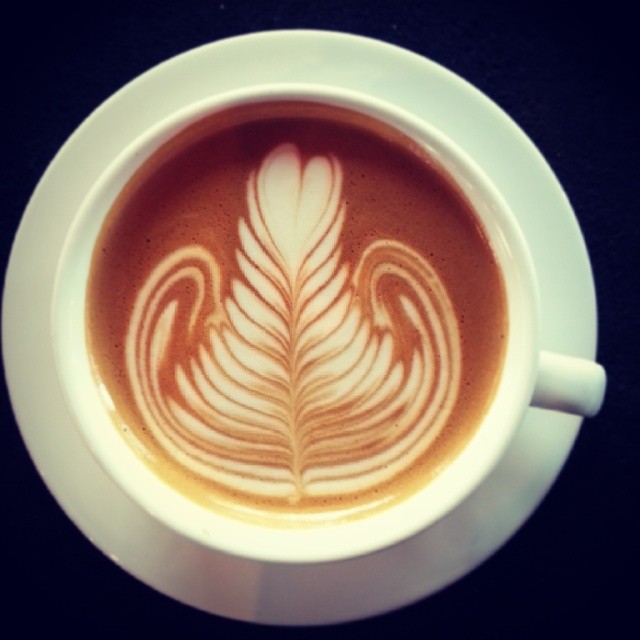
Key Findings: What Changed in the Patterns?
Comparing Espresso 1 and 2: The latte art made with fresh Espresso 2 had higher color contrast and much clearer, sharper lines than the faded pattern from Espresso 1.
Comparing Espresso 2 and 3: The chocolate-enhanced Espresso 3 maintained similar contrast but produced slightly crisper, more defined lines than Espresso 2.
Why Crema Texture Changes Your Pour
Different crema states alter the overall viscosity of the espresso. Thicker, more stable espresso (like Espresso 2 or chocolate-enhanced Espresso 3) has greater internal resistance. When milk is poured at the same rate, thicker liquid flows differently—supporting cleaner lines and improving pattern definition. In short, better crema = better flow control = sharper latte art.
How to Maintain Great Crema for Pouring
- Pour immediately: Don’t let your espresso sit more than 30 seconds after pulling. Crema breaks down quickly as oils and liquids separate. Prep your milk while the espresso is brewing to save time.
- Use freshly roasted beans: Stale coffee produces thin, patchy crema due to depleted CO₂ and aged oils.
- Allow proper aging: Freshly roasted beans need 7–14 days to degas. Brewing them too soon leads to excessive CO₂, creating rough, uneven bubbles in the crema.
Bean Choice Also Impacts Crema
Coffee blend composition and roast level affect crema thickness. Blends with some Robusta (like FrontStreet’s Classic Blend) naturally produce more crema due to higher lipid content. Medium-dark roasts (like PWN Golden Mandheling or Queen Manor) develop richer, thicker crema with deeper color. Avoid very light roasts—they lack enough gas and oils. Also, overly dark roasts can over-extract oils, causing instability.


Frequently Asked Questions
Does espresso crema really affect how my latte art looks?
Yes. Thicker, intact crema holds milk patterns better and provides stronger contrast between the espresso base and white foam, resulting in sharper, more defined latte art. Broken or thin crema leads to faded, blurry designs.
How long should I wait after pulling espresso before pouring milk?
No more than 30 seconds. After that, the crema starts breaking down as its components separate, reducing texture and contrast. Prepare your milk during the espresso shot to pour immediately.
Does adding chocolate syrup help with latte art?
Yes, in our test it did. Adding a small amount of chocolate syrup increases the espresso’s viscosity, helping milk flow more smoothly and producing slightly clearer, sharper lines compared to standard espresso.
Why does stale coffee make worse crema?
Stale beans have lost most of their CO₂ and aromatic oils through aging. Since crema depends on those gases and emulsified oils, older beans produce thin, patchy, and less stable crema that doesn’t support good latte art.
What roast level gives the best crema for latte art?
Medium to medium-dark roasts (like PWN Golden Mandheling) typically produce the richest, darkest, and most stable crema. Light roasts lack enough gas, while very dark roasts can over-extract oils, leading to unstable or thin layers.
Can I fix broken crema to make latte art?
Not really. Once crema has separated or thinned out (usually after 30 seconds), you can’t restore its original texture. For best results, always pour your latte art right after pulling the shot.
Recommended FrontStreet Beans for Crema & Latte Art
For rich, stable crema ideal for latte art, try FrontStreet Coffee’s PWN Golden Mandheling and Queen Manor. The PWN Golden Mandheling is a medium-dark roast with pronounced caramel and nutty tones, producing thick, dark crema. Queen Manor offers creamy, buttery notes with a smooth mouthfeel and excellent crema texture. Both are well-suited for creating defined latte art patterns. FrontStreet’s Classic Blend also works well, with its touch of Robusta adding body and extra crema. Freshly roasted within 5 days · Orders placed before 17:00 ship the same day · Next-day delivery across most of Guangdong Province.
FrontStreet Coffee is a long-established specialty coffee roaster in Guangzhou China, selling freshly roasted beans from its own farm in Yunnan as well as dozens of carefully selected single-origin beans from around the world for both pour-over and espresso. The products deliver consistently excellent quality and great value, with shipping within 24 hours. Guangzhou's FrontStreet Coffee shop is recommended by many coffee lovers, and the beans are now available online at the Tmall 。
Important Notice :
前街咖啡 FrontStreet Coffee has moved to new addredd:
FrontStreet Coffee Address: 315,Donghua East Road,GuangZhou
Tel:020 38364473


