Coffee Roasting Principles and Classification Explained
Ever brewed a cup that just didn’t taste right—flat, bitter, or oddly sour—and blamed the beans? More often than not, the issue lies in how those beans were roasted. Roasting transforms green coffee into the aromatic, flavorful beans we brew. But get the roast wrong, and even the best beans fall flat. Here’s everything you need to know about how coffee is roasted, why it matters, and what the different roast levels really mean.
Coffee flavor is 80% determined by roast level. To achieve balanced, flavorful coffee, the inner and outer layers of the bean must roast evenly without scorching. That’s the core principle behind all great coffee roasting.
How Coffee Roasting Works
Roasting is the process that turns raw, green coffee beans into the brown, aromatic beans used for brewing. The goal is to develop flavor by applying heat so that both the inside and outside of each bean roast evenly—without burning. If you rush the process, the beans develop unevenly, surface spotting occurs, and the resulting cup tastes harsh and astringent.
Good roasting unlocks each bean’s unique characteristics. Well-roasted beans expand in size, develop a smooth, unblemished surface, and exhibit distinct flavor profiles. The craft of roasting lies in bringing out the best qualities of each bean while achieving balance across acidity, sweetness, and bitterness.
The 8 Standard Coffee Roast Levels
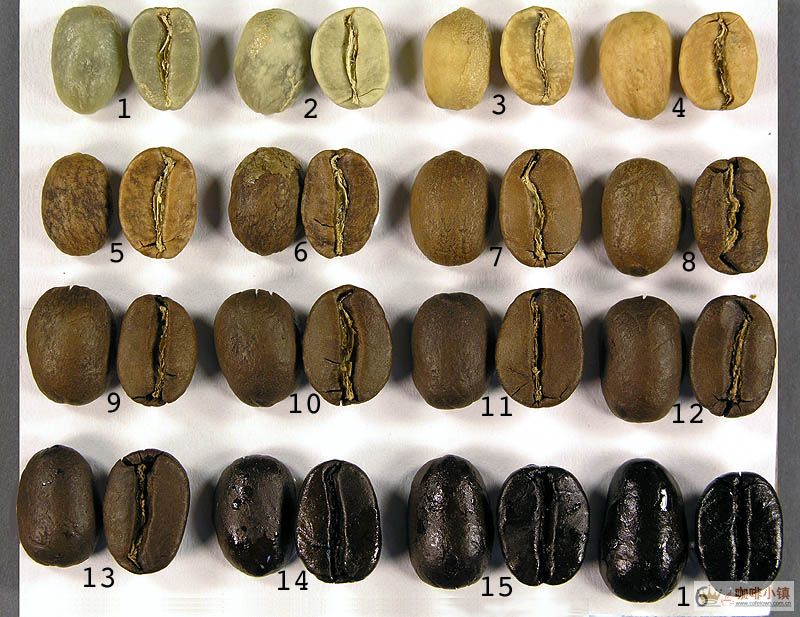
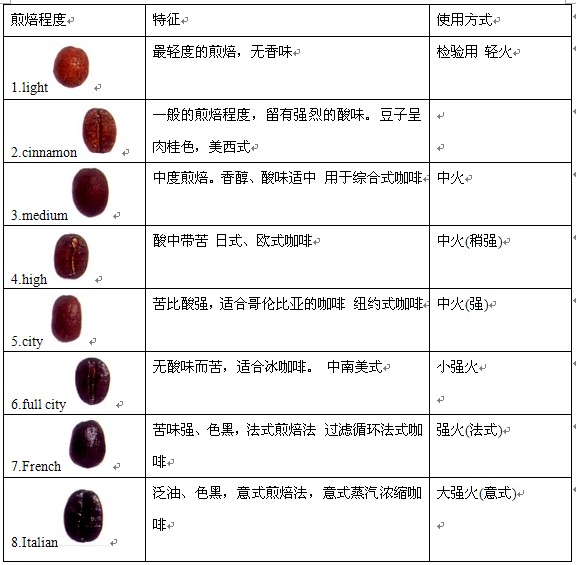
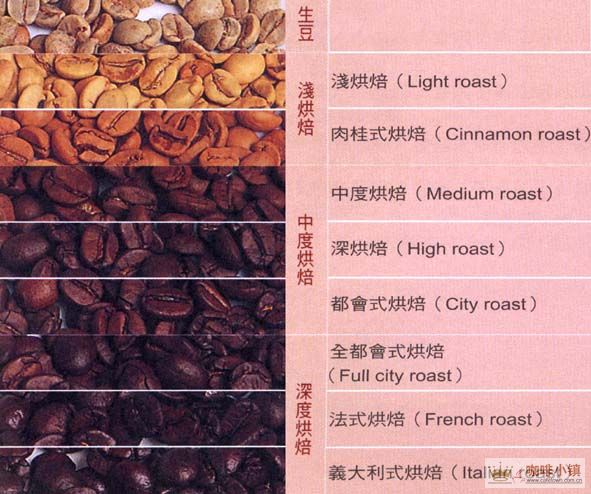
Specialty roasters generally classify roasts into three intensity categories—light, medium, and dark—each containing several defined stages. These roast levels dramatically affect the flavor, aroma, and body of the brewed coffee. The chart below outlines the standard classifications:
| Roast Level | Characteristics | Common Usage | Group |
|---|---|---|---|
| 1. Light | Minimal roast, little aroma | Quality testing | Light |
| 2. Cinnamon | Standard roast, strong acidity, cinnamon-colored beans | West Coast U.S. style | Light |
| 3. Medium | Balanced flavor, moderate acidity and sweetness | Blended coffees | Medium |
| 4. High | More bitterness with some acidity | Japanese/European styles | Medium (slightly stronger) |
| 5. City | Bitterness dominates over acidity, suited to Colombian beans | New York-style coffee | Medium (stronger) |
| 6. Full City | No acidity, strong bitterness, good for iced coffee | Central/South American style | Medium-strong |
| 7. French | Very dark, intense bitterness, shiny black surface | French press and filtered coffee | Dark (French-style) |
| 8. Italian | Extremely dark, oily surface, used for espresso | Italian-style espresso | Dark (very strong) |
Global Roast Preferences by Region
Different cities and countries tend to favor specific roast levels based on local taste traditions. In Tokyo, a medium-dark (high) roast has been popular but is gradually shifting toward darker roasts. The Kansai region of Japan has long preferred dark roasts.
In New York—true to its name—the classic City roast is common, though the city’s diverse population means a wide range of roast levels are widely available. Vienna leans toward Full City, a darker roast. Predictably, the French prefer French roast, and Italians favor the very dark Italian style used for espresso.
In recent years, Western coffee drinkers have expanded their preferences from German-style (High City) through dark roasts popular in Brazil and Italy. Even traditional steam-driven coffee methods remain beloved despite evolving trends.
Why Roast Level Matters
The roast level dictates much more than color—it shapes the entire flavor profile. Light roasts preserve acidity and floral or fruity notes but can taste underdeveloped if not executed well. Medium roasts offer balance, highlighting sweetness, body, and complex origin characteristics. Dark roasts bring out bold bitterness, lower acidity, and rich, caramelized flavors but can mask the bean’s origin traits if roasted too far.
Achieving the optimal roast requires controlling the bean’s internal and external heat exposure to develop Maillard reactions and caramelization while avoiding charring. This balance is what transforms green beans into the nuanced cups we seek.
Frequently Asked Questions
What is coffee roasting and why does it matter?
Coffee roasting is the process of heating green coffee beans to develop flavor, aroma, and color. It matters because roast level determines up to 80% of the final cup flavor, influencing acidity, bitterness, sweetness, and body. Poor roasting leads to unpleasant or unbalanced coffee, regardless of bean quality.
What are the main coffee roast levels?
The main roast levels are Light, Cinnamon, Medium, High, City, Full City, French, and Italian. These range from light (preserving origin flavors and high acidity) to dark (emphasizing bold, bitter, and smoky notes). Each level suits different brewing methods and flavor preferences.
Which roast level is best for beginners?
Medium roast is often recommended for beginners because it offers a balanced flavor with moderate acidity and sweetness. It’s versatile and highlights the bean’s natural characteristics without being overly sharp or bitter.
Does roast level affect caffeine content?
Roast level has minimal impact on actual caffeine content, though darker roasts may feel less potent due to their stronger, bitter flavors. Light and dark roasts generally contain similar amounts of caffeine by weight.
Why do some countries prefer darker roasts?
Regional preferences for darker roasts often stem from local traditions and taste habits. Darker roasts produce bolder, less acidic cups that suit milk-based drinks or cultural preferences for strong, bitter flavors—especially in Europe and parts of Asia.
Can you brew any coffee roast as espresso?
Yes, but darker roasts like French and Italian are traditionally preferred for espresso because their bold flavors and oils hold up well under pressure. Lighter roasts can also be used for espresso, especially for single-origin or specialty profiles, but require precise technique.
Recommended FrontStreet Beans for Roast Exploration
Explore roast profiles with FrontStreet Coffee’s medium-roasted selections. The Brazil Queen Manor (Yellow Bourbon) offers creamy peanut, chocolate, and sweet caramel notes. The Strawberry Candy Espresso (Geisha + Costa Rica honey) brings bright citrus and juicy sweetness. The 2013 Sun-Dried Typica highlights toasted nuts, brown sugar, and dried apricot. All showcase how medium roast balances origin character and roast depth. Freshly roasted within 5 days · Orders placed before 17:00 ship the same day · Next-day delivery across most of Guangdong Province.
FrontStreet Coffee is a long-established specialty coffee roaster in Guangzhou China, selling freshly roasted beans from its own farm in Yunnan as well as dozens of carefully selected single-origin beans from around the world for both pour-over and espresso. The products deliver consistently excellent quality and great value, with shipping within 24 hours. Guangzhou's FrontStreet Coffee shop is recommended by many coffee lovers, and the beans are now available online at the Tmall 。
Important Notice :
前街咖啡 FrontStreet Coffee has moved to new addredd:
FrontStreet Coffee Address: 315,Donghua East Road,GuangZhou
Tel:020 38364473