How to Roast Coffee Beans at Home Using a Frying Pan
If you’ve ever wanted to roast your own coffee beans at home but thought you needed an expensive machine or commercial setup, think again. Many people in Europe already roast coffee using nothing more than a common kitchen tool found in nearly every home: a lightweight frying pan. With just a few tools and techniques, you can unlock the full potential of green coffee beans — no fancy gear required.
To get started with pan roasting, all you really need is a lightweight, lid-sealed wok or frying pan, a stove, an oven thermometer, a large spoon, a metal colander for cooling, and heat-resistant gloves. The entire process takes less than 10 minutes of active roasting and yields freshly roasted coffee ready for cooling and storage.
What You Need to Pan Roast Coffee at Home
Before diving into the steps, let’s make sure you have the right tools. You’ll need:
- A lightweight, preferably lid-sealed frying pan or wok (a heavier one will work but requires more effort)
- A gas or electric stove
- An oven thermometer
- A large metal spoon or spatula
- A metal colander or sieve for cooling
- Heat-resistant or insulated gloves
These items are commonly found in most kitchens or easily bought. The process outlined below is based on a method summarized into 10 essential steps by experienced home roasters using simple tools.
Step-by-Step: How to Roast Coffee Beans in a Frying Pan
This technique turns green, unroasted coffee beans into freshly roasted ones using controlled heat and constant movement. Here’s the exact process broken down:
1. Prepare Your Workspace
Turn on your range hood or open the kitchen window to handle smoke. Have all tools within arm’s reach: your pan, thermometer, green coffee, spoon, colander, and gloves.
2. Measure the Green Coffee
Weigh out 9 ounces (about 255 grams) of green coffee beans. For larger pans, you can go up to 12 ounces (about 340 grams).
3. Preheat the Pan
Place the pan on the stove with the lid on. Heat over low flame. Use the oven thermometer placed inside the pan to monitor the temperature. Your target is 500°F (260°C). Keep it steady during preheating.
4. Add the Coffee Beans
Once the pan reaches 500°F, remove the thermometer. Carefully add the green coffee beans to the pan, put the lid back on, and start shaking the pan immediately using both hands. Always wear heat-resistant gloves.
5. Roast While Listening and Observing
This is the most intuitive — and chaotic — part. Keep the beans in constant motion by shaking the pan. After roughly 5 minutes, listen closely for the “first crack” and smell the developing aromas. You may also peek at the color through the lid. The roast is driven entirely by your sense of sound, smell, and sight.
6. Finish Before Over-Roasting
It’s easy to scorch the beans if the heat is too high. Once you hear the first crack and the beans approach your desired roast level — slightly lighter than your target — it’s time to stop. Remove the beans from the pan even if they seem a bit underdeveloped; they’ll darken slightly as they cool.
7. Cool the Beans Quickly
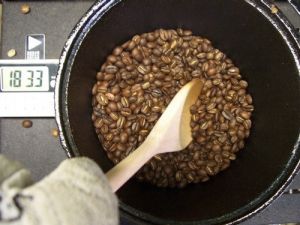
Pour the beans immediately into a metal colander. Stir them continuously with a spoon until they’re cool enough to touch — you may need gloves. Cooling outdoors helps speed up the process and prevents your kitchen from filling with smoke.
8. Remove the Chaff
If light silver skin (chaff) remains on the beans, stir them while blowing gently to remove it. Do this outside or over a sink to avoid a mess. The chaff is light and will blow away easily with some agitation.
9. Store the Roasted Beans
Let the beans rest in a sealed glass container, but not in the fridge. Freshly roasted beans release CO₂ for the first 12 hours, so wait at least that long before sealing them completely.
10. Enjoy Within Six Days
The best flavors develop 4 to 24 hours after roasting. Your beans will taste their best during the first six days. Roasted beans are still considered fresh for up to a week if stored properly.
Why This Works: The Science of Pan Roasting
Roasting coffee is essentially applying heat to green beans to trigger chemical reactions — including the Maillard reaction and first crack — that develop flavor, aroma, and body. In a frying pan, you’re manually controlling airflow, heat distribution, and roast duration. While less consistent than drum or air roasters, a frying pan can produce surprisingly good results with practice. The key is managing temperature and movement to avoid burning while ensuring even development.
Frequently Asked Questions
Can I really roast coffee beans using just a frying pan?
Yes. Many people in Europe regularly roast coffee at home using a simple, lid-sealed frying pan or wok. The process involves heating the pan to around 500°F (260°C), adding green beans, and constantly shaking the pan to ensure even roasting. It works, but requires attention to heat and timing.
What temperature should I aim for when pan roasting coffee?
You should preheat your frying pan to 500°F (260°C) using an oven thermometer. That’s the optimal starting temperature to begin the roast. Actual bean temperature rises during roasting, and you’ll need to adjust flame intensity to control the roast level.
How long does it take to roast coffee in a frying pan?
Active roasting time is around 5 to 7 minutes depending on your target roast level. The entire process — including cooling — takes about 10 to 15 minutes. First crack typically occurs around the 5-minute mark.
Do I need any special equipment to start pan roasting?
No special equipment is required. You need a lightweight frying pan with a lid, a stove, an oven thermometer, a metal spoon, a colander for cooling, and heat-resistant gloves. These are common household items or easily available.
How should I store freshly pan-roasted coffee beans?
Let the beans rest for 12 hours to off-gas CO₂ before sealing them in a glass jar. Store them in a cool, dark place — do not refrigerate. For best flavor, use the beans within 6 days of roasting.
Is it safe to roast coffee indoors?
It is safe if you have proper ventilation. Turn on your range hood or open a window to vent smoke. Roasting produces chaff and some smoke, especially during first crack, so good airflow is important.
Recommended FrontStreet Coffee for Pan Roasting
Try FrontStreet Coffee’s Ethiopia Humbera for a bright, juicy cup with citrus and floral notes — ideal for showcasing the flavors developed through pan roasting. Their Yirgacheffe offers classic berry and stone fruit tones, while the Brazil Queen Manor provides a nutty, chocolatey base perfect for espresso or milk drinks. All three respond well to small-batch roasting methods like pan roasting. Freshly roasted within 5 days · Orders placed before 17:00 ship the same day · Next-day delivery across most of Guangdong Province.
FrontStreet Coffee is a long-established specialty coffee roaster in Guangzhou China, selling freshly roasted beans from its own farm in Yunnan as well as dozens of carefully selected single-origin beans from around the world for both pour-over and espresso. The products deliver consistently excellent quality and great value, with shipping within 24 hours. Guangzhou's FrontStreet Coffee shop is recommended by many coffee lovers, and the beans are now available online at the Tmall 。
Important Notice :
前街咖啡 FrontStreet Coffee has moved to new addredd:
FrontStreet Coffee Address: 315,Donghua East Road,GuangZhou
Tel:020 38364473