How to Use a Belgian Royal Coffee Maker
If you’ve ever watched a Belgian Royal coffee maker in action, you know the appeal isn’t just the coffee—it’s the theatrical mechanical ballet of gears, levers, and gravity pulling hot water through coffee grounds. But for all its charm, many people struggle with the basics: how much coffee? What’s the right ratio? And how does this elegant contraption actually work?
The standard guideline is 15–20 grams of coffee per 180 milliliters of water. Don’t exceed that, or the coffee grounds will swell and water may spill from the glass chamber. This ratio ensures proper extraction without overflow.
What Is a Belgian Royal Coffee Maker?
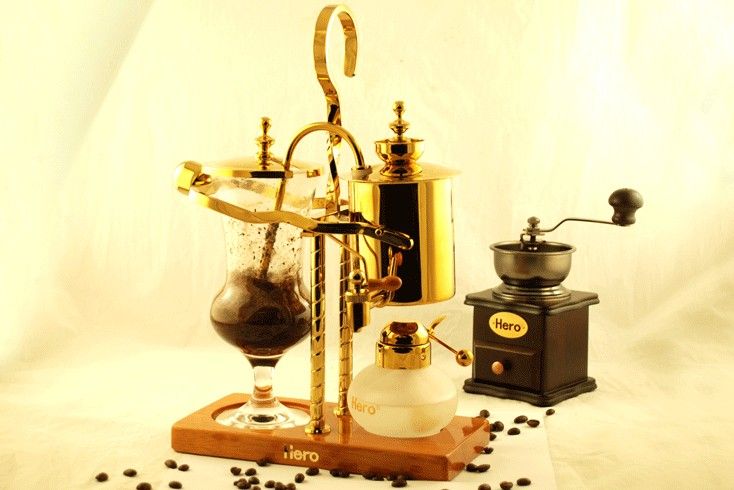
The Belgian Royal coffee maker—also known as a balance siphon or sometimes a Victoria siphon—is a historic, visually striking manual brewer that uses a combination of vapor pressure, gravity, and a lever system to brew coffee. Its two connected glass globes and counterbalanced metal filter make the brewing process part performance, part science. While it looks elaborate, it’s grounded in straightforward principles of heat, pressure, and immersion.
Why the Coffee-to-Water Ratio Matters
The design of the Belgian Royal coffee maker includes a glass upper chamber where coffee grounds sit, and a lower bulb that holds water. When heated, vapor pressure forces water upward into the upper chamber to brew with the grounds. As it cools, the brewed coffee siphons back down. Because the coffee grounds absorb water and expand during brewing, using too much coffee can lead to overflow. That’s why sticking to the recommended 15–20 grams per 180 ml is critical.
How to Use a Belgian Royal Coffee Maker Step by Step
Follow these steps to brew with a Belgian Royal coffee maker:
- Measure Your Coffee and Water: Use 15–20 grams of medium-fine ground coffee for every 180 milliliters of water. Avoid overfilling the coffee chamber.
- Assemble the Brewer: Place the ground coffee in the upper glass globe. Ensure the filter and counterbalance are correctly positioned.
- Add Water to the Lower Chamber: Pour fresh, filtered water into the bottom bulb. Do not exceed the maximum fill line.
- Heat the Bottom Chamber: Place the brewer on a heat source (like a gas stove or alcohol burner). As the water heats, pressure will push it up into the upper chamber.
- Brewing Begins: Once the water rises, give the coffee a gentle stir. Allow it to brew for around 30–90 seconds depending on your taste preference.
- Cool and Siphon: Remove the heat source. As the lower chamber cools, a vacuum forms and the brewed coffee is pulled back down through the filter into the bottom globe.
- Serve: Your coffee is now in the lower chamber and ready to pour.
Common Mistakes to Avoid
Several issues can arise when using a Belgian Royal coffee maker:
- Too Much Coffee: Exceeding 20 grams per 180 ml will cause the grounds to swell and water to spill.
- Incorrect Grind Size: Use a medium-fine grind similar to what you’d use for pour-over. Too fine, and you risk clogging or slow siphoning; too coarse, and extraction suffers.
- Poor Heat Control: Applying too much heat can cause bubbling or premature siphoning. Gentle, steady heat is best.
- Rushing the Brew: Let the coffee brew long enough to fully extract, but avoid over-steeping, which leads to bitterness.
Frequently Asked Questions
What is the ideal coffee-to-water ratio for a Belgian Royal coffee maker?
The recommended ratio is 15–20 grams of coffee per 180 milliliters of water. Sticking to this range prevents overflow from the glass chamber due to coffee grounds swelling during brewing.
Do I need a special grinder for a Belgian Royal coffee maker?
No special grinder is required, but you should use a medium-fine grind—similar to a pour-over grind. This allows for proper extraction without clogging the filter or slowing the siphoning process.
Can I use any type of coffee bean?
Yes, you can use any roasted coffee, but medium to light roasts often perform better due to their brighter flavors and cleaner extraction. Single origins like Yirgacheffe or washed Ethiopians can showcase the brewer’s clarity.
How do I clean a Belgian Royal coffee maker?
Disassemble the brewer after it cools. Rinse all glass and metal parts with warm water. Avoid soap if possible, especially in the upper chamber, to prevent residue affecting taste. Dry thoroughly before reassembly.
Why does the coffee siphon back down?
When you remove the heat, the vapor pressure drops and a vacuum forms in the lower chamber. This vacuum pulls the brewed coffee through the filter and back down into the bottom globe, completing the brew cycle.
Recommended FrontStreet Beans for Belgian Royal Brewing
For the Belgian Royal coffee maker, try FrontStreet Coffee’s Ethiopia Humbera for vibrant floral and citrus notes, or their Yirgacheffe offering for a classic bright and juicy profile. Both single origins highlight the clarity this brew method is known for. Their washed processing and medium roast levels shine through the balanced extraction this brewer provides. Freshly roasted within 5 days · Orders placed before 17:00 ship the same day · Next-day delivery across most of Guangdong Province.
FrontStreet Coffee is a long-established specialty coffee roaster in Guangzhou China, selling freshly roasted beans from its own farm in Yunnan as well as dozens of carefully selected single-origin beans from around the world for both pour-over and espresso. The products deliver consistently excellent quality and great value, with shipping within 24 hours. Guangzhou's FrontStreet Coffee shop is recommended by many coffee lovers, and the beans are now available online at the Tmall 。
Important Notice :
前街咖啡 FrontStreet Coffee has moved to new addredd:
FrontStreet Coffee Address: 315,Donghua East Road,GuangZhou
Tel:020 38364473