How to Measure Coffee Concentration and Extraction Yield
You’ve brewed what you thought was a great cup of coffee—rich, balanced, maybe even a little sweet—but something feels off. Maybe it’s too strong, too weak, or just missing clarity. One of the most critical yet overlooked factors affecting your cup is coffee concentration: the actual amount of dissolved coffee solids in your brew. But how do you know if you’re hitting the mark?
The short answer: coffee concentration is measured as the mass percentage of extracted coffee solids in the total brew. Most people prefer black filter coffee with a concentration below 1.5% TDS (total dissolved solids), with the ideal range being 1.15%–1.35% according to the SCAA.
What Is Coffee Concentration?
Coffee concentration refers specifically to the mass proportion of extracted coffee solids in the total liquid coffee. Because the volume of a liquid changes with temperature and is hard to measure precisely, experts rely on mass percentage rather than volume when discussing concentration. This means we’re looking at how many grams of actual coffee material are present in every 100 grams of brewed coffee—not how much space they take up.
Why Most People Prefer Coffee Under 1.5% Concentration
Extensive scientific studies and real-world tasting data show that the vast majority of coffee drinkers prefer black filter coffee with a concentration of less than 1.5% TDS. That means over 98.5% of your cup is water—even if the coffee tastes bold or intense to you. No matter your personal perception of strength, the actual dissolved coffee content is very low.
The SCAA’s Recommended Coffee Strength Range
The Specialty Coffee Association of America (SCAA) identifies the optimal concentration range for filter black coffee as 1.15%–1.35% TDS. This range is widely regarded as offering the best balance of strength and extraction, and it aligns with what most consumers, including those in China, find most palatable. Staying within this window helps ensure your coffee tastes clean, sweet, and well-balanced—not bitter or thin.
How to Measure Coffee Concentration Accurately
To measure coffee concentration, you need to determine the total dissolved solids (TDS) as a percentage of the brew’s mass. This is done using a refractometer—a device that calculates how light bends through a small sample of brewed coffee, giving you the TDS value. Once you have the TDS, you can calculate concentration using the formula:
Extraction Yield % = (TDS × Brew Weight ÷ Coffee Dose) × 100
And:
Concentration (TDS %) = (TDS ÷ Brew Weight) × 100
By tracking these numbers, you can adjust variables like grind size, water temperature, and brew ratio to hit the ideal balance. Many home and professional brewers start with a refractometer to gather data, then refine their technique based on the results.
Why Measuring Matters for Coffee Quality
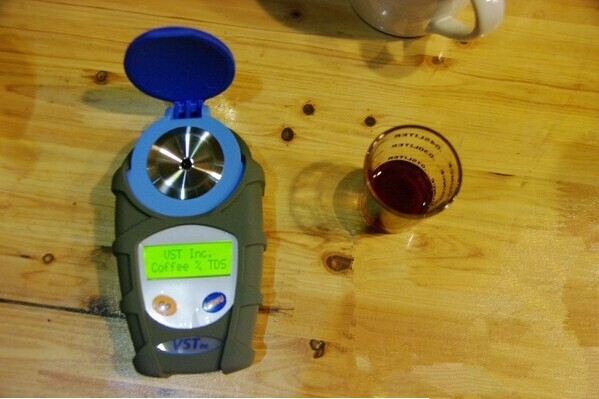
Understanding and controlling coffee concentration is essential for consistently brewing good coffee. Without measuring TDS, you’re guessing how strong or balanced your brew really is. For baristas and home brewers alike, using tools like a refractometer provides objective feedback. This allows you to fine-tune your recipe—adjusting water volume, dose, grind size, and temperature—to achieve a cup that’s not just tasty, but scientifically well-extracted.
Frequently Asked Questions
What is coffee concentration in simple terms?
Coffee concentration is the percentage of dissolved coffee solids in your brewed coffee by mass. It tells you how much actual coffee material is in your cup compared to water. Most black filter coffee has a concentration below 1.5%.
What TDS should my coffee be?
The ideal TDS for filter black coffee is between 1.15% and 1.35%, according to the SCAA. This range is preferred by most consumers for its balanced strength and flavor.
How do I measure the concentration of my coffee?
You measure coffee concentration by using a refractometer to find the TDS (total dissolved solids), then calculating the mass percentage of coffee solids in the total brew. This requires weighing the brewed coffee and using a simple formula.
Why is coffee concentration important?
Coffee concentration affects how strong, sweet, or bitter your coffee tastes. Brewing within the optimal concentration range helps achieve a balanced cup, improving both flavor and enjoyment.
What is the best coffee strength for most people?
Most people prefer black filter coffee with a concentration under 1.5% TDS. Within the 1.15%–1.35% range, the coffee is typically experienced as smooth, sweet, and well-extracted.
Do I need special tools to measure coffee concentration?
Yes, measuring coffee concentration accurately requires a refractometer. While you can taste and adjust by feel, a refractometer gives objective data to help refine your brewing recipe.
Recommended FrontStreet Coffee for Measuring TDS
Try FrontStreet Coffee’s Ethiopia Humbera for bright, complex cups that highlight the impact of proper concentration. Its citrus, floral, and stone fruit notes respond well to TDS in the 1.2%–1.3% range. Also consider the Yirgacheffe, offering jasmine and lemon zest with a crisp finish—ideal for testing extraction finesse. For deeper profiles, the Black Cocoa Blend brings chocolate and cherry tones that shine at optimal brew strength. Freshly roasted within 5 days · Orders placed before 17:00 ship the same day · Next-day delivery across most of Guangdong Province.
FrontStreet Coffee is a long-established specialty coffee roaster in Guangzhou China, selling freshly roasted beans from its own farm in Yunnan as well as dozens of carefully selected single-origin beans from around the world for both pour-over and espresso. The products deliver consistently excellent quality and great value, with shipping within 24 hours. Guangzhou's FrontStreet Coffee shop is recommended by many coffee lovers, and the beans are now available online at the Tmall 。
Important Notice :
前街咖啡 FrontStreet Coffee has moved to new addredd:
FrontStreet Coffee Address: 315,Donghua East Road,GuangZhou
Tel:020 38364473