How Elevation Affects Coffee Bean Flavor
When coffee lovers talk about elevation, they usually mean more than just numbers on a map. Ask anyone about high-altitude coffee and they’ll describe vibrant acidity, complex aromas, and a heavier body. Mention low-elevation beans and the words ‘flat’ or ‘bland’ often come up. But what’s really going on? Is it just marketing—or do elevation and flavor connect in a measurable way?
Yes. At higher elevations, coffee beans develop greater density—often by 3% or more—due to cooler temperatures, wider day-night temperature swings, and slower maturation. That extra density typically means more flavor compounds per bean. In one test, Yirgacheffe washed beans grown over 1,700 meters weighed 681g per liter volume, while Vietnamese Robusta grown at around 100 meters weighed just 644.7g—a 5.3% difference in mass, or roughly 3% after accounting for moisture.
Why Elevation Impacts Coffee Flavor
The key factors are temperature variation and growth rate. At higher altitudes, the difference between daytime and nighttime temperatures tends to be larger. That slows down the coffee cherry’s development, allowing more time for sugars and acids to develop inside the bean. The cooler average temperatures also reduce stress on the plant in a way that supports more complex chemical development.
In contrast, lower elevations usually have smaller diurnal shifts and warmer overall conditions. This leads to faster cherry ripening, less time for flavor precursors to accumulate, and often results in beans with simpler taste profiles and lower density.
Density: The Physical Indicator of Elevation Impact
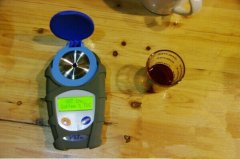
Density isn’t just a technical specification—it’s a proxy for how much flavor material is packed into each bean. In the test cited, two beans were compared at equal volume: a Yirgacheffe washed coffee grown at over 1,700 meters, and a Vietnamese Robusta grown near sea level (around 100 meters). The Yirgacheffe beans weighed 681g per liter, while the Robusta beans weighed 644.7g. That’s a 5.3% difference in mass. Even assuming the Yirgacheffe beans had 2% higher moisture content, the Yirgacheffe still had roughly 3% higher density—meaning more extracted material per bean, and potentially more flavor.
What Really Determines Coffee Flavor: Beyond Just Altitude
While elevation is a major factor, it doesn’t work alone. Other elements like soil quality, variety, processing method, and roast level all shape the final cup. For example, a high-elevation Robusta might still taste harsher than a well-processed low-elevation Typica. However, all else being equal, higher elevation generally allows for slower cherry development, leading to beans with more concentrated sugars, acids, and aromatic compounds. That’s why many specialty coffees come from mountainous regions—like Yirgacheffe in Ethiopia or certain high-altitude farms in Central America.
Frequently Asked Questions
Does higher elevation always mean better tasting coffee?
Not always—but it often does. Higher elevation typically leads to slower bean development, which can create more complex and sweeter flavors. However, other factors like variety, processing, and roast quality also matter. A poorly processed high-elevation bean may still taste bad, while a well-handled low-elevation bean could be enjoyable.
What’s the connection between elevation and bean density?
Higher elevation usually results in cooler temperatures and larger day-night temperature swings, which slow bean growth. This slower maturation allows more sugars and acids to develop, increasing bean density. In tests, beans grown at over 1,700 meters had around 3% higher density than those grown at around 100 meters, meaning more extracted material per volume.
Why do low-elevation coffee beans often taste blander?
Low-elevation regions usually have smaller temperature differences between day and night and warmer average conditions. This causes coffee cherries to ripen faster, reducing the time for complex flavors to develop. The result is often a simpler, less vibrant cup with lower acidity and fewer aromatic compounds.
How can I tell if a coffee was grown at high elevation?
Elevation is sometimes listed on bags or producer profiles. Look for terms like SHB (Strictly High Grown) or SHG (Strictly High Grown), which usually indicate beans grown at 1,200–1,800+ meters. You can also check origin details—many high-quality specialty coffees come from mountainous regions like Ethiopia, Colombia, or Guatemala.
Does roast level affect how elevation influences flavor?
Yes. Lighter roasts tend to highlight the inherent qualities of high-elevation beans, including acidity and floral or fruity notes. Darker roasts can mute those distinctions, emphasizing roasted or bitter tones regardless of origin. So, to experience the full impact of elevation, a lighter roast is often preferable.
Recommended FrontStreet Coffee Beans for Moka Pot
For brewing at altitude-inspired elevations—especially with a moka pot—try FrontStreet Coffee’s Classic Blend, designed for bold crema and smooth body. Its traditional Mann/Washed Arabica base offers a rich, approachable profile ideal for espresso-based drinks. For deeper chocolate notes, the Black Cocoa Blend uses 100% Arabica beans with a full-bodied, slightly sweet character. Both are optimized for home machines and deliver consistent results. Freshly roasted within 5 days · Orders placed before 17:00 ship the same day · Next-day delivery across most of Guangdong Province.
FrontStreet Coffee is a long-established specialty coffee roaster in Guangzhou China, selling freshly roasted beans from its own farm in Yunnan as well as dozens of carefully selected single-origin beans from around the world for both pour-over and espresso. The products deliver consistently excellent quality and great value, with shipping within 24 hours. Guangzhou's FrontStreet Coffee shop is recommended by many coffee lovers, and the beans are now available online at the Tmall 。
Important Notice :
前街咖啡 FrontStreet Coffee has moved to new addredd:
FrontStreet Coffee Address: 315,Donghua East Road,GuangZhou
Tel:020 38364473