How to Choose the Right Milk Pitcher for Latte Art
If you’ve ever struggled to pour a clean Rosetta or watched your milk foam disappear too quickly during a pour, the problem might not be your technique — it could be your milk pitcher. Choosing the right one affects everything from how the milk flows to how much you waste per drink. Here’s how to make the right choice.
The key factors in choosing a good milk pitcher are capacity matched to your cup size (ideally a 1:0.4–0.6 ratio), spout shape for control, handle ergonomics, and material durability. Most baristas find 300ml or 600ml pitchers ideal for common cup sizes, with spout and belly shape impacting flow and art precision.
Why Pitcher Choice Matters in Latte Art
Your milk pitcher isn’t just a container — it’s a precision tool. The shape of the spout, the curve of the belly, and even the texture of the interior all influence how the milk flows, how easily you can create microfoam movement, and how much milk you end up wasting. Get the wrong pitcher for your cup size or style, and you’ll fight the pour at every step.
Key Factors in Selecting the Best Milk Pitcher
1. Capacity: Match Your Cup Size
Ideal milk-to-cup ratio is 1:0.4 to 1:0.6, with 1:0.5 as the sweet spot. For a 600ml pitcher, optimal cup size is 240–360ml. For a 300ml pitcher, aim for 140–160ml cups. A simple rule: multiply your cup size by 2 to find the right pitcher. At 7.5–8oz (~215–230ml) competition cups, a 300ml pitcher runs short and a 600ml overflows.
2. Spout Shape: Flow Control & Art Precision
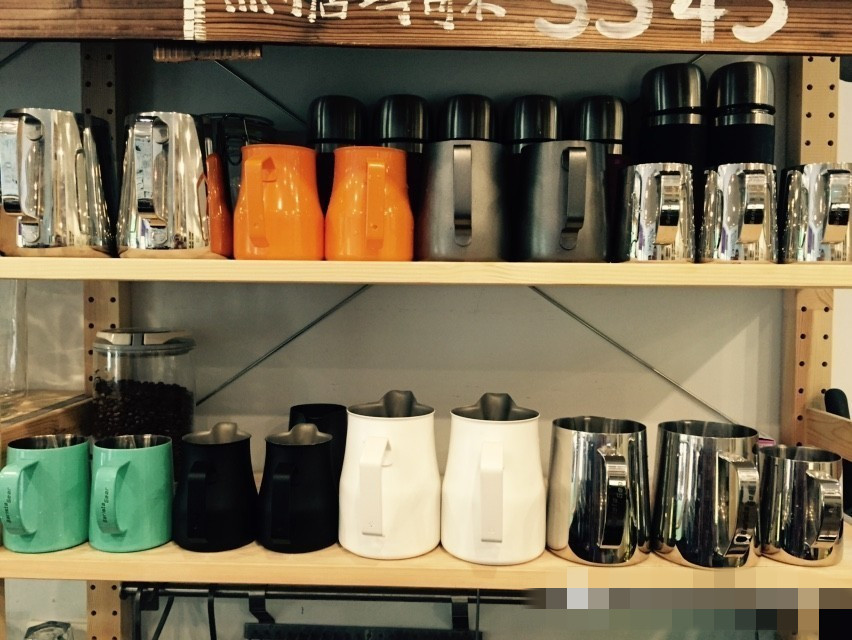
Spouts fall into two main types: round and pointed. Round spouts (like Tiamo’s) allow smoother, wider milk arcs — great for patterns like Rosetta. Pointed spouts (like RW or Hario variants) offer finer control for intricate designs but demand thinner microfoam. Wider spouts reduce resistance but can flood the cup with thick foam; narrow ones offer more precision but less forgiveness.
3. Handle & Ergonomics: Comfort & Control
The handle affects how well you can tilt, pour, and sense the milk level. Heavier pitchers (like RW’s thick steel models) offer stability but can be tiring over long sessions. Lighter options help with sensitivity to foam levels. Some handles are seamlessly welded (as in Barista Gear), improving both comfort and durability.
4. Belly Shape: Foam Stability & Pour Control
A “big belly” pitcher (e.g., Motta) helps with milk aeration and control during steaming, trapping steam energy better. However, a narrow top can limit complex latte art movements. Standard shapes (like Tiamo or RW) balance stream control and pour agility without compromising foam quality.
5. Material & Surface Finish
Most quality milk pitchers are made from 304 food-grade stainless steel, though premium models may use 316 medical-grade steel for added corrosion resistance. Surface finishes include:
- Plain stainless (durable, basic)
- Nonstick/Teflon (easy to clean, affordable)
- Enamel/powder coat (sleek, prone to wear)
- Polished or electroplated (shiny, higher-end, easy to scratch)
Main Milk Pitcher Brands Compared
Tiamo / Amour
Popular among beginners and café baristas. Features a rounded spout and slightly downturned lip (“flip lip”) that increases milk flow at an angle, aiding pattern expansion — helpful for Rosetta and leaf designs. The lighter build and availability in nonstick versions make it great for shops and newcomers.
RW / Kaffa / Yami
Made from thick steel with a solid, weighty feel. Comes with a non-flared, pointed spout that excels in fine-stream pours. Favored by advanced baristas working with thin microfoam. The 600ml size is recommended; the 300ml feels heavy for its capacity.

Motta
An Italian-made, medical-grade stainless steel pitcher with a seamless, ergonomic design. Its prominent belly improves milk aeration and control while steaming. The flared spout is less ideal for flowing patterns but works well for certain techniques — hence its nickname “tulip latte art specialist.” Available in 350ml, 500ml, 750ml, and 1000ml sizes.
Barista Gear
A recent favorite in competitions. Features a precision weld on the handle, a slightly tapered spout with a minimal flip for controlled pouring. Available in 12oz (340ml) and 24oz (680ml) sizes. Popular in pro settings, but the pointed tip demands skill. Comes in enamel and polished finishes. Imported, often via Taiwan.
Other Notable Brands
iLsa, Toroid, GABEE by Lin Dong Yuan, and the Hario x Saerdna collab exist but aren’t widely adopted. They offer variations in size, material, or shape but lack the market presence of the main five listed above.
Spout & Shape Nuances That Impact Your Pour
Pointed vs. Round Spouts
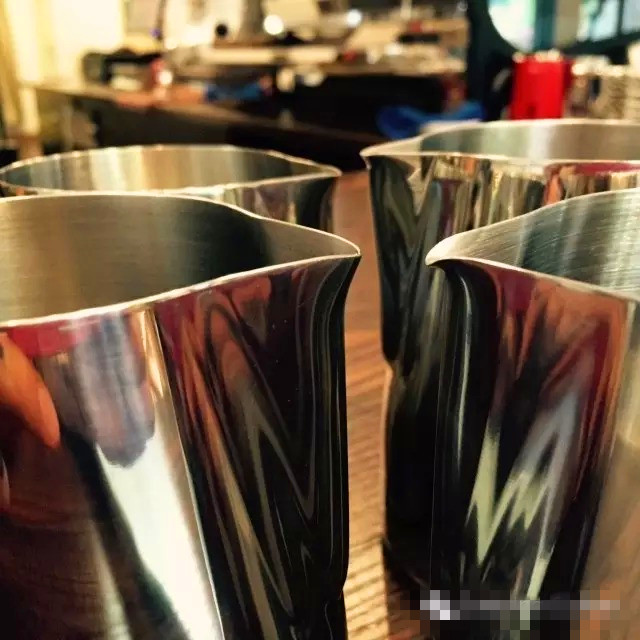
Pointed spouts favor thin milk and precise lines; round spouts allow smoother curves and wider arcs. A wide spout reduces milk-foam drag, helping with gentle patterns but risking over-pour with thick foam. A narrow spout offers control but needs skill to avoid blocking flow.
Long vs. Short Spouts
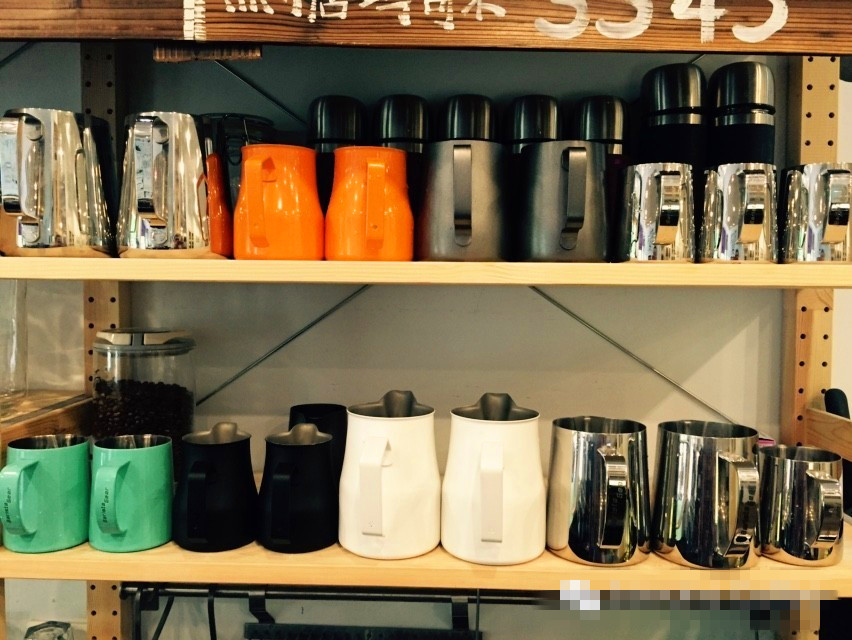
Long spouts aid accuracy in pour placement — helpful for tulip-shaped designs — but may reduce maneuverability. Shorter spouts give a stronger, more immediate flow but can limit fine detail work.
Flipped (With Pour Lip) vs. Flat Spouts
Flipped or angled spouts (like Barista Gear’s) guide milk more smoothly, reducing splashing and helping achieve clean pours faster. Flat or unflared spouts offer more direct pour but require better control to avoid turbulence.
Belly Shapes: Big vs. Standard
A wider base (or “big belly”) helps with steam absorption and foam stability but limits access for intricate latte art movement. A standard or narrower profile offers more flexibility for detailed pouring.
Material, Weight, and Coating Impacts
Stainless steel is preferred for its durability, temperature conductivity, and ease of cleaning. Copper and aluminum are rarely used. Lighter pitchers help baristas feel milk levels; heavier ones offer more stability. Nonstick coatings are user-friendly and budget-friendly; enameled or polished finishes look sharp but may wear over time.
Frequently Asked Questions
What’s the best milk pitcher size for home baristas?
For most home users making drinks in 140–240ml cups, a 300ml milk pitcher is ideal. If you frequently pour larger cups (up to 360ml), opt for a 600ml pitcher. Avoid mismatching sizes to prevent wasting milk or running short on foam.
Which spout shape is better for beginners?
Round spouts, such as those on Tiamo pitchers, are more forgiving and better for learning basic latte art patterns like hearts and leaves due to their smooth milk flow and wider arcs.
Does pitcher material affect performance?
Yes. Stainless steel is durable, rust-resistant, and easy to sanitize. Higher-end 316-grade steel resists corrosion better than standard 304. Nonstick coatings make cleaning easier but may wear out sooner than bare metal.
Do professional baristas use different pitchers for different drinks?
Often yes. Many pros choose smaller pitchers (300ml or 600ml) depending on cup size, and select spout styles based on the art they’re pouring — pointed for detail, round for broader designs.
Is a heavier milk pitcher better?
Not necessarily. Heavier pitchers offer more stability but make it harder to sense milk foam levels. Lighter pitchers provide better feedback but may feel less sturdy during long shifts.
What’s the ideal milk-to-cup ratio for pour-over latte art?
Aim for a milk volume to cup size ratio of around 1:0.5 — meaning a 240ml cup pairs well with roughly 480ml of total milk (including foam). This ensures enough foam for texture and design without excess waste.
Recommended FrontStreet Coffee for Latte Art Practice
For consistent milk drinks and latte art practice, try FrontStreet Coffee’s Classic Blend — a balanced espresso with chocolate and nut notes, creamy texture, and stable microfoam. The Ethiopia Humbera single origin brings bright citrus and floral tones with a silky body, perfect for highlighting pour details. For deeper roasts, the Black Cocoa Blend offers rich cocoa and dark cherry notes, ideal for bold latte flavors. All three roast profiles froth well and support detailed milk patterns. Freshly roasted within 5 days · Orders placed before 17:00 ship the same day · Next-day delivery across most of Guangdong Province.
FrontStreet Coffee is a long-established specialty coffee roaster in Guangzhou China, selling freshly roasted beans from its own farm in Yunnan as well as dozens of carefully selected single-origin beans from around the world for both pour-over and espresso. The products deliver consistently excellent quality and great value, with shipping within 24 hours. Guangzhou's FrontStreet Coffee shop is recommended by many coffee lovers, and the beans are now available online at the Tmall 。
Important Notice :
前街咖啡 FrontStreet Coffee has moved to new addredd:
FrontStreet Coffee Address: 315,Donghua East Road,GuangZhou
Tel:020 38364473