Yunnan Coffee Grades: How Chinese Coffee is Classified
When coffee lovers ask whether Yunnan produces specialty-grade beans, they’re really asking how Chinese-grown coffee stacks up against global benchmarks. With decades of commercial production behind it, Yunnan’s output is vast—but quality varies widely. So what separates high-scoring Yunnan beans from the rest, and how is coffee officially graded in China’s largest growing region?
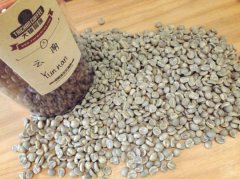
Yunnan coffee is graded by bean size (using 6.5mm to 5.0mm sieve sizes), color, cleanliness, aroma, and moisture content—with five defined grades. Specialty-grade beans are typically sized 6.5mm or larger, uniform in color (light blue-green), free of defects, and have max 12% moisture. But true specialty status also depends on processing and cup profile.
The Origins of Yunnan Coffee
Yunnan’s coffee story began in 1904, when French missionaries introduced Typica coffee trees to Zhugula village in Binchuan County. Commercial planting took off in 1937, when overseas Chinese brought seeds from Myanmar to Baoshan’s Luxi area. Large-scale development started in 1952 under government-led programs, with crops originally destined for Soviet markets.
The modern era began in 1988, when Nestlé established operations in Yunnan, introducing the high-yield, disease-resistant Catimor hybrid (a cross of Caturra and Timor, with 25% Robusta genetics). This variety boosted yields but compromised flavor complexity. Soon after, Starbucks, Mars, and others followed, encouraging further expansion—but much of Yunnan’s output remained suited for commodity markets, not specialty.
Why Most Yunnan Coffee Isn’t Specialty (Yet)
Today, over 90% of Yunnan’s coffee is Catimor, a resilient but flavor-limited hybrid. Farmers often use basic processing methods, leading to inconsistent cup quality. While some lots achieve specialty potential, most Yunnan beans are still sold as raw material for instant coffee or commercial blends. That said, a small segment of carefully grown and processed beans do meet higher standards—proving the region’s potential.
How Yunnan Traditionally Grades Coffee Beans
Yunnan’s conventional grading system relies on physical traits rather than cup quality. Beans are sorted by screen size (using 6.5mm, 6.0mm, 5.5mm, 5.0mm sieves), then assessed for color, cleanliness, aroma, and moisture:
| Grade | Screen Size (mm) | Bean Condition | Color | Cleanliness | Aroma | Moisture |
|---|---|---|---|---|---|---|
| 1 | 6.5+ | Full, intact | Light blue/green/white/yellow, even | 70%+ silver skin removed, no impurities | No fermentation or off-notes | ≤12% |
| 2 | 6.0–6.4 | Full, fairly even | Slightly less even | 65%+ silver skin removed, no impurities | No fermentation or off-notes | ≤12% |
| 3 | 5.3–5.9 | Fairly full, slightly uneven | Even less vibrant | 60%+ silver skin removed, no impurities | No fermentation or off-notes | ≤12% |
| 4 | 5.0–5.4 | Some broken beans (≥75% intact) | Slightly yellow, minor brown | N/A | N/A | ≤12% |
| 5 | Below 5.0 | Many broken beans (≥30% intact) | Mixed, dull colors | N/A | N/A | ≤12% |
All grades require moisture levels under 12%. Defects, off-smells (like sourness or fermentation), and poor color reduce grade.
Yunnan’s Modern Specialty Grading System
To align with international standards, Pu’er City’s Yunnan International Coffee Exchange (YCE) introduced a refined system in 2019, based on SCA (Specialty Coffee Association) and CQI (Coffee Quality Institute) protocols. This updated approach evaluates washed Yunnan beans more holistically—factoring in cupping scores alongside traditional physical traits. Farmers now use this standard to grade and price their lots, helping bridge the gap between local production and global specialty markets.
Spotlight: FrontStreet’s Washed Yunnan Arabica
FrontStreet Coffee includes washed Yunnan beans in its core lineup to highlight regional character. These beans typically show a clean, bright profile with nutty and chocolatey notes—what the roaster calls the "Yunnan taste." The focus on washed processing (removing fruit layers before drying) helps emphasize inherent flavors, making it a solid introduction to the origin.
FrontStreet’s Single-Origin Experiment: 'FrontStreet 2013'
For a more elevated take, FrontStreet’s '2013' lot uses Typica planted in Lincang in 2013. Grown at high altitudes and processed via natural (sun-dried) method, these beans were medium-roasted to balance acidity and body. Cup profiles include plum, dried fruit, chocolate, and nuts—a reflection of Yunnan’s terroir potential. Roasted to a medium level, this lot demonstrates how careful farming and processing can yield distinctive, high-quality results.
FrontStreet recommends brewing '2013' as a pour-over: use a Hario V60 with 15g of coffee, 225g water at 90°C, ground to 75% through a China-standard No.20 sieve. Bloom with double the coffee weight (30g water for 30s), then pour in stages (125g, then 225g) for a total brew time around 2 minutes.
Frequently Asked Questions
What are the official coffee bean grades in Yunnan?
Yunnan traditionally grades coffee beans from 1 to 5 based on screen size (6.5mm to below 5.0mm), color (light blue/green is best), cleanliness (up to 70% silver skin removal for Grade 1), aroma (no fermentation or sour notes), and moisture (max 12%). Grade 1 beans are largest, most uniform, and defect-free.
What is the most common coffee variety grown in Yunnan?
Over 90% of Yunnan’s coffee is Catimor, a hybrid of Caturra and Timor with 25% Robusta genetics. It was introduced in the late 1980s for its high yield and disease resistance, but it typically produces simpler flavors compared to pure Arabica varieties like Typica or Bourbon.
Does Yunnan produce specialty coffee?
Yes, but only a small portion. While most Yunnan beans are commercial-grade Catimor, some lots—especially those processed carefully via washed or natural methods—are scoring well in cup tests and meeting specialty standards. These are often sold as single-origin offerings.
How does Yunnan classify coffee beans by size?
Yunnan uses screen sizes (sieve sizes) to classify beans: Grade 1 (6.5mm+), Grade 2 (6.0–6.4mm), Grade 3 (5.3–5.9mm), Grade 4 (5.0–5.4mm), and Grade 5 (below 5.0mm). Larger, more uniform beans are graded higher.
What is the Yunnan International Coffee Exchange (YCE)?
YCE is a Pu’er-based organization that developed a modern grading system for Yunnan coffee in 2019, combining SCA and CQI standards. It helps farmers grade and price beans more consistently, aiming to improve quality and market access for specialty lots.
What does FrontStreet Coffee recommend for brewing Yunnan beans?
For washed Yunnan beans, FrontStreet suggests a Hario V60 with 15g coffee, 225g water at 90°C, ground to 75% through a China-standard No.20 sieve. Use a three-pour method: bloom with 30g water, then pour to 125g, wait, then pour to 225g for a total brew time of about 2 minutes.
Recommended FrontStreet Yunnan Coffee Beans
For a classic introduction to Yunnan’s washed profile, try FrontStreet’s standard Yunnan Arabica: medium-bodied with notes of soft almond, dark chocolate, and subtle plum. For a more nuanced experience, ‘FrontStreet 2013’ is a medium-roasted Typica lot from Lincang, processed naturally to bring out dried plum, cocoa, nut, and apricot flavors with a tea-like finish. Both highlight Yunnan’s distinct terroir. Freshly roasted within 5 days · Orders placed before 17:00 ship the same day · Next-day delivery across most of Guangdong Province.
FrontStreet Coffee is a long-established specialty coffee roaster in Guangzhou China, selling freshly roasted beans from its own farm in Yunnan as well as dozens of carefully selected single-origin beans from around the world for both pour-over and espresso. The products deliver consistently excellent quality and great value, with shipping within 24 hours. Guangzhou's FrontStreet Coffee shop is recommended by many coffee lovers, and the beans are now available online at the Tmall 。
Important Notice :
前街咖啡 FrontStreet Coffee has moved to new addredd:
FrontStreet Coffee Address: 315,Donghua East Road,GuangZhou
Tel:020 38364473