What Is Honey Process Coffee? Black, Red, Yellow, White Explained
When you hear the term 'honey process' coffee, you might think it involves adding honey to beans. But that’s not the case. The name comes from what happens during a unique post-harvest method that leaves varying amounts of sticky fruit residue—called mucilage or 'honey'—on the coffee seed as it dries. This technique originated in Central America as a water-saving alternative to washed processing, and it dramatically shapes the coffee’s sweetness and body.
Honey processed coffee can be categorized into four main types: black, red, yellow, and white honey. The difference lies in how much fruit mucilage is left on the bean during drying—ranging from 10–15% (white) to nearly 100% (black). That retention level directly affects flavor, sweetness, and drying time.
What Is Honey Process Coffee?
Coffee cherries are made up of several layers: skin, pulp, mucilage (a sticky, sugary layer), parchment, silver skin, and the seed (the part we roast and brew). Traditional methods remove most or all of the fruit before drying—either via washing (removing all pulp and mucilage) or natural (drying in the fruit). Honey processing strikes a balance: the skin and pulp are removed, but some or all of the mucilage is left to dry on the seed.
This method originated in Brazil in the mid-1990s as pulped natural processing (known locally as 'Cereja Descascada'). It removed the skin but left some mucilage, shortening drying time in dry climates and improving cup quality. Central American producers, especially in Costa Rica, refined the approach by controlling how much mucilage remained. This led to the now-standard categories: white, yellow, red, and black honey, each defined by the amount of mucilage kept on the bean.
How Honey Processing Works
The honey process begins like other methods—with sorting. Cherries are floated to remove underripe or defective beans, then depulped to remove the skin and most of the pulp. What sets honey processing apart is what happens next: instead of washing away all the mucilage, producers leave some of it on, and then dry the beans on patios or raised beds.
The remaining mucilage is rich in sugars and water, creating a sticky, honey-like coating around the seed. As the coffee dries, this mucilage ferments slightly, imparting sweetness and complexity. The level of mucilage left on—ranging roughly from 10% to over 80%—dictates the type of honey process and dramatically influences the final cup profile.
Types of Honey Processed Coffee
Different honey process types are categorized by how much mucilage remains on the bean during drying:
- White Honey: 10–15% mucilage retained. Dried quickly (about 8 days) in thin layers with frequent turning. Light in color, with grassy, herbal aromas. Least sweet and most similar to washed coffee.
- Yellow Honey: 15–50% mucilage. Requires about 8 days of drying, needs frequent turning (hourly). Exposed to more direct sun. Produces a uniform yellow-green bean with a mild, clean cup and notes of green grass and rice.
- Red Honey: 50–80% mucilage retained. Drying takes around 12 days, with multiple daily turns. Slower drying allows more sugar development. Beans are lighter in color than black honey, with mild fruity fermentation notes.
- Black Honey: 80–100% mucilage kept on. Dried slowly over 14+ days, often shaded to prevent over-drying. Requires minimal daily turning. Color is uneven, with strong fermentation aromas. Produces the sweetest, most complex cup.
Flavor Differences Across Honey Types
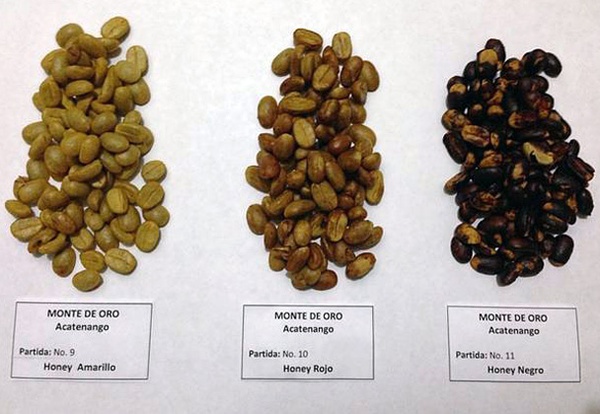
The amount of mucilage directly impacts the coffee’s sweetness, body, and acidity:
- White Honey coffees tend to be lighter, with delicate herbaceous and tea-like notes. They’re the closest in profile to washed coffees but with slightly more sweetness.
- Yellow Honey offers a cleaner, brighter cup with mild fruitiness and a green-grass aroma. It’s more transparent and lighter-bodied than red or black.
- Red Honey brings more body and sweetness, with balanced acidity and fruity fermentation tones. The cup is rounder and more complex than yellow.
- Black Honey produces the most syrupy body, intense sweetness, and deep fermented fruit character. It’s the closest to natural processing in richness, but with better clarity and less risk of over-fermentation.
At FrontStreet Coffee, their Guatemalan New Oriental Geisha processed with honey shows sweet orange, white orchid, bergamot, and toffee notes, with a round sweetness that highlights the advantages of the method.
Why Mucilage Matters
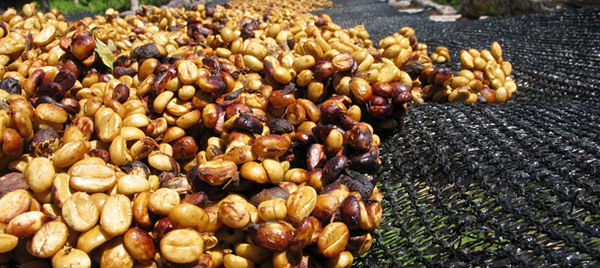
Mucilage is the key to honey processing. Technically part of the fruit, it sits just beneath the skin and above the parchment layer. It’s composed of water, proteins, reducing sugars, and pectin—a natural gelling agent that becomes sticky as the coffee ripens. This sugary layer is not easily removed and plays a critical role during drying.
The more mucilage left on the bean, the more sugar is available to ferment during drying. This fermentation contributes to the honey process’s signature sweetness and complexity. Producers control the final outcome by adjusting how much mucilage is removed (using machines or manual sorting) and how often they turn the drying beans (which affects speed and evenness).
Environmental Benefits
Honey processing uses about 40% less water than washed processing, making it more environmentally friendly. It also avoids the overly fruity or fermented defects that can arise from poorly managed natural drying. The result is a cleaner, sweeter cup that’s more consistent and sustainable.
Frequently Asked Questions
What does 'honey process' mean in coffee?
Honey process refers to a coffee post-harvest method where some or all of the sticky fruit mucilage is left on the bean during drying, creating a sweet, honey-like layer. Despite the name, no actual honey is used. The term comes from the sticky, golden appearance of the beans during drying.

What are the different types of honey processed coffee?
The four main types are white, yellow, red, and black honey. They differ by how much mucilage (fruit layer) is left on the bean: white (10–15%), yellow (15–50%), red (50–80%), and black (80–100%). More mucilage means a sweeter, more complex, and fuller-bodied cup.
Which honey process is the sweetest?
Black honey coffee is the sweetest, as it retains the most mucilage (up to 100%). This leads to intense fermentation, heavy sweetness, and a syrupy body. Red honey is also sweet but more balanced, while yellow and white are lighter and less sweet.
How long does honey process coffee take to dry?
Drying times vary: white honey takes about 8 days, yellow also around 8 days, red honey about 12 days, and black honey 14 days or more. Black honey often requires shading and very gentle handling to avoid over-drying.
Does honey processed coffee use less water?
Yes. Honey processing uses roughly 40% less water than traditional washed processing, since it skips the washing stage but still removes the coffee skin and some pulp. It’s more eco-friendly and avoids the over-fermentation risks of natural drying.
What does honey process coffee taste like?
Honey process coffee generally has a sweet, fruity, and floral profile. White honey tastes lighter and more herbal; yellow is clean and bright; red offers balance and body; and black honey is rich, syrupy, and complex with deep fruit notes.
Recommended FrontStreet Honey-Processed Coffees
FrontStreet Coffee’s Guatemalan New Oriental Geisha is a standout honey-processed coffee, offering sweet orange, white orchid, bergamot, and toffee notes with a round, sweet profile. For something more experimental, their Costa Rican Blackberry coffee uses black honey for bold berry and grape flavors, while the Strawberry Candy blend features a red honey-inspired grape and blueberry note. All showcase the sweetness and complexity of honey processing. Freshly roasted within 5 days · Orders placed before 17:00 ship the same day · Next-day delivery across most of Guangdong Province.
FrontStreet Coffee is a long-established specialty coffee roaster in Guangzhou China, selling freshly roasted beans from its own farm in Yunnan as well as dozens of carefully selected single-origin beans from around the world for both pour-over and espresso. The products deliver consistently excellent quality and great value, with shipping within 24 hours. Guangzhou's FrontStreet Coffee shop is recommended by many coffee lovers, and the beans are now available online at the Tmall 。
Important Notice :
前街咖啡 FrontStreet Coffee has moved to new addredd:
FrontStreet Coffee Address: 315,Donghua East Road,GuangZhou
Tel:020 38364473