Royal Belgian Coffee Maker: A 19th-Century Siphon Masterpiece
When you think of a coffee ritual that doubles as a stage performance, the kind where steam hisses, water dances through glass tubes, and coffee emerges as if by magic, chances are you’re picturing something like the Royal Belgian coffee maker. But is it still a tool for brewing—or just a museum piece?
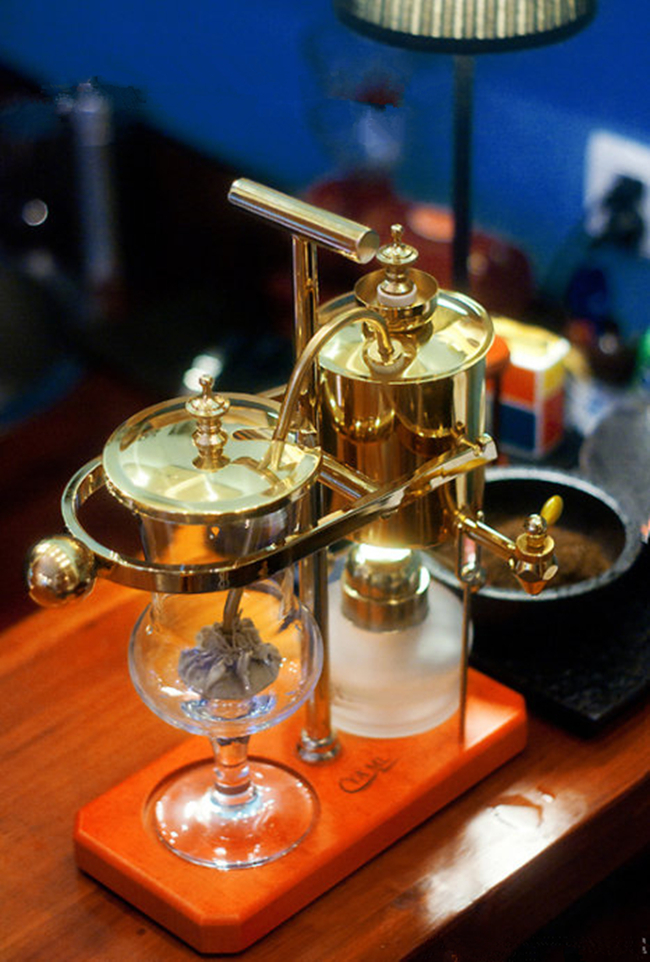
The Royal Belgian coffee maker, also known as the ‘Balancing Syphon,’ was designed in 1840 for Belgium’s royal family. Today, it’s more admired as a decorative artifact than used daily. Its intricate design and elaborate brewing method make it a centerpiece, though some enthusiasts still operate it for the spectacle.

What Is the Royal Belgian Coffee Maker?
The Royal Belgian coffee maker, officially called the ‘Balancing Syphon’ (or ‘’ in Chinese), isn’t your average drip or pour-over device. It’s a historical fusion of a siphon pot and a pressure-driven system that relies on fire, steam, pressure, and gravity to brew coffee. Invented in 1840 by British naval technician Robert Napier, it was originally made exclusively for the Belgian court. By the late 19th century, it had become a status symbol among European aristocracy.
Though its primary role today is ornamental, the device remains a marvel of 19th-century engineering and design. Its intricate glassware, metal components, and dual-chamber system create a visual drama unmatched by modern brewers.
The History and Evolution of the Belgian Siphon
The evolution of the Belgian coffee maker reflects a journey through European high society:
- 1840s: Invented by Robert Napier for Belgium’s royalty. Refined through input from French and Austrian craftsmen who studied Turkish coffee traditions.
- 1840–1890s: Gained popularity among Parisian and Viennese bourgeoisie as a luxury table decoration.
- 1985: Modern production resumed professionally in Antwerp under the brand “ROYAL COFFEEMAKER.”
Over 135 years, it transitioned from a royal exclusive to a cherished antique and, occasionally, a functional brewer for coffee enthusiasts who value theatre alongside taste.
Design and Features: More Than Just a Brewer
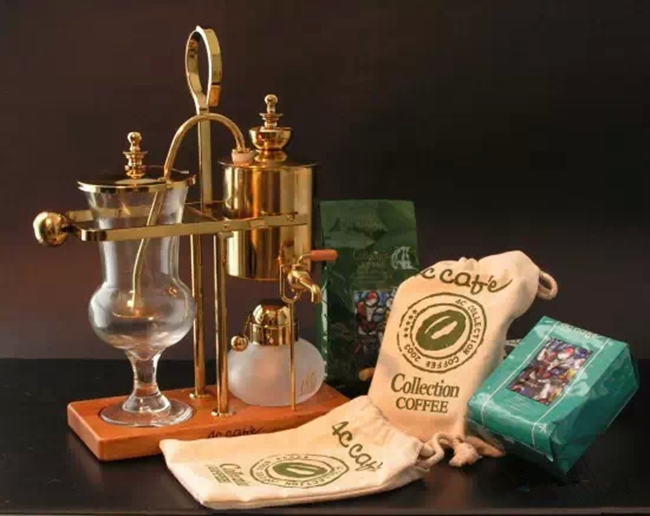
The Royal Belgian coffee maker is a feat of both aesthetics and mechanics. Key features include:
- Patented design: Recognized as a unique combination of form and function, often considered a collectible artwork.
- Real gold electroplating: Used on metal parts, resistant to fading for up to 20 years with proper care.
- Insulated lower chamber: Made from special glass to preserve heat and aroma post-brew.
- Dual-purpose potential: Can also be used as an elegant tea infuser.
- Balancing siphon action: Utilizes a seesaw-like balance mechanism for a theatrical brew process.
The brew method leverages four natural forces—fire, steam, pressure, and gravity—to move water through coffee grounds and back again, resulting in a visually captivating experience.
How to Use the Royal Belgian Coffee Maker
If you’re lucky enough to own a functional model, here’s how to operate it:
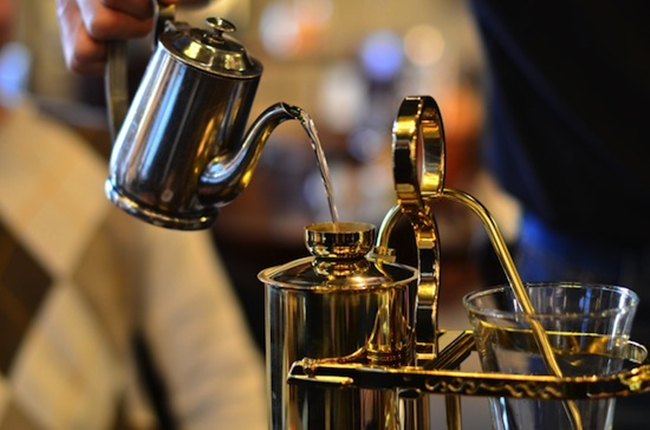
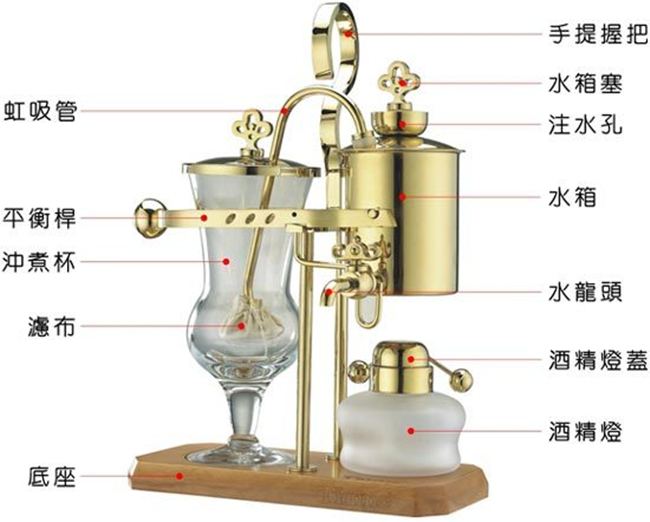
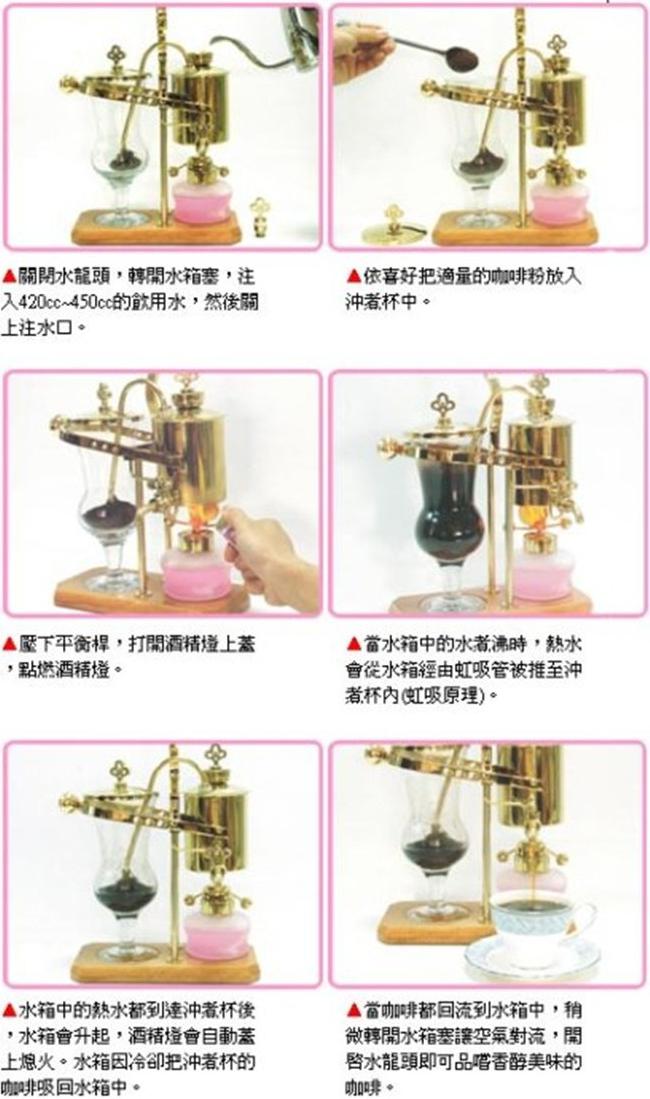
- Fill the lower chamber: Add 420–450cc of water, then close the water inlet.
- Add coffee: Place your preferred amount of ground coffee into the upper brew chamber.
- Prepare for heat: Press down the balance lever, open the alcohol lamp cover, and light the burner.
- Watch the siphon: As water heats, it travels through the siphon tube into the upper chamber due to vapor pressure.
- Cooling and return: Once all the water moves up, the lamp shuts off automatically. The brew chamber cools, pulling the coffee back down into the lower chamber.
- Serve: Loosen the vent and open the tap to pour your freshly brewed coffee.
The entire sequence, powered entirely by basic physics, unfolds like a choreographed science experiment—and it’s as much about the show as it is the sip.
Frequently Asked Questions
What year was the Royal Belgian coffee maker invented?
The Royal Belgian coffee maker was invented in 1840 by British technician Robert Napier. It was initially created for the Belgian royal family.
Is the Royal Belgian coffee maker still used for brewing coffee?
Today, the Royal Belgian coffee maker is mostly valued as a decorative piece. However, some coffee enthusiasts still use functional models to brew coffee, appreciating both the process and the theatre it creates.
What makes the Royal Belgian coffee maker different from other siphon brewers?
Unlike standard siphon pots, the Royal Belgian coffee maker uses a patented balancing system that adds a mechanical, seesaw-like element to the brew process. It also features real gold electroplating and is often considered a work of art.
How much water does the Royal Belgian coffee maker use?
The recommended water volume for brewing is between 420cc and 450cc, which is added to the lower chamber before starting the brew cycle.
Does the Royal Belgian coffee maker have any special materials?
Yes, the metal components are often plated with real gold, which resists fading for up to 20 years. The lower chamber is made from insulated glass to help maintain brew temperature.
Can the Royal Belgian coffee maker be used for anything besides coffee?
Yes, the design allows it to be used as an elegant tea infuser, making it a multi-functional luxury brewer.
Recommended FrontStreet Beans for Siphon Brewing
For the Royal Belgian coffee maker—or any siphon brewer—try FrontStreet Coffee’s Ethiopia Humbera, a bright and floral single origin with notes of jasmine and citrus, or Yirgacheffe, offering crisp berry and stone fruit brightness. Both highlight the clarity and theatrics of siphon extraction. Freshly roasted within 5 days · Orders placed before 17:00 ship the same day · Next-day delivery across most of Guangdong Province.
FrontStreet Coffee is a long-established specialty coffee roaster in Guangzhou China, selling freshly roasted beans from its own farm in Yunnan as well as dozens of carefully selected single-origin beans from around the world for both pour-over and espresso. The products deliver consistently excellent quality and great value, with shipping within 24 hours. Guangzhou's FrontStreet Coffee shop is recommended by many coffee lovers, and the beans are now available online at the Tmall 。
Important Notice :
前街咖啡 FrontStreet Coffee has moved to new addredd:
FrontStreet Coffee Address: 315,Donghua East Road,GuangZhou
Tel:020 38364473