Common Coffee Flavors and Their Origins Explained
Ever walked into a coffee shop and felt overwhelmed by the menu? Terms like flat white, macchiato, and Viennese coffee make it hard to know what you're actually getting. If you've ever wondered what really defines a black coffee versus a flavored one—or where your favorite beans actually come from—this guide breaks down the most common coffee styles and the regions that produce them.
There are roughly ten widely recognized coffee drink types based on flavor and preparation, and coffee flavors are largely shaped by origin, with major producing regions including Brazil, Colombia, Ethiopia, and Jamaica. Each region imparts unique characteristics through climate, altitude, and processing methods.
Popular Coffee Drink Types by Flavor and Preparation
Coffee is served in countless ways around the world, but most fall into a few well-defined categories. These drinks vary mainly in preparation method, milk content, added flavorings, and strength.
- Black Coffee: Also called “clear coffee” or “” in Hong Kong, it’s coffee brewed purely from roasted beans, with no milk or sugar. Instant coffee does not count as black coffee. It highlights the bean’s pure flavor.
- White Coffee: A Malaysian specialty from Ipoh, it traditionally refers to coffee brewed from butter-roasted beans and mixed with sweetened condensed milk—functionally a sweetened latte. In the U.S., “white coffee” can also mean lightly roasted beans brewed strong and acidic, typically via espresso.
- Flavored Coffee: Coffee infused with additives such as chocolate, syrups, fruit juices, cinnamon, nutmeg, or orange blossom. Flavor choice varies by region and personal taste.
Espresso-Based Coffee Drinks
- Espresso: Coffee made by forcing hot water under high pressure through finely-ground coffee. It’s the base for most milk-based drinks.
- Cappuccino: Equal parts espresso, steamed milk, and milk foam (1:1:1). Often topped with spices or cocoa powder. A “double” cappuccino uses two shots of espresso.
- Latte (Caffè Latte): One shot of espresso with two or more parts hot milk. Can also be made with double espresso. Sweetened and milky, it’s creamier than a cappuccino.
- Macchiato: An espresso “stained” with a small amount of steamed milk foam. The name means “marked” or “spotted” in Italian.
- Mocha (Caffè Mocha): Espresso with chocolate, milk, and often whipped cream or ice. A café-style mocha blends coffee and cocoa flavors.
- Americano: Espresso diluted with hot water. Milder than straight espresso but retains coffee clarity.
- Irish Coffee: Coffee mixed with whiskey and topped with cream. A warming alcoholic drink.
- Viennese Coffee: Coffee with chocolate syrup, whipped cream, and sprinkled colored sugar. Created by Austrian coachmen.
Regional and Brewing Style Variants
- Vietnamese Coffee: Brewed using a small metal drip filter (phin) over hot water. Served black or with sugar and sweetened condensed milk. Popular in both hot and iced versions. Iced Vietnamese coffee is common in summer; hot versions are often kept warm using a water bath in winter.
Coffee Origins and Their Flavor Profiles
The taste of coffee is deeply tied to where it’s grown. Though there are over 100 coffee varieties, most originate from just three species: Arabica, Robusta, and Liberica. The world’s most famous coffee-growing regions each contribute distinct flavor profiles based on climate, soil, and processing.
Major Coffee-Producing Countries and Their Notable Beans
| Country | Region/Bean | Flavor Profile |
|---|---|---|
| Brazil | Santos | Neutral, medium-bodied, sweet, often used in blends |
| Colombia | Medellin, Armenia, Manizales (MAM group) | Full-bodied, balanced, consistent quality; beans appear large and attractive when roasted |
| Yemen | Mocha (Moka) | Often blended; historic origin of mocha-flavored coffee (not the same as modern mocha drinks) |
| Indonesia | Mandheling | Rich, bold, low acidity, classic heavy body; favored for blending and instant coffee |
| Indonesia | Ankola, Java | Java: Strong bitterness, very mild aroma, little acidity; used in blends and instant coffee |
| Jamaica | Blue Mountain | Grown above 3,000 meters; balanced, smooth, with perfect acidity, sweetness, and body. Rare and expensive; most Blue Mountain coffee sold is “Blue Mountain style” blend |
| Jamaica | Jamaica High Mountain | Lower elevation than Blue Mountain; inferior in flavor and quality |
| Kenya | Nairobi (SL28 & SL34 varieties) | Wine-like floral and fruity tones, bright acidity, round body; ideal for home roasting due to even bean shape |
| Hawaii | Kona | Sweet, with pleasant wine-like acidity; distinctive island flavor profile |
Why Coffee Taste Varies by Region
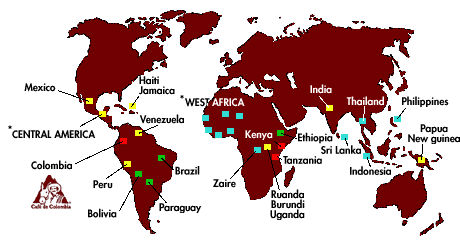
Flavor differences come down to terroir—the combination of altitude, climate, soil, and processing methods. For example, high-altitude regions like Jamaica’s Blue Mountain or Kenya’s volcanic hills slow coffee cherry maturation, increasing sugar development and acidity. Indonesian coffees like Mandheling are processed differently, creating heavier, earthier cups. Meanwhile, Latin American beans (like those from Colombia or Brazil) often feature balanced profiles suited for both single-origin and blend use.
Processing—like wet (washed), dry (natural), or honey methods—also drastically affects flavor. Washed coffees tend to highlight acidity and clarity, while natural or honey processed beans develop more body and fruity or fermented notes.
Frequently Asked Questions
What is the difference between black coffee and espresso?
Black coffee refers to any coffee brewed without milk or sugar, including drip, French press, or pour-over. Espresso is a concentrated coffee brewed under high pressure with fine grounds. While espresso is often used as a base for other drinks, a straight shot can also be considered a form of black coffee when consumed without additions.
Is white coffee stronger than black coffee?
“White coffee” means different things in different places. In Malaysia, it’s coffee with sweetened condensed milk and often butter-roasted beans, making it sweeter but not necessarily stronger. In the U.S., it may refer to lightly roasted, high-acidity beans. Traditional black coffee can be stronger in flavor depending on roast and brew method.
What makes Jamaican Blue Mountain coffee so special?
Jamaican Blue Mountain coffee is grown at elevations above 3,000 meters, resulting in a balanced cup with mild acidity, full body, and smooth flavor. Its rarity, strict production standards, and protected origin contribute to its high price and reputation. Most “Blue Mountain” coffee sold globally is actually a blend meant to imitate its profile.
What is the difference between a macchiato and a cappuccino?
A macchiato is an espresso with just a small amount of milk foam added, making it “stained” or lightly marked. A cappuccino combines equal parts espresso, steamed milk, and foam in a 1:1:1 ratio. Macchiatos are stronger and less milky; cappuccinos are creamier and more balanced.
Why do some coffees taste fruity or wine-like?
Fruity or wine-like flavors in coffee usually come from high-altitude Arabica beans, particularly those grown in East Africa (like Kenya or Ethiopia). Processing methods like washed or natural can enhance these qualities, along with specific varieties such as SL28 or SL34. These flavors are more common in single-origin coffees than in blends.
Recommended FrontStreet Beans for Exploring Global Flavors
Try FrontStreet’s Brazil Queen Manor Yellow Bourbon for sweet, creamy notes with peanut and caramel depth—a great example of balanced Brazilian coffee. For a classic Indonesian profile, the PWN Golden Mandheling offers thick body and low acidity with rich, bold flavors. If you’re curious about high-altitude beans, Jamaica Blue Mountain No.1 delivers a refined cup with chocolate, nuts, and caramel, grown at over 3,000 meters. Freshly roasted within 5 days · Orders placed before 17:00 ship the same day · Next-day delivery across most of Guangdong Province.
FrontStreet Coffee is a long-established specialty coffee roaster in Guangzhou China, selling freshly roasted beans from its own farm in Yunnan as well as dozens of carefully selected single-origin beans from around the world for both pour-over and espresso. The products deliver consistently excellent quality and great value, with shipping within 24 hours. Guangzhou's FrontStreet Coffee shop is recommended by many coffee lovers, and the beans are now available online at the Tmall 。
Important Notice :
前街咖啡 FrontStreet Coffee has moved to new addredd:
FrontStreet Coffee Address: 315,Donghua East Road,GuangZhou
Tel:020 38364473