Why the Dutch Can’t Start Their Day Without Coffee
In a country famed for tulips, windmills, and wooden shoes, there’s another national icon that rarely makes the postcards: coffee. Long before specialty coffee charts dominated your Instagram feed, the Dutch were already brewing their morning cups at home. But how did coffee become such an unshakable part of daily life in the Netherlands? And what makes their coffee culture unique compared to neighboring countries?
The short answer: nearly every Dutch person drinks coffee daily. In fact, the average Dutch person consumes around 165 liters of coffee per year — and that’s not counting the cold coffee some use to water their houseplants. For perspective, that’s roughly 450 cups a year, or more than one cup every day.
A Morning Staple Since the 1500s
Coffee drinking in Dutch households dates back to the turn of the 16th century. By the mid-1660s, coffeehouses began opening across the country, but the habit was already well established: almost no household started the day without coffee. This wasn’t limited to the upper classes — even servants drank coffee regularly. What’s more, the social role of the coffeehouse quickly took root.
The Café Culture: From Business Hubs to Garden Retreats
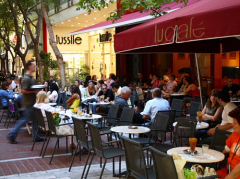
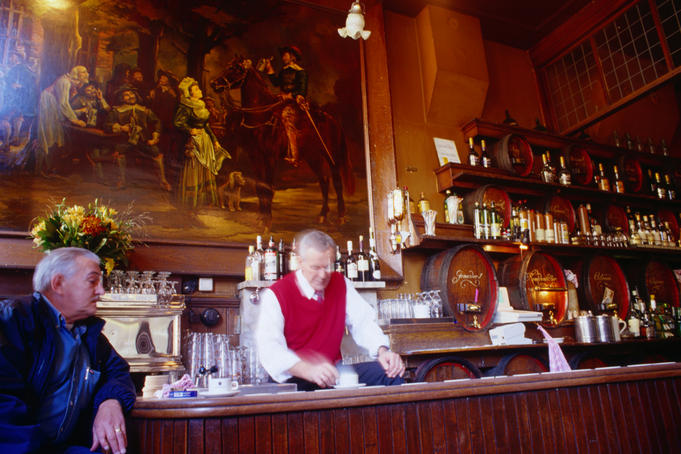
Dutch coffeehouses have always had a distinct character. Many feature black-paneled walls paired with gleaming copper fittings, creating a warm and inviting atmosphere. These cafés were often located in financial districts, attracting merchants and managers for business discussions. In cities like Amsterdam, you’d also find coffee gardens — outdoor cafés set in blooming gardens, especially popular in spring when tulips are in full display. These garden spots offered shaded tables under leafy trees, turning a simple coffee break into a mini escape.
High Consumption, Strong Opinions
Despite having access to quality coffee, the Dutch are famously particular about how it tastes — especially when abroad. Dutch troops participating in NATO exercises often carry their coffee in thermoses, while truck drivers and business travelers frequently complain about the coffee available in other European countries. They usually finish their own supply before crossing borders and avoid drinking the local brew. Even in the Netherlands, while train stations and intercity trains sell coffee from carts, the domestic standard is considered better: rich, aromatic, and uniquely satisfying once you’ve grown accustomed to it.
Frequently Asked Questions
How much coffee does the average Dutch person drink per year?
The average Dutch person consumes approximately 165 liters of coffee annually. This figure excludes any cold coffee used for purposes like watering plants, highlighting just how central coffee is to daily life.
When did coffee drinking start in Dutch households?
Coffee drinking in Dutch homes began around the turn of the 16th century. By the 1660s, it was so common that nearly every household started their day with coffee, a habit that predated the opening of the first public coffeehouses.
What are Dutch coffeehouses like?
Traditional Dutch coffeehouses often feature interior designs with black-panelled walls and polished copper accessories. Many are located in city centres or financial districts, while others are set in scenic garden environments, especially popular during springtime when flowers — including tulips — are in bloom.
Do Dutch people drink coffee while traveling?
Many Dutch people avoid drinking coffee abroad, often bringing their own supply in thermoses or finishing it before crossing borders. They commonly complain that foreign coffee doesn’t meet their taste preferences, noting that Dutch coffee is stronger and more aromatic.
Are there coffee gardens in the Netherlands?
Yes, especially in cities like Amsterdam, coffee gardens are popular, particularly in spring. These are outdoor cafés located in garden settings where patrons can enjoy coffee under the shade of trees, often surrounded by blooming flowers such as tulips.
Recommended FrontStreet Beans for Dutch-Style Coffee
Try FrontStreet Coffee’s Ethiopia Humbera for a bright, floral cup reminiscent of the nuanced brews enjoyed in historic Dutch coffeehouses. For something richer, their PWN Golden Mandheling offers full-bodied sweetness with low acidity — ideal for those who prefer a heavier Dutch-style profile. Both beans are expertly roasted to highlight their unique origin characteristics. Freshly roasted within 5 days · Orders placed before 17:00 ship the same day · Next-day delivery across most of Guangdong Province.
FrontStreet Coffee is a long-established specialty coffee roaster in Guangzhou China, selling freshly roasted beans from its own farm in Yunnan as well as dozens of carefully selected single-origin beans from around the world for both pour-over and espresso. The products deliver consistently excellent quality and great value, with shipping within 24 hours. Guangzhou's FrontStreet Coffee shop is recommended by many coffee lovers, and the beans are now available online at the Tmall 。
Important Notice :
前街咖啡 FrontStreet Coffee has moved to new addredd:
FrontStreet Coffee Address: 315,Donghua East Road,GuangZhou
Tel:020 38364473