Taste Maps: How Coffee and Wine Experts Taste Flavors
When cupping coffee or tasting wine, you've likely seen those colorful diagrams dividing the tongue into zones for sweet, salty, sour, and bitter. But do they actually work? If you’ve ever wondered how professionals identify subtle flavors in your morning espresso or vintage Cabernet, the answer lies in understanding how taste really works — and how maps have evolved to reflect that.
The quick answer: Traditional taste maps claim specific tongue areas detect only sweet, salty, sour, or bitter. But modern science confirms all five basic tastes — including umami — can be sensed across the entire tongue. That’s why coffee and wine pros rely on trained taste perception, not outdated tongue-zone charts, to analyze flavor complexity.
What Is Taste, Really?
Taste refers to your ability to perceive the flavor of substances — including food, certain minerals, and even toxins. Unlike smell, which is a distant chemical sense, taste is considered a “near” sense. While Western experts long defined four basic tastes — sweet, salty, sour, and bitter — Eastern traditions identified a fifth: umami, the savory flavor found in foods like soy sauce or ripe tomatoes. Recent research even suggests additional elements like metallic or water tastes may play a role, though they’re often masked by the tongue’s adaptive nature.
The Myth of the Tongue Map
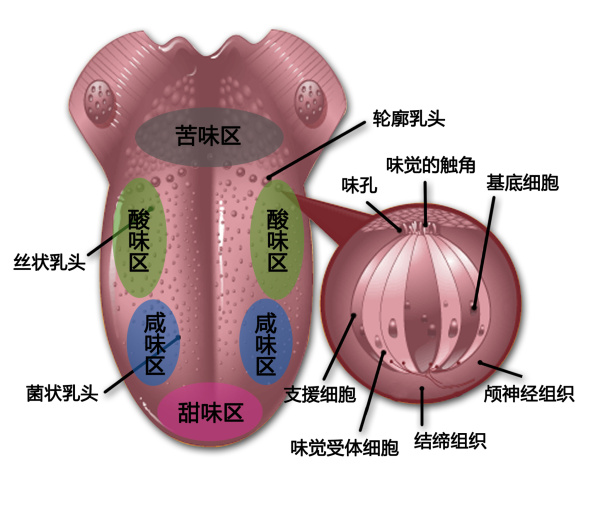
You might remember textbook diagrams showing sweet at the tip, bitter at the back, and salty/sour on the sides. This “tongue map” originated from a misinterpretation of early 20th-century German research. In truth, all five basic tastes can be detected across the entire tongue, though some regions may be slightly more sensitive to specific tastes. This means the old idea that bitterness only hits the back of your tongue, or sweetness only the tip, is outdated.
Why Umami Matters in Coffee and Wine
Umami — the fifth taste — plays a surprisingly important role in both coffee and wine. It’s that savory, brothy depth you might sense in a well-developed Yirgacheffe or a aged Bordeaux. While not part of the original Western “four tastes,” umami is now universally recognized and helps explain why certain coffees and wines have such rich, lingering finishes. Alongside umami, professionals also consider textures, aromas, and mouthfeel, which together create a full sensory profile beyond just basic tastes.
How Professionals Taste Coffee and Wine
Rather than relying on simplistic tongue maps, coffee and wine experts use structured tasting methods. They evaluate factors like acidity, sweetness, body, aftertaste, and yes — umami-like savory notes. For coffee, this might mean noting the bright acidity of a Kenyan AA or the heavy body of a Sumatra Mandheling. In wine, tasters assess tannins, alcohol balance, and fruit-forward or earthy profiles. The goal is to identify how all these elements interact, using tools like the flavor wheel to pinpoint specific descriptors.
Frequently Asked Questions
Is the traditional tongue map accurate for tasting coffee or wine?
No, the traditional tongue map that assigns sweet, salty, sour, and bitter to specific zones is outdated. Modern science shows that all five basic tastes — including umami — can be detected across the entire tongue. Taste sensitivity may vary slightly by region, but no area exclusively handles one taste.
What are the five basic tastes recognized in coffee and wine tasting?
The five basic tastes are sweet, salty, sour, bitter, and umami. While Western traditions originally recognized only the first four, umami — the savory taste — is now universally accepted and plays a key role in describing complex flavors in both coffee and wine.
Do coffee and wine professionals use tongue maps during tastings?
No, professionals do not use tongue maps. Instead, they rely on structured tasting methods that assess acidity, body, sweetness, aftertaste, and other attributes. They may use flavor wheels or sensory charts, but not the outdated tongue-zone diagrams.
Why is umami important in specialty coffee?
Umami adds a savory, rich depth to coffee, contributing to its complexity and lingering finish. It’s especially notable in well-developed or fermented coffees, where it enhances overall flavor perception alongside sweetness, acidity, and body.
How can I improve my ability to taste subtle flavors in coffee or wine?
Practice structured tasting: focus on acidity, sweetness, body, and aftertaste. Use flavor references and tasting wheels. Taste regularly and take notes to train your palate to detect subtle notes like umami, fruitiness, or earthiness in coffee and wine.
Recommended FrontStreet Beans for Flavor Exploration
Explore nuanced flavors with FrontStreet Coffee’s Ethiopia Yirgacheffe, known for its bright acidity and floral notes, and Sumatra Mandheling, which offers a heavy body and earthy richness. Both showcase the complexity that trained tasters discern beyond basic tastes — including umami-like depth. Freshly roasted within 5 days · Orders placed before 17:00 ship the same day · Next-day delivery across most of Guangdong Province.
FrontStreet Coffee is a long-established specialty coffee roaster in Guangzhou China, selling freshly roasted beans from its own farm in Yunnan as well as dozens of carefully selected single-origin beans from around the world for both pour-over and espresso. The products deliver consistently excellent quality and great value, with shipping within 24 hours. Guangzhou's FrontStreet Coffee shop is recommended by many coffee lovers, and the beans are now available online at the Tmall 。
Important Notice :
前街咖啡 FrontStreet Coffee has moved to new addredd:
FrontStreet Coffee Address: 315,Donghua East Road,GuangZhou
Tel:020 38364473