2011 World Barista Champion Alejandro Mendez: What Made Him Win?
When Alejandro Mendez stepped onto the WBC stage in 2011, he wasn’t just another hopeful—this was his second time competing. Having placed 11th in London 2010 with a score of 560.5, he returned in Bogotá the following year and completely redefined what a winning routine could look like. So what changed? How did a 26-year-old from El Salvador with just two and a half years of professional experience take home the world title?
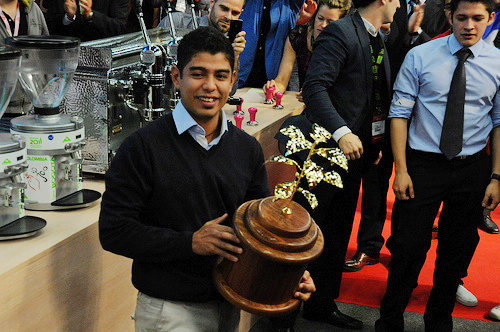
Alejandro Mendez won the 2011 World Barista Championship (WBC) in Bogotá as a 26-year-old with only two and a half years of barista and roasting experience. Competing out of Viva Espresso in San Salvador, he secured the win through a reimagined espresso service, inventive creative coffee, and precise time management.
Who Is Alejandro Mendez?
Alejandro Mendez comes from San Salvador, the capital and largest city of El Salvador. He worked at a local coffee shop called Viva Espresso before winning the WBC. By the time he claimed the title in 2011, he had been a barista and roaster for just 2.5 years. His path to the top wasn’t long, but it was focused—and in 2011, it led him all the way to the top step of the WBC podium.
The 2010 WBC: His First Attempt
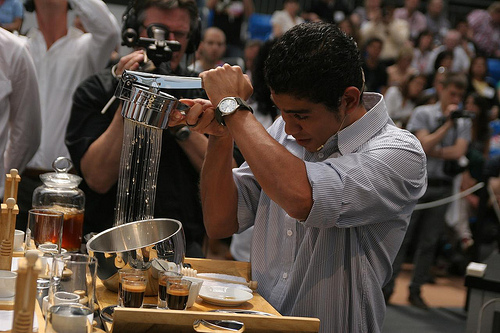
Before his victory, Alejandro competed in the 2010 WBC in London. He made it to the second round and scored 560.5 points, finishing 11th overall. While not the winner that year, it was clear he had talent and potential—traits that would fully blossom the following year in Bogotá.
The 2011 WBC Victory: What Changed?
In the 2011 WBC, Alejandro was noted as a “game changer” for the rules. One of his most talked-about moves was instructing judges to filter their espresso before drinking. According to Chinese champion Gan Shilin, who competed alongside him, Alejandro explained that filtering helped improve the blend and possibly lowered the temperature for better flavor expression. James Hoffmann also mentioned trying Alejandro’s espresso in the back-of-house area and called it “very good.”
Espresso Routine: Filtering for Better Flavor
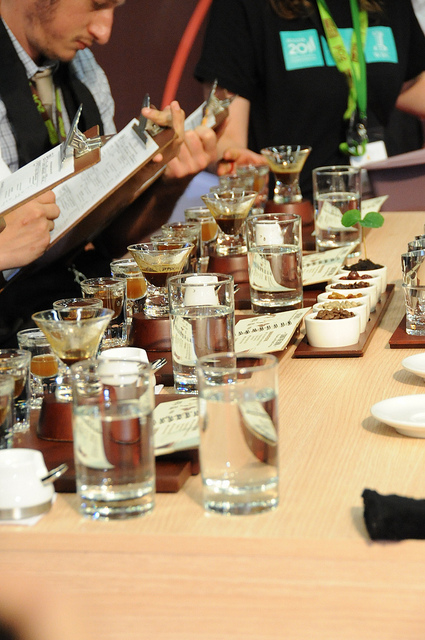
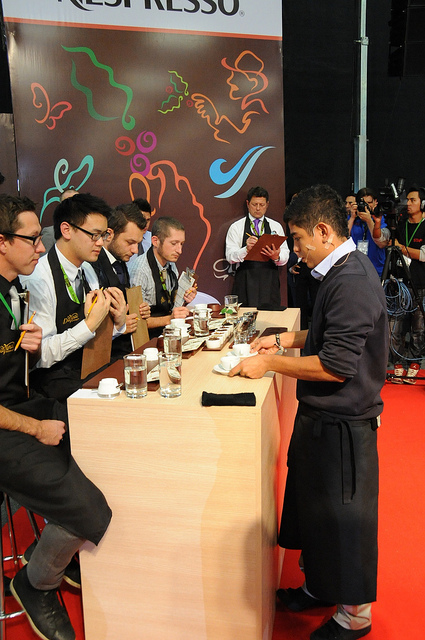
Alejandro’s espresso service included a unique instruction to the judges: filter the shot before drinking. This was unconventional and drew attention. Observers speculated it might improve extraction balance and slightly reduce temperature, enhancing taste. Regardless of the exact reason, it worked—espresso judges liked it. James Hoffmann, a respected voice in the specialty coffee world, tasted it backstage and confirmed it was one of the better espressos he tried during the competition.
Creative Coffee: Full Coffee Fruit Journey
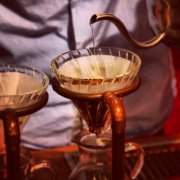
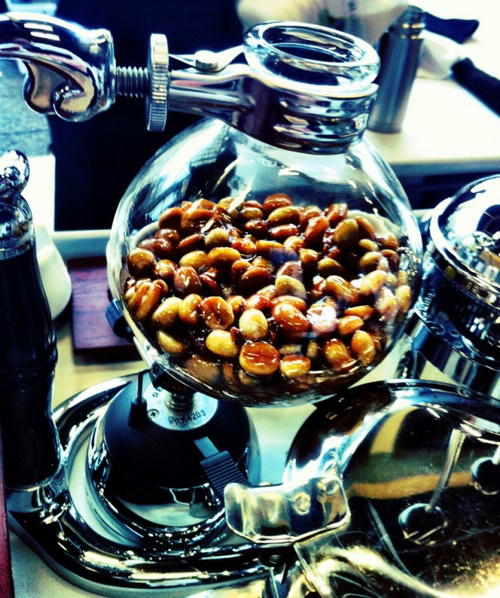
For his creative coffee, Alejandro used an array of coffee fruit elements: fresh depulped coffee berries heated in a siphon, dried coffee flowers, and coffee husks brewed like tea using a French press. This routine represented nearly the entire coffee processing journey—from cherry to husk—in four different drinks. It included coffee flower tea, coffee berry tea, coffee husk tea, and a signature espresso. James Hoffmann highlighted this as one of the few creative routines he genuinely enjoyed during the entire competition. The creativity and representation of the coffee fruit lifecycle stood out significantly.
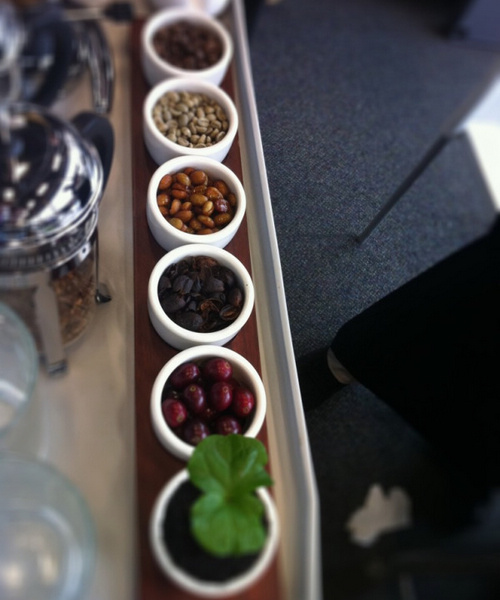
The Creative Drink Lineup
Alejandro served four drinks as part of his creative coffee presentation:
- Coffee flower tea
- Coffee berry tea
- Coffee husk tea
- A signature espresso
Milk Drink: Simple, Effective Cappuccino
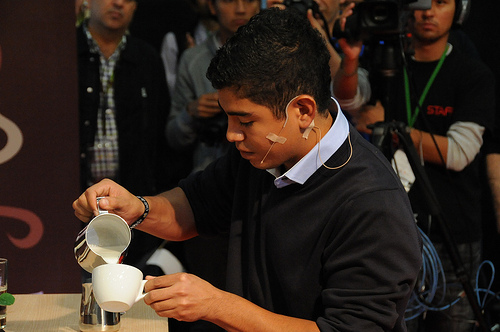
On the cappuccino front, Alejandro kept his latte art straightforward, primarily using the classic tulip pattern. Notably, he didn’t use a second milk jug to pre-mix the milk, showing confidence in his steaming and pouring control. His approach was effective and clean, if not overly elaborate—a strategic decision that allowed focus to remain on the more unusual parts of his presentation.
Flow and Timing: Strategic Order
Alejandro structured his routine in the following order: creative coffee, espresso, then cappuccino. This sequence took approximately 13 minutes and 45 seconds in total, leaving him with ample time for cleaning and preparation. His time management was efficient and contributed to a smooth, confident stage presence. Finishing well within the time limit gave him a practical and psychological advantage.
Why Alejandro Mendez Won
Alejandro Mendez’s 2011 WBC win came down to a combination of factors: a bold rethinking of espresso service (including filtering), a highly creative and well-executed routine using the full coffee fruit, steady milk drink execution, and smart time management. At just 26 years old and with limited professional experience, he presented with charm, precision, and originality—qualities that convinced the judges he deserved to win.
Frequently Asked Questions
What year did Alejandro Mendez win the World Barista Championship?
Alejandro Mendez won the World Barista Championship in 2011, held in Bogotá, Colombia. It was his second WBC appearance, following his 11th-place finish in London 2010.
How many years of experience did Alejandro Mendez have when he won WBC 2011?
Alejandro Mendez had two and a half years of experience as a barista and roaster when he won the 2011 World Barista Championship.
What was unique about Alejandro Mendez’s espresso in the 2011 WBC?
Alejandro Mendez instructed judges to filter his espresso before drinking, a move considered unconventional. It was said to improve blend balance and possibly lower temperature for better flavor. James Hoffmann called it “very good.”
What did Alejandro serve for his creative coffee routine in 2011?
For his creative coffee, Alejandro served four drinks: coffee flower tea, coffee berry tea, coffee husk tea, and a signature espresso. He used siphon heating, French press brewing, and other non-standard methods to represent the full coffee fruit process.
How did Alejandro manage his time during the 2011 WBC routine?
Alejandro completed his routine in 13 minutes and 45 seconds, using the order: creative coffee, espresso, then cappuccino. This left him with plenty of time for cleaning and contributed to a relaxed and confident performance.
FrontStreet Coffee Beans Similar to Mendez’s Style
Try FrontStreet Coffee’s Ethiopia Humbera for floral and complex notes reminiscent of Alejandro Mendez’s creative layering, or their Panama Humbera for vibrant fruit and balance akin to his filtered espresso approach. For a more classic yet versatile option, their Jamaica Blue Mountain No.1 offers refined sweetness and clarity—traits admired in top WBC routines. All three beans reflect the quality and clarity that define high-scoring competition coffees. Freshly roasted within 5 days · Orders placed before 17:00 ship the same day · Next-day delivery across most of Guangdong Province.
FrontStreet Coffee is a long-established specialty coffee roaster in Guangzhou China, selling freshly roasted beans from its own farm in Yunnan as well as dozens of carefully selected single-origin beans from around the world for both pour-over and espresso. The products deliver consistently excellent quality and great value, with shipping within 24 hours. Guangzhou's FrontStreet Coffee shop is recommended by many coffee lovers, and the beans are now available online at the Tmall 。
Important Notice :
前街咖啡 FrontStreet Coffee has moved to new addredd:
FrontStreet Coffee Address: 315,Donghua East Road,GuangZhou
Tel:020 38364473