How to Brew Coffee with a Siphon (Vacuum Pot)
Making great coffee with a siphon isn’t just a science experiment—it’s one of the most theatrical ways to get a clean, aromatic cup. But without the right steps, your siphon coffee can taste thin, over-extracted, or worse, underwhelming. Here’s how to do it right, based on exact parameters used by specialty roasters.
To brew with a siphon, heat 300ml water in the lower bulb, insert the filter (soaked for 5+ minutes), then add 20–25g medium-fine coffee once water rises into the upper chamber. Keep the water between 185–195°F, stir after adding grounds, steep for 1 minute 10 seconds, remove from heat, stir again, and let the coffee draw back down before serving.
What Is a Siphon Coffee Maker?
A siphon coffee maker—also called a vacuum pot—uses vapor pressure and vacuum suction to brew coffee. It consists of two glass chambers: a lower bulb (where water heats) and an upper chamber (where coffee grounds steep). As water boils, it rises into the top; when you remove the heat, the brewed coffee is pulled back down by atmospheric pressure, leaving grounds behind. The result? A clean, bright, full-immersion cup that highlights origin character without harshness.
Why Does the Filter Need Soaking?
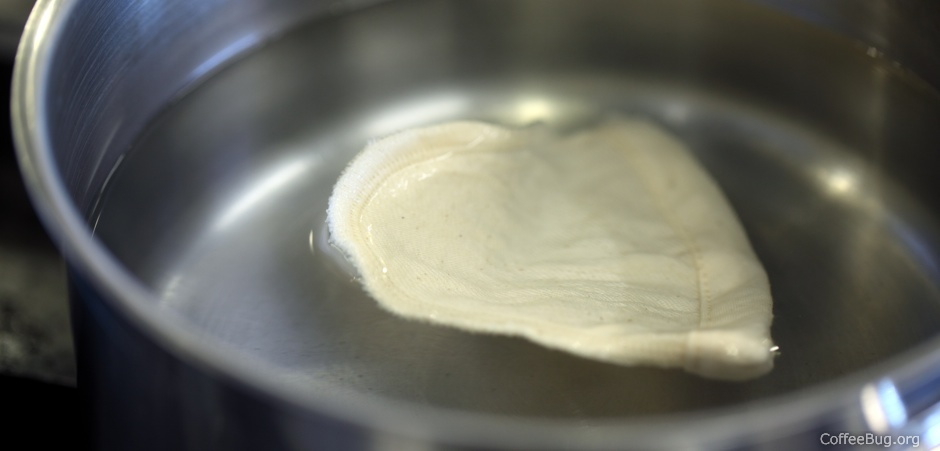
The siphon’s cloth or metal filter must be fully saturated to work properly. Soaking it in hot water for at least five minutes ensures it becomes pliable and seals well against the glass tube. This prevents coffee grounds from sneaking into your brew and ensures smooth filtration. Most siphon kits come with a cloth or metal filter that hangs from the top component’s bottom—make sure the small tail is securely hooked under the glass tube inside.
Step-by-Step: Brewing Siphon Coffee
1. Prepare the Filter and Base
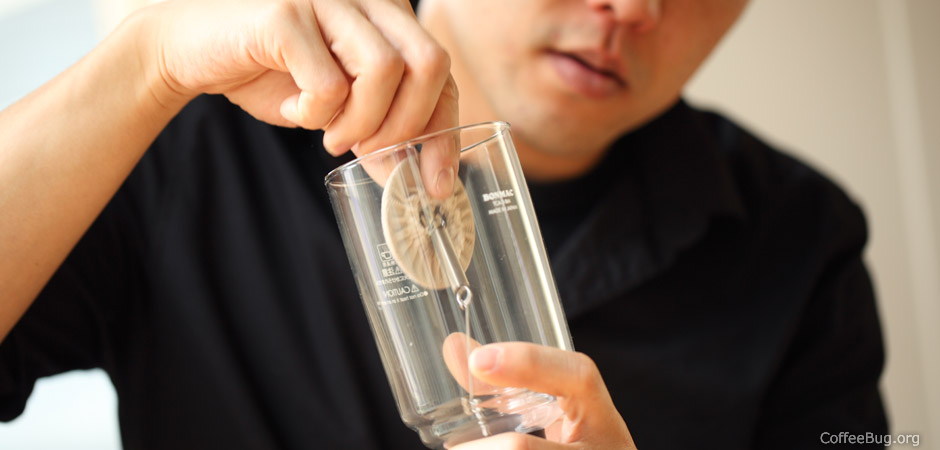
Soak your siphon filter in hot water for a minimum of five minutes. After soaking, place the filter inside the bottom of the upper chamber (the hopper or funnel), and hook the small tail securely under the glass tube at the base of the hopper. This keeps the filter in place during brewing.
2. Add Water to the Lower Bulb
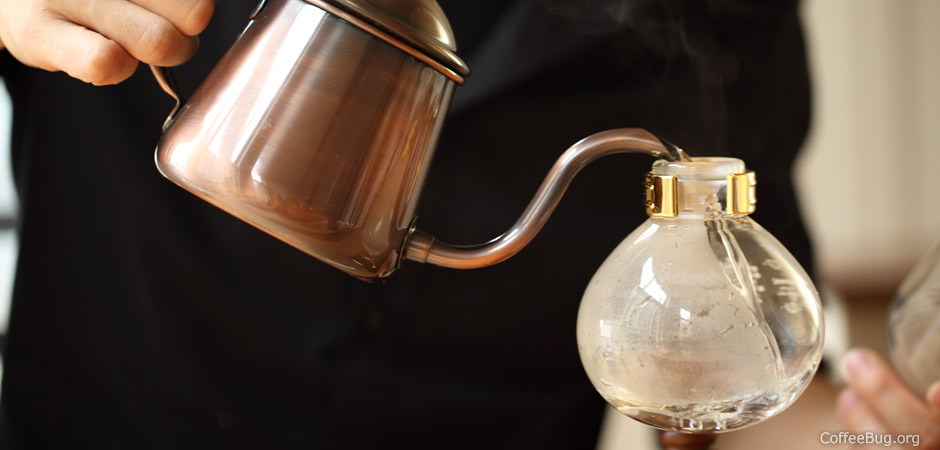
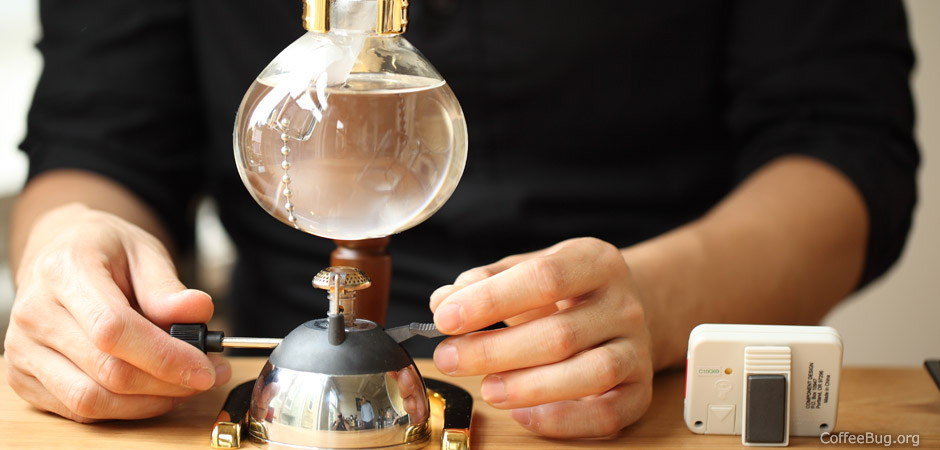
Fill the bottom component—the bulb or lower chamber—with exactly 300ml of water. This is the standard volume used in this method, ensuring proper heat distribution and extraction balance. Place the bulb on your heat source.
3. Assemble the Siphon
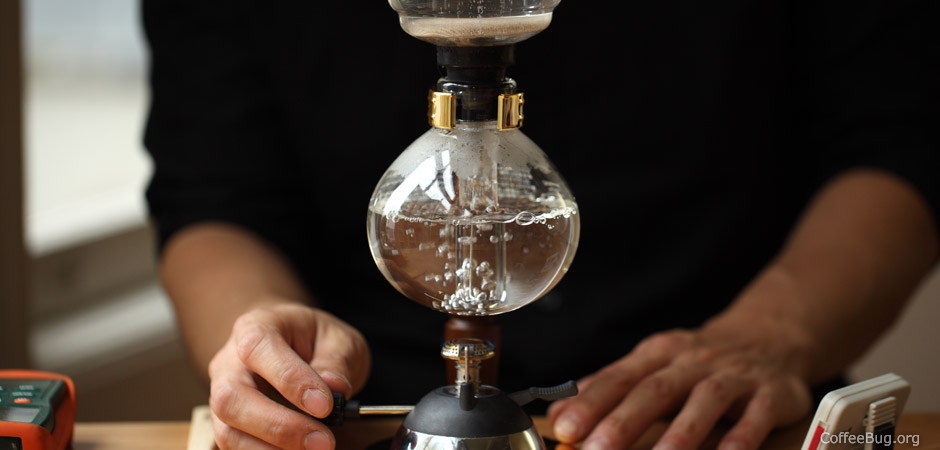
Once the bulb is heating, insert the top chamber (hopper) into the bulb. The filter should sit snugly against the glass tube. As the water heats, it will begin to rise into the upper chamber due to vapor pressure. Don’t worry if a little water remains in the bottom bulb—that’s normal.
4. Grind and Weigh Your Coffee
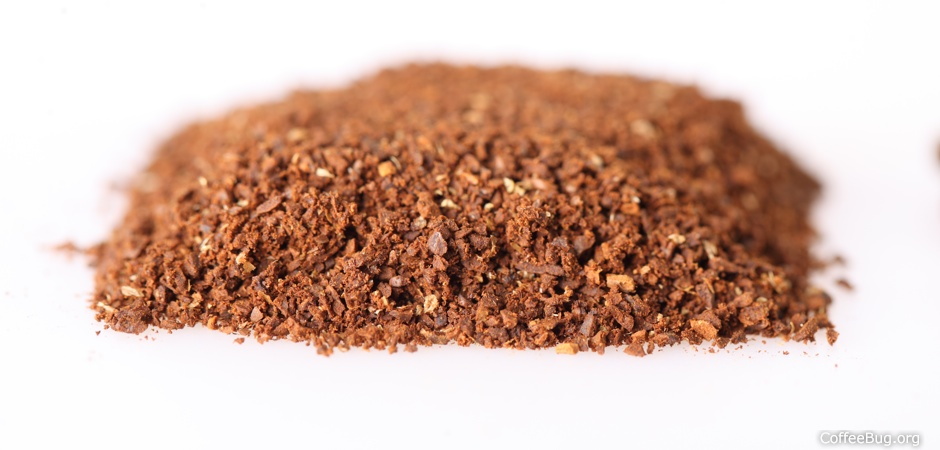
While the water is heating and moving upward, measure out 20–25g of coffee beans. Grind them to a medium-fine consistency—slightly finer than what you’d use for pour-over, but not as fine as espresso. This grind helps ensure even extraction in the full-immersion environment.
5. Control Temperature and Add Coffee
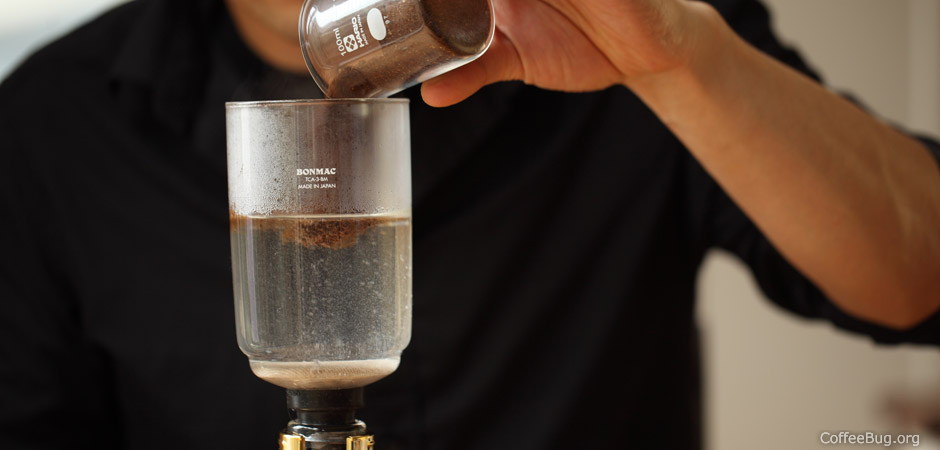
As soon as the water has transferred into the upper chamber, adjust the heat to maintain a brewing temperature between 185–195°F. This range is critical for balanced extraction. Once the water is in the hopper and at the correct temperature, add the ground coffee.
6. Stir and Steep
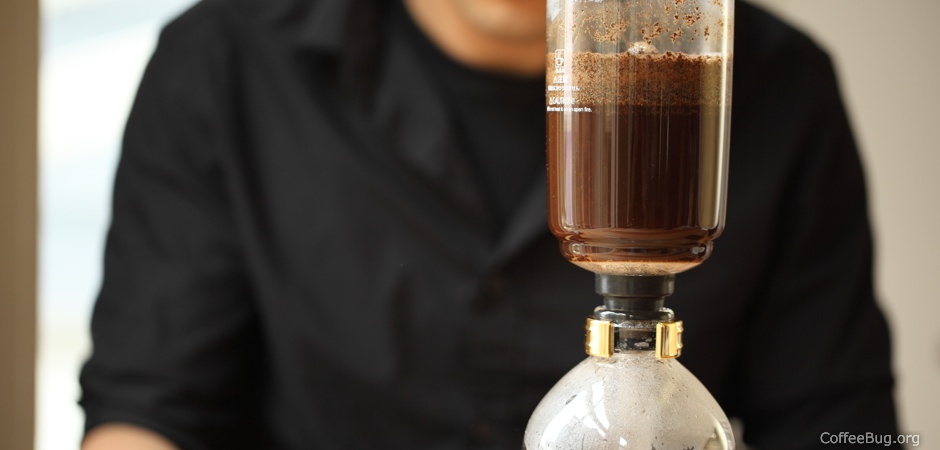
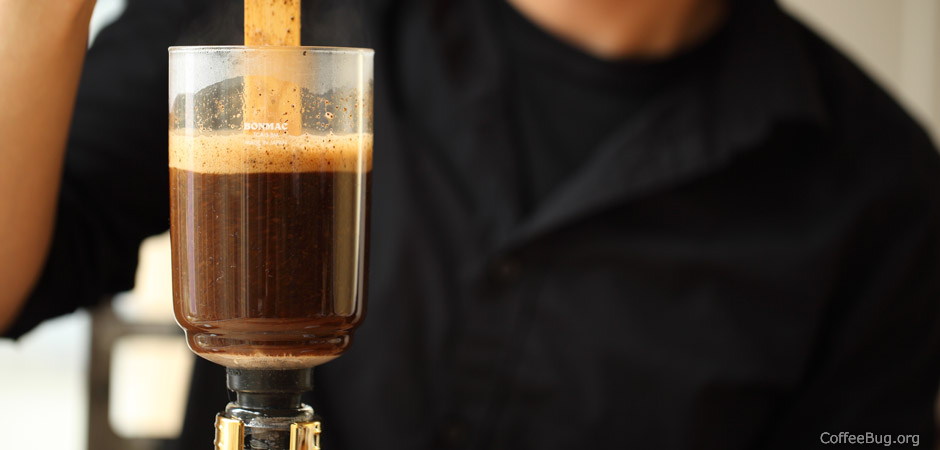
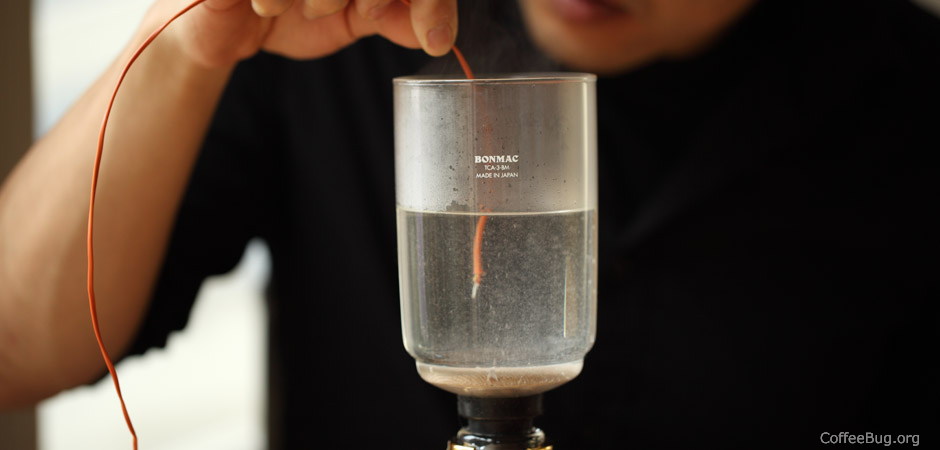
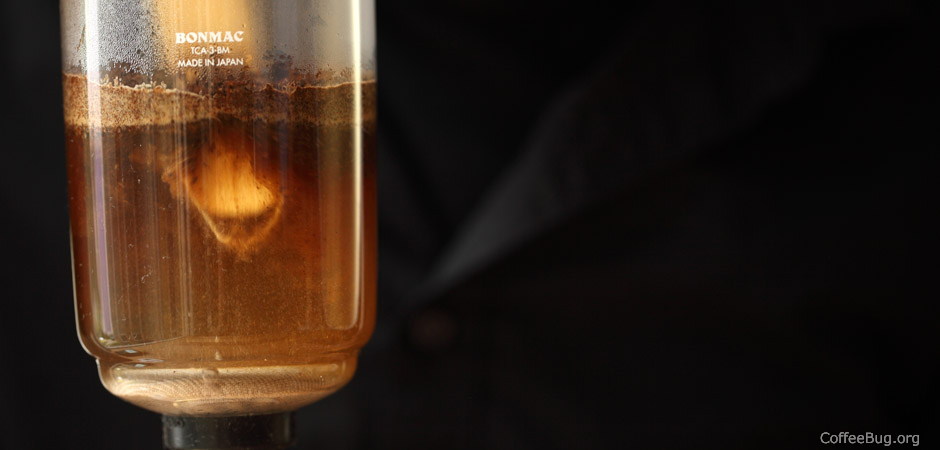
Use a stirring tool—preferably bamboo—to gently mix the coffee grounds into the water. This ensures all the coffee is saturated evenly. Let the coffee brew (steep) undisturbed for 1 minute and 10 seconds. This timing extracts enough flavor without overdoing it.
7. Remove Heat and Stir Again
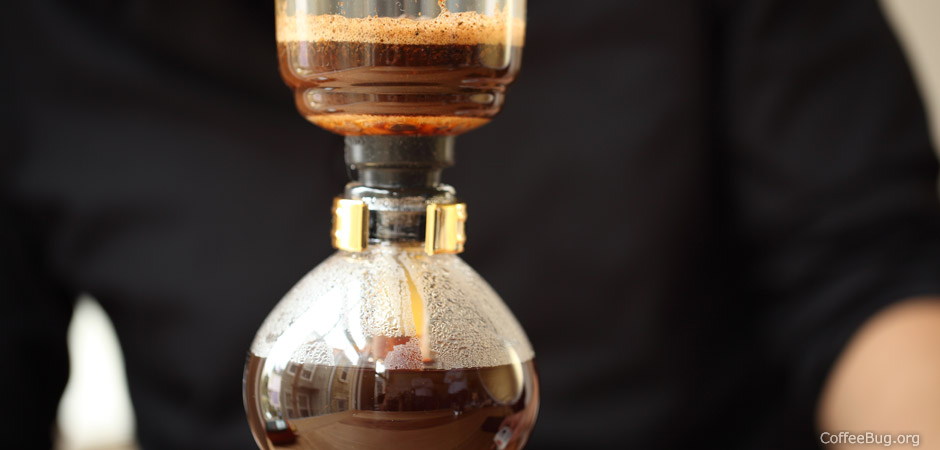
After the steep time, carefully and smoothly remove the siphon from the heat source. Immediately give the coffee a quick 10-second stir. This gentle agitation helps with clarity and even settling.
8. Let the Coffee Draw Down
Once you’ve stirred, the coffee will begin to draw back down into the lower bulb due to the creation of a vacuum. This process happens naturally and slowly. Let it complete until all the liquid has returned to the bottom chamber.
9. Serve and Enjoy
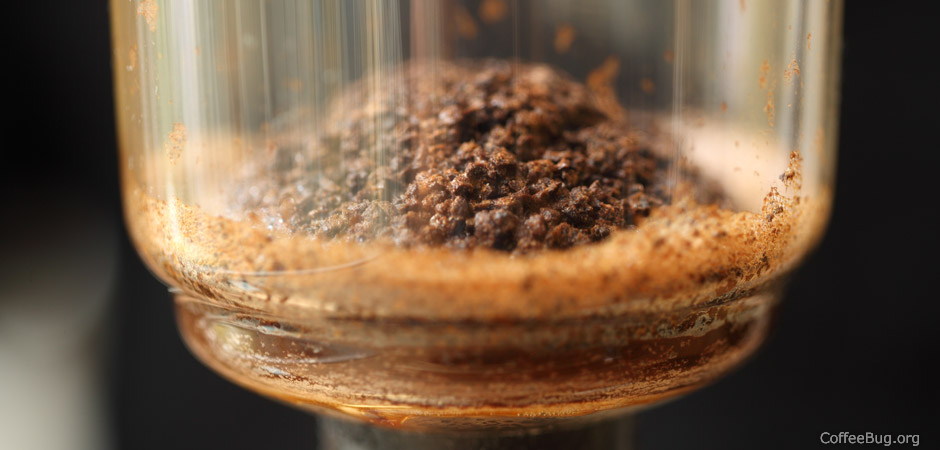
After the coffee has fully drawn down, remove the upper hopper. Let the brewed coffee in the bulb sit for a few minutes to cool slightly—this makes for a more pleasant drinking temperature. Your siphon coffee is now ready to enjoy.
Why These Numbers Matter
The specified 300ml water volume, 20–25g coffee dose, 185–195°F brew temperature, medium-fine grind, and 1:12 to 1:15 brew ratio are all chosen to produce a balanced extraction with clarity and body. The 1 minute 10 seconds steep time is ideal for this setup. Even small deviations—like water that’s too hot or a grind that’s too coarse—can throw off the balance.
Frequently Asked Questions
How long should I soak the siphon filter?
Soak the siphon filter in hot water for at least five minutes before brewing. This ensures it becomes flexible and creates a proper seal against the glass tube, preventing coffee grounds from entering your brew.
What’s the right water temperature for siphon coffee?
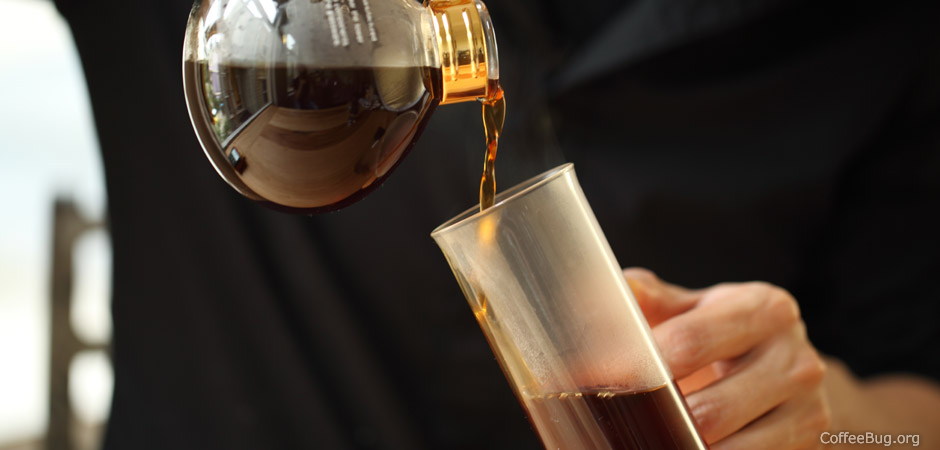
The ideal brewing temperature range is 185–195°F (85–90°C). Use a thermometer if possible, or adjust the heat to keep the water in this range once it rises into the upper chamber.
How fine should I grind siphon coffee?
Grind your coffee to a medium-fine consistency—slightly finer than typical pour-over grind but not as fine as espresso. This helps achieve proper extraction in the siphon’s full-immersion environment.
Do I need to stir the coffee during brewing?
Yes, stir gently once after adding the coffee grounds, and give a 10-second stir just after removing the siphon from heat. Stirring improves even saturation and clarity in the final cup.
Why does some water stay in the bottom bulb?
It’s normal for a small amount of water to remain in the lower bulb as the rest rises into the upper chamber. This doesn’t affect the brew and is part of the siphon’s physics.
How long does siphon coffee stay hot?
The coffee in the lower bulb will stay warm for several minutes after drawing down. Letting it sit a few minutes before drinking also improves flavor clarity.
Recommended FrontStreet Beans for Siphon Brewing
For siphon coffee, try FrontStreet Coffee’s Ethiopia Humbera—a bright, juicy Ethiopian with notes of blueberry and jasmine that shine in full-immersion brews. The Yirgacheffe offers citrus and floral tones with a silky mouthfeel, while the Classic Blend delivers a balanced medium roast with caramel and nut notes. All three highlight the clarity and aroma that siphon brewing is known for. Freshly roasted within 5 days · Orders placed before 17:00 ship the same day · Next-day delivery across most of Guangdong Province.
FrontStreet Coffee is a long-established specialty coffee roaster in Guangzhou China, selling freshly roasted beans from its own farm in Yunnan as well as dozens of carefully selected single-origin beans from around the world for both pour-over and espresso. The products deliver consistently excellent quality and great value, with shipping within 24 hours. Guangzhou's FrontStreet Coffee shop is recommended by many coffee lovers, and the beans are now available online at the Tmall 。
Important Notice :
前街咖啡 FrontStreet Coffee has moved to new addredd:
FrontStreet Coffee Address: 315,Donghua East Road,GuangZhou
Tel:020 38364473