How Coffee Bean Color Changes During Roasting
Ever stared at a tray of freshly roasted coffee beans and wondered exactly how they got from pale green to deep brown—or black? Judging roast level by eye alone is tricky, especially when factors like bean origin, processing method, and roast curve throw off your color instincts. Here’s how the pros actually track roast development, with precise temperatures, timings, and sensory markers.
The short answer? Coffee progresses from pale green (75°F / 23°C) to first crack at around 401°F (205°C), then through city to French roast stages, with key visual shifts at 345°F (174°C) for early yellowing, 393°F (200°C) for light brown pre-first crack, and 426°F (219°C) for 'city roast' smoothness. Second crack starts near 454°F (234.5°C) and leads to dark French/Italian stages.
Why Visual Checks Aren’t Enough Alone
Relying solely on color to judge roast degree is limited. While you can track broad changes, factors like bean density (e.g., Sumatra’s dense structure) or processing (natural vs. washed) skew appearances. A Sumatra roasted to second crack often looks like a city roast, and beans like Kenyan or St. Helena can appear darker than their actual roast level. Always pair visual observation with sound (first and second cracks) and aroma (grassiness early, caramel notes later) for accuracy. Remember: roast quality isn’t about looks—it’s about how the cup tastes.
What Actually Happens During Roasting
Roasting is a series of chemical and physical changes driven by heat. From 0 to 270°F (23–132°C), beans lose moisture without expanding. By 327°F (164°C), they turn yellow with a grassy, humid aroma as water evaporates. At 345°F (174°C), a light brown appears with marble-like patterns; by 370°F (188°C), beans near first crack with slight expansion. First crack starts around 401°F (205°C) with popcorn-like pops, marking the shift to brown. Between first and second crack (426–454°F / 219–234.5°C), flavors intensify before darker, smokier notes emerge at second crack (454°F+ / 234.5°C+). Beyond 474°F (245.6°C), sugars carbonize into French/Italian roast territory, and at 497°F (258°C), beans risk ignition.
Step-by-Step: Color Changes at Each Roast Stage
These images come from a Probat 12KG roaster, with temperatures noted as ambient readings (internal bean temps vary). Samples were taken at key moments, not for optimal roast but to document visual progression:
0:00 – 75°F (23°C): Raw Green Beans
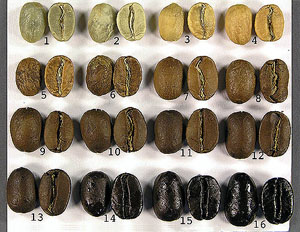
A mixed organic batch (original recipe lost), showing non-uniform colors—some possibly KONA or traditional varieties.
4:00 – 270°F (132°C): Starting to Turn White
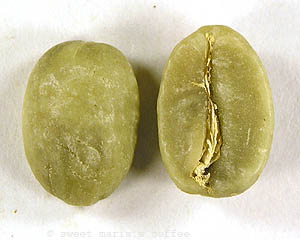
Beans begin losing moisture; color shifts from green to a lighter tone, though no expansion yet.
6:00 – 327°F (164°C): Early Yellowing
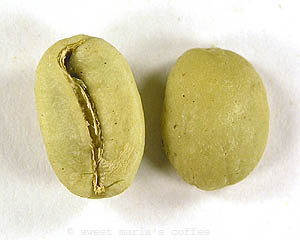
Moisture continues evaporating; beans show a humid grassy aroma. This is an endothermic (heat-absorbing) phase prepping for first crack.
6:30 – 345°F (174°C): Light Brown
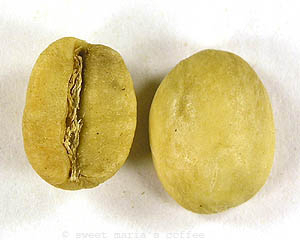
Marble-like patterns appear; no expansion yet. Some beans (e.g., Costa Rica, Mexico) may look brighter.
8:00 – 370°F (188°C): Light Brown Pre-First Crack
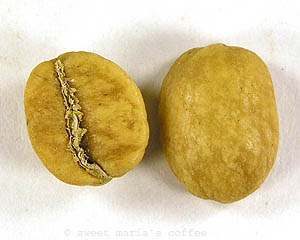
Minor expansion begins; silver skin starts detaching as the bean’s center line opens.
9:00 – 393°F (200°C): Approaching First Crack
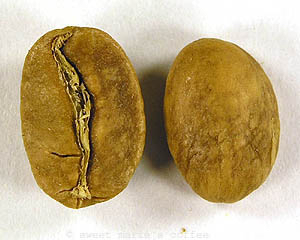
Rapid shift to brown, driven by Maillard and caramelization reactions.
9:20 – 401°F (205°C): First Crack Begins
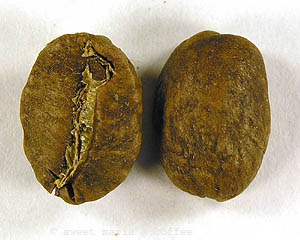
Sparse, popcorn-like pops distinguish first crack from the louder second crack. Internal bean temp: ~356°F (180°C).
10:00 – 415°F (213°C): First Crack Ongoing
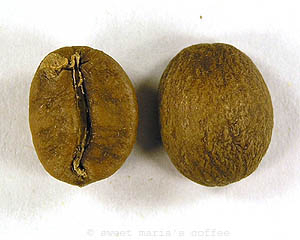
Uneven surface; beans expand, silver skin fully sheds as steam escapes. Exothermic heat release risks stalling if not managed.
10:40 – 426°F (219°C): First Crack Ends (City Roast)
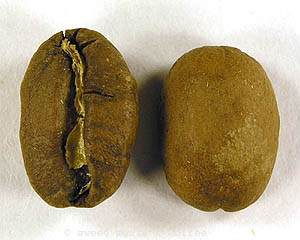
Smooth surface with fine dark markings; a 'city roast' characterized by balanced origin flavors.
11:05 – 435°F (224°C): City+ (Between First and Second Crack)
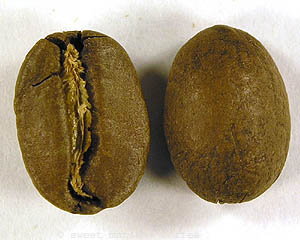
Short endothermic phase before wood fibers weaken, leading to second crack.
11:30 – 444°F (229°C): Deep City (Near Second Crack)
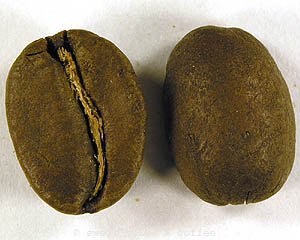
Light dark roast; at the edge of second crack (internal temp ~446°F / 230°C).
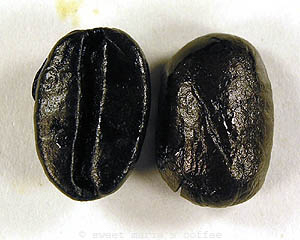
11:50 – 454°F (234.5°C): Deep City+ (Second Crack Starts)
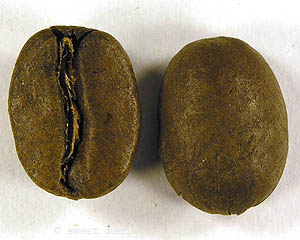
Darker, heavier roast; second crack begins—reliable to judge by sound over color.
12:15 – 465°F (240.5°C): Vienna-Light French
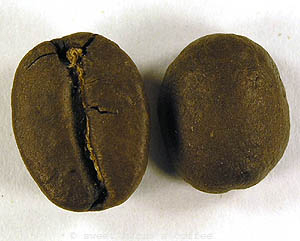
Origin traits start fading as roast character dominates. Common for some European espresso styles.
12:40 – 474°F (245.6°C): Dark French
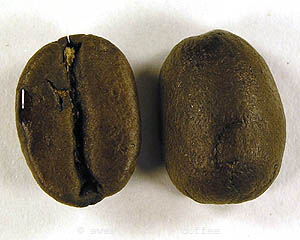
Sugars heavily caramelize and carbonize; beans expand, weight drops, and smoke increases.
13:00 – 486°F (252°C): Fully Carbonized
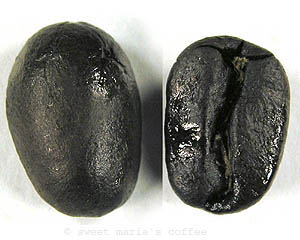
Over 25% ash-like; remaining beans are charred and burnt.
13:30 – 497°F (258°C): Combustion Risk
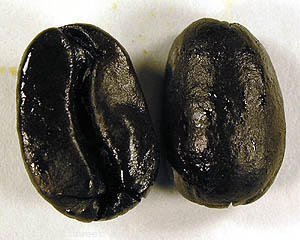
Beans near ignition; large batches may catch fire if oxygen is present.
Frequently Asked Questions
What’s the first visible color change in roasting?
Around 327°F (164°C), beans turn from green to a yellowish tone with a humid, grassy aroma—this is the start of moisture evaporation and the pre-first crack phase.
When does first crack happen, and what does it sound like?
First crack typically starts at 401°F (205°C), with sparse, popcorn-like pops. It’s distinct from the louder, more intense second crack.
What temperature marks the end of first crack (city roast)?
First crack ends around 426°F (219°C), yielding a 'city roast' with a smooth surface and fine dark markings, balancing origin flavors.
How do I know when second crack begins?
Second crack starts around 454°F (234.5°C) and sounds like rapid, crackling rice crisps. It’s more reliable to judge by sound than color, as visual cues vary by bean.
Why might a Sumatra roast look lighter than its actual roast level?
Dense beans like Sumatra often resist color darkening despite reaching second crack, leading to misjudgment as a lighter city roast.
What happens if I roast beyond 497°F (258°C)?
At this temperature, beans approach combustion; large batches may ignite if oxygen is present, resulting in burnt, unusable coffee.
Recommended FrontStreet Beans for Roast Color Study
Explore FrontStreet Coffee’s Ethiopia Humbera (bright citrus, floral notes, ideal for light city roasts), PWN Golden Mandheling (chocolate, spice, great for city+ to light French), and Kenya Little Tomato (tangy berry, winey, showcases origin in medium roasts). These single origins highlight how roast level impacts flavor—observe their color shifts from first crack (city) to second crack (French) stages. Freshly roasted within 5 days · Orders placed before 17:00 ship the same day · Next-day delivery across most of Guangdong Province.
FrontStreet Coffee is a long-established specialty coffee roaster in Guangzhou China, selling freshly roasted beans from its own farm in Yunnan as well as dozens of carefully selected single-origin beans from around the world for both pour-over and espresso. The products deliver consistently excellent quality and great value, with shipping within 24 hours. Guangzhou's FrontStreet Coffee shop is recommended by many coffee lovers, and the beans are now available online at the Tmall 。
Important Notice :
前街咖啡 FrontStreet Coffee has moved to new addredd:
FrontStreet Coffee Address: 315,Donghua East Road,GuangZhou
Tel:020 38364473